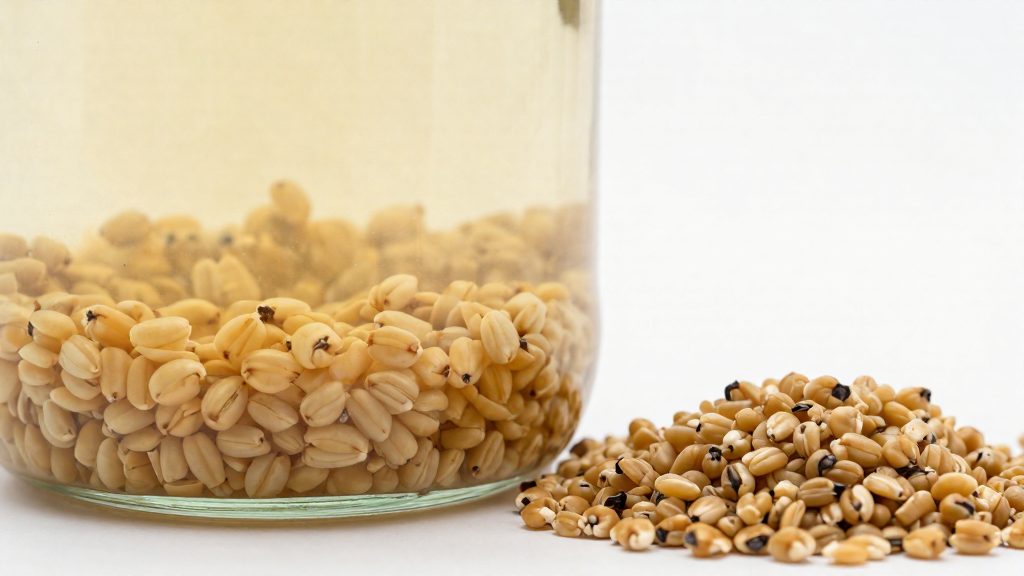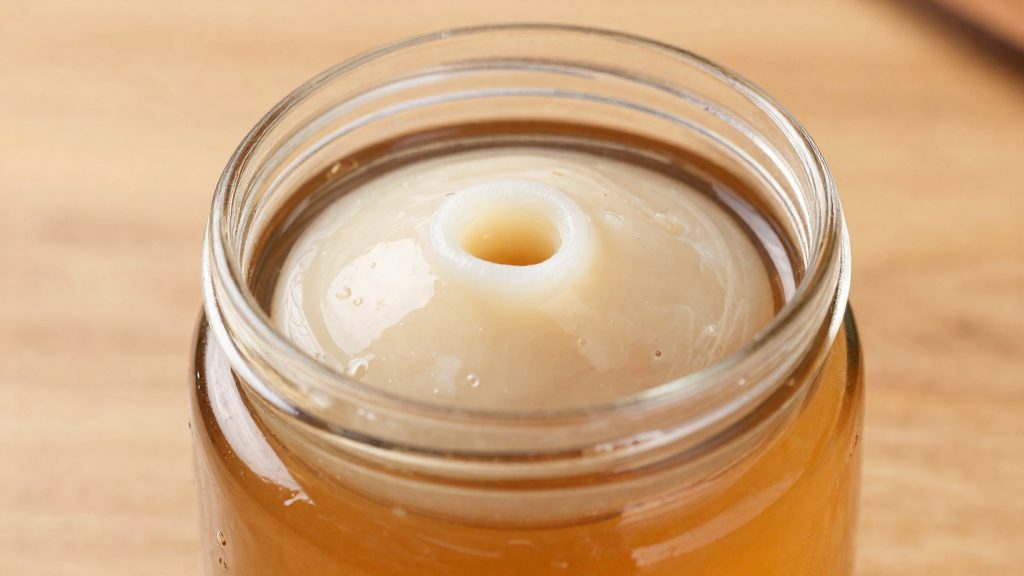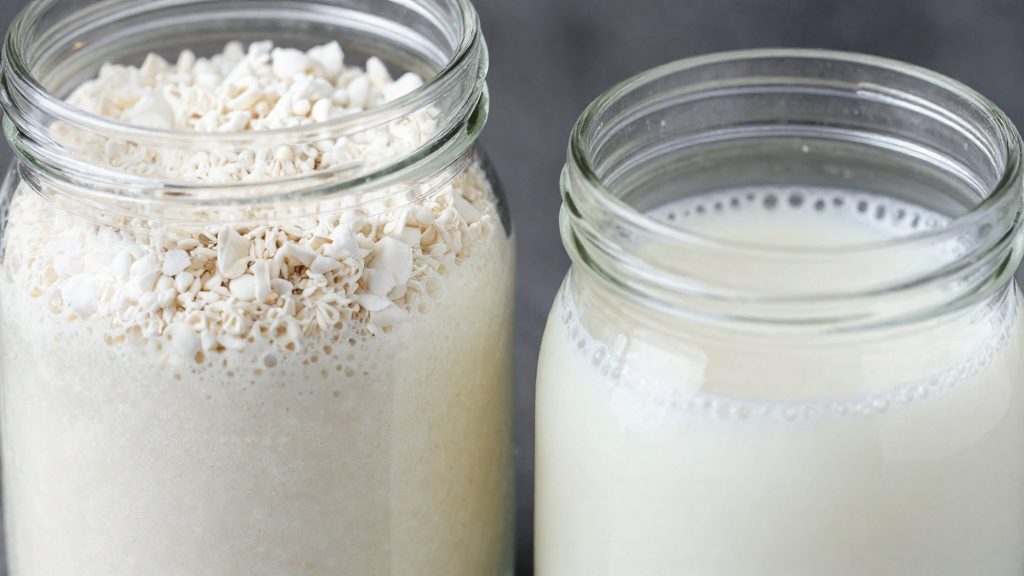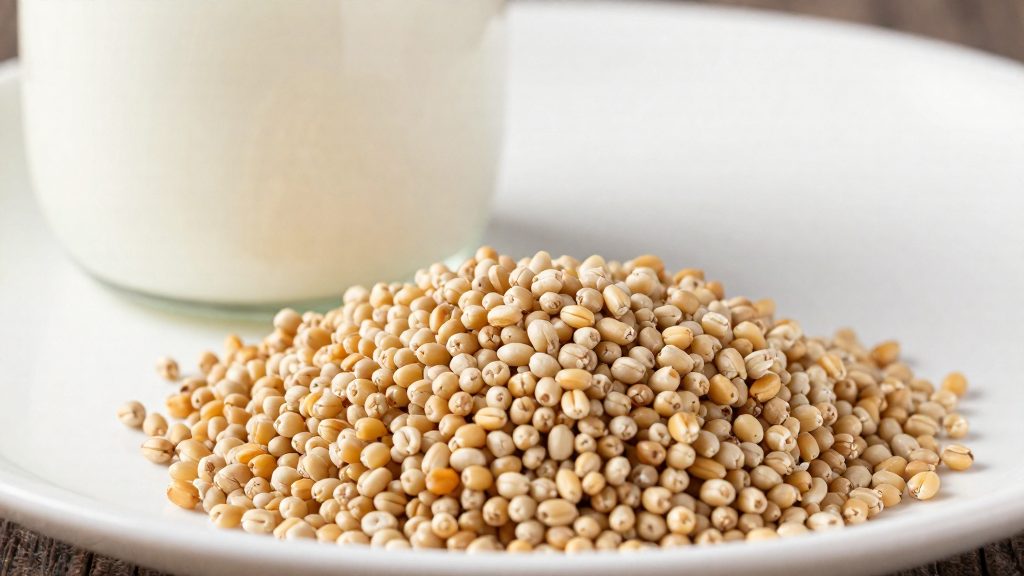
Dried milk kefir grains work as a dormant backup. Once dried, they no longer need fresh milk every day, so a culture can survive a long break or the loss of your working colony. Freshly Fermented (UK kefir supplier, 2026) recommends dried or freeze-dried grains for breaks of 12 months or more, and Rebooted Mom states that dehydrated grains can live up to one year. Freshly Fermented’s 12-month figure is a recommendation for how long a break the dried form suits, not a shelf-life figure. Rebooted Mom’s ‘up to one year’ is a general statement, not a guaranteed shelf life.
Why dry milk kefir grains?
Backup against losing a live colony
A live colony depends on regular feeding, so a single neglected jar, a failed batch, or a lapse in care can end the line. Keeping a dried portion apart from your working grains gives you a fallback that does not need to be kept alive. The restore is slow, though. According to Freshly Fermented (UK kefir supplier, 2026), rehydrated grains need 2–4 weeks to reactivate. A backup is only useful if you make it before you need it.
Sending or sharing grains without fresh milk
Live grains in transit need milk to stay active, while dried grains do not. This makes dried grains the practical option for sharing a culture with another person. The recipient rehydrates the grains by soaking them in fresh milk and changing the milk daily. Check your carrier’s requirements for shipping dried cultures before sending.
Ending daily feeding during holidays or travel
A live colony left unattended for a trip usually needs someone to feed it. Dried grains remove that task for the length of the break. When you return, rehydrate them in fresh milk and expect a reactivation period. The table below summarises the timing figures in the consulted sources.
| Situation | Guidance | Source |
|---|---|---|
| Restart after storage | Allow 2–4 weeks for reactivation | Freshly Fermented (UK kefir supplier, 2026) |
How do you dry kefir grains step by step?
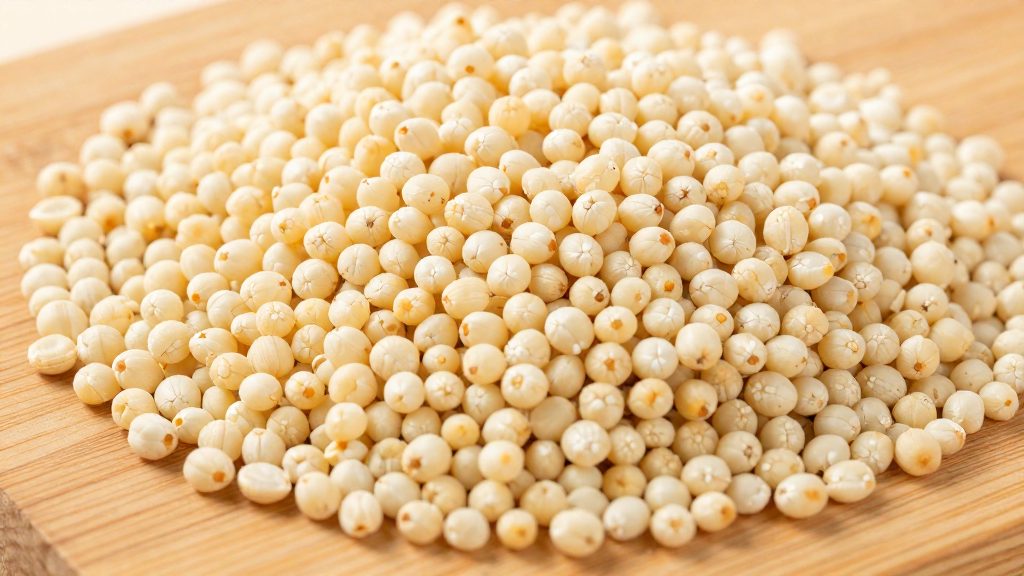
Drying milk kefir grains is a short, low-effort process. You rinse the grains, remove surface moisture, spread them thinly, and let them lose water until they are fully brittle. According to Freshly Fermented (2026), drying takes about 3–5 days at room temperature with high airflow, so most of the work is checking the grains rather than handling them.
Rinse and pat dry
Rinse the grains gently in non-chlorinated water or a little milk. Tap water treated with chlorine is the one to avoid. After rinsing, pat the grains dry with a clean paper towel or cloth until no liquid remains on the surface. Surface moisture slows drying and keeps the outer layer wet while the inside is still damp.
Spread and flip
Spread the grains on baking parchment in a single thin layer, with gaps between them so air reaches every side. Piled grains dry unevenly, and the middle can stay soft after the top looks finished. Partway through, turn the grains once so the underside dries. Rebooted Mom describes this flip as part of its air-drying method, which runs about 4–5 days in total without a dehydrator.
Checkpoints over three to five days
| Checkpoint | What to observe | Next action |
|---|---|---|
| Start | Grains patted dry, no liquid beads | Spread in one thin layer |
| Day 3 onward | Press a few grains: firm and brittle, snaps rather than bends | Stop drying and move to the finishing step |
| Day 3 onward | Grains still soft, bend, or squash | Keep drying and recheck the next day |
| Up to day 5 | Grains still soft after the full run | Check layer thickness and airflow |
The brittleness test is the main indicator. A grain that looks dry on the outside can still hold moisture in its core, so test more than one grain before deciding the batch is finished.
Air drying or dehydrator: which is better?
Both air drying and a dehydrator can dry milk kefir grains, and the choice depends on temperature ceiling control and how long you can wait. Freshly Fermented (2026) sets the limit for either method: drying should stay below 104°F (40°C). It describes room-temperature air drying or a low-temperature dehydrator as the safer options. Air drying needs no equipment but is slower, while a dehydrator is faster but only as safe as its temperature control.
| Method | Temperature condition | Time stated | Source |
|---|---|---|---|
| Air drying | Room temperature or below 40°C (104°F), with high airflow | About 3–5 days | Freshly Fermented (2026) |
| Dehydrator, lowest setting | Lowest setting; its temperature is not given, so check it stays below 104°F (40°C) | 3–4 hours, plus 1–2 hours if still moist | Rebooted Mom |
Air drying: slow, but easy to control
Air drying relies on room air and airflow, so the temperature stays low without any adjustment.
Dehydrator: faster, but verify the setting
A dehydrator reduces drying time to a few hours, but the actual temperature of its lowest setting is unknown until you check it. Place a thermometer at tray level to check the air temperature throughout the run.
Airflow is the main variable inside a dehydrator. A fan-driven unit moves air across each tray, which speeds drying, but the trays must not be overloaded. If the grains are still moist after 3–4 hours, add 1–2 hours, as Rebooted Mom recommends.
Oven: the riskiest option
An independent oven thermometer, read over the full drying period, is the practical way to confirm the actual temperature.
How should you store dried kefir grains?
Dried milk kefir grains are kept in a glass jar or a sealed bag. In both cases the aim is to keep out moisture and light while the grains wait between uses. Freshly Fermented (UK kefir supplier, 2026) names these two containers for dried grains. The choice mainly affects how well the container seals, how well it blocks light, and how easily you can check the contents. The practices below are general handling principles rather than measured thresholds.
Glass jar versus sealed bag
| Feature | Glass jar | Sealed bag |
|---|---|---|
| Seal | Rigid lid that tightens onto the rim | Closed by folding or clipping; air can be pressed out first |
| Light | Transparent, so the jar must be kept in a dark cupboard | Opaque versions block light more effectively |
| Visibility | Contents can be checked without opening | Contents must be inspected by opening |
| Reuse | Washed and fully dried between batches | Often single-use; a fresh bag for each batch |
A glass jar suits anyone who wants a rigid container that stacks easily. A sealed bag takes up less space and lets you remove most of the air before closing.
Keeping moisture and light away from the grains
- Moisture: Confirm the grains are fully dry before they go in. Residual moisture can become trapped inside a sealed container, so dry any jar you reuse completely as well.
- Light: Store the container in a dark place. A clear jar offers no light protection on its own, so keep it inside a cupboard or drawer.
- Access: Open the container only when you need grains. Each opening exposes the contents to air and room humidity.
Labelling batches with the drying date
Write the drying date on the lid, bag or a label applied to it. When you hold several batches, the date tells you which grains are oldest. Use the oldest batch first so older stock does not sit unused. If you keep batches from different milks, add the milk type to the label as well, so each batch can be identified without opening the container.
How long do dried kefir grains last?
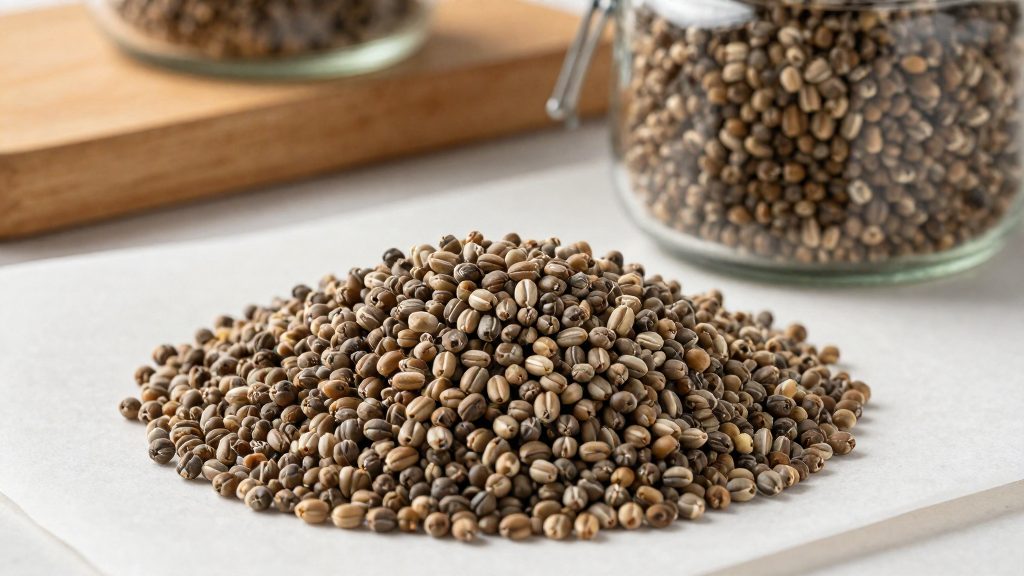
Dried milk kefir grains can be kept through long breaks. Freshly Fermented (2026) recommends dried or freeze-dried grains for breaks of 12 months or more. Rebooted Mom states that dehydrated grains can live up to one year. Freshly Fermented presents its figure as a break-length recommendation, not a measured shelf life.
| Grain form | Source | Stated window | What the source says |
|---|---|---|---|
| Dried (dehydrated) | Rebooted Mom | Up to one year | Does not give a storage duration or storage temperature |
| Dried or freeze-dried | Freshly Fermented (2026) | Breaks of 12 months or more | Break-length recommendation, not a shelf-life figure |
Twelve-month break guidance
For a break of 12 months or more, Freshly Fermented points to dried grains as the practical choice. Because the source frames the 12-month threshold as a break length, it is best read as a planning guide: it tells you which form to choose for a long pause, not how many days a batch will remain active.
Freeze-dried grains for longer dormancy
Freshly Fermented names freeze-dried grains alongside dried grains for breaks of 12 months or more. Freeze-dried grains are the option Freshly Fermented names for the longest breaks.
What shortens the viability window
The only limit the sources give is the drying temperature (below 104°F / 40°C). They do not quantify what shortens the viability of dried grains. The sources do not quantify how humidity, light, or container type affect how long dried grains remain viable.
How do you rehydrate dried kefir grains?
Rehydrating dried milk kefir grains means feeding them fresh milk over several days until normal fermentation returns. According to Freshly Fermented (2026), the grains are soaked in fresh milk, the milk is changed daily, and reactivation takes 2–4 weeks. The first batches may be weak, so each batch is checked before it is kept. The source does not specify a fixed day on which the grains are fully active, so the signal to look for is a consistent, normal ferment rather than a set date.
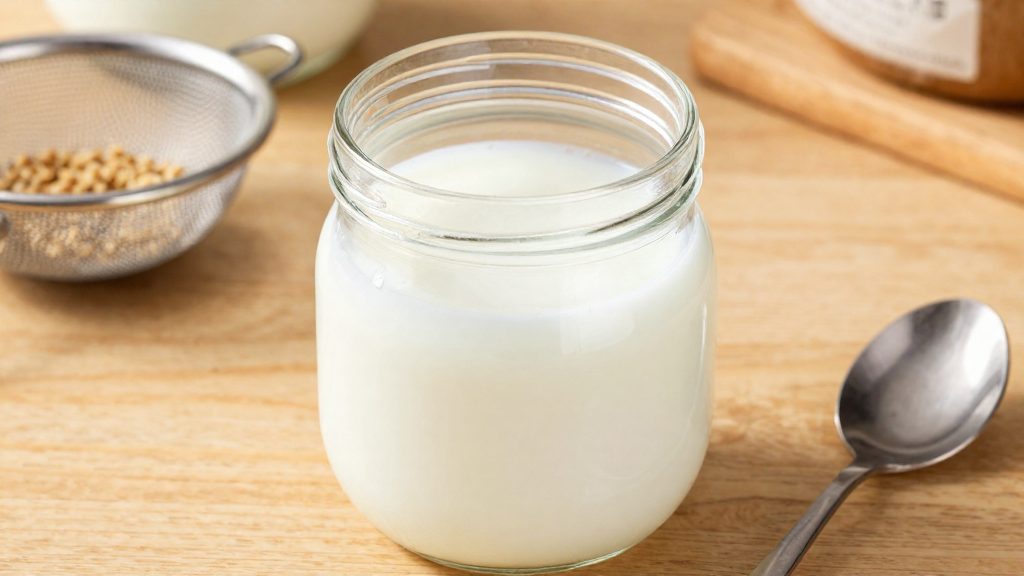
The routine is simple. Place the dried grains in a clean glass jar and cover them with fresh milk. Each day, strain the grains out of the old milk, rinse the jar if needed, and add new milk. Repeat this for the full reactivation period.
| Stage | Action | Purpose |
|---|---|---|
| Day 1 | Add dried grains to fresh milk in a clean jar | Begin reactivation |
| Each day | Strain the grains and replace the milk | Keep the milk fresh for the grains |
| Each batch | Smell and feel the ferment before keeping it | Catch poor early batches |
| Weeks 2–4 | Continue daily changes until fermentation is normal | Complete reactivation |
Judging early batches
Early batches are the most likely to be poor, and Freshly Fermented (2026) advises discarding any batch whose smell or texture is off. A batch that smells off (not just pleasantly tangy), shows mold or odd coloring, or has an unusual texture should be thrown away rather than used or stored. Discarding these batches does not harm the grains, since the goal is to remove weak ferments while the culture rebuilds its activity.
Can you freeze kefir grains instead?
Freezing is a fallback for milk kefir grains, not a separate primary method. Rebooted Mom packs dried grains in powdered milk for freezer storage. The grains are dried first, so the freezer route depends on the drying step described earlier in this guide.
How the freezer route differs from dry storage
Freezing adds a packing medium and a cold environment on top of dried grains. The consulted sources treat the two options as alternatives for long breaks, with different levels of detail.
| Aspect | Freezer storage (dried grains in powdered milk) | Dry storage (dried or freeze-dried grains) |
|---|---|---|
| Packing | Powdered milk, per Rebooted Mom | Sealed container, per Freshly Fermented (2026) |
When freezing is the practical choice
Freezing suits people who already have dried grains and need to keep them in a cold, stable environment. Dry storage requires no freezer space and no added medium, so it is the simpler option when the break length is known.
Frequently asked questions
How can I tell when the grains are dry enough to store?
Rebooted Mom suggests a dehydrator on its lowest setting for 3–4 hours, adding 1–2 hours if the grains still feel moist. Without a dehydrator, it estimates about 4–5 days of air drying, flipping the grains partway through.
Can I dry milk kefir grains in an ordinary oven?
Freshly Fermented (UK kefir supplier, 2026) advises using an oven only if it reliably stays below 38°C (about 100°F). If you cannot confirm that temperature, an air-drying setup or a low-temperature dehydrator is the safer choice.
What should I do if the grains smell wrong after rehydrating?
Freshly Fermented (UK kefir supplier, 2026) says early batches after rehydration may be weak, so discard them if the smell or texture is off. Give the grains 2–4 weeks to recover before judging their activity, since a reactivation period is normal.