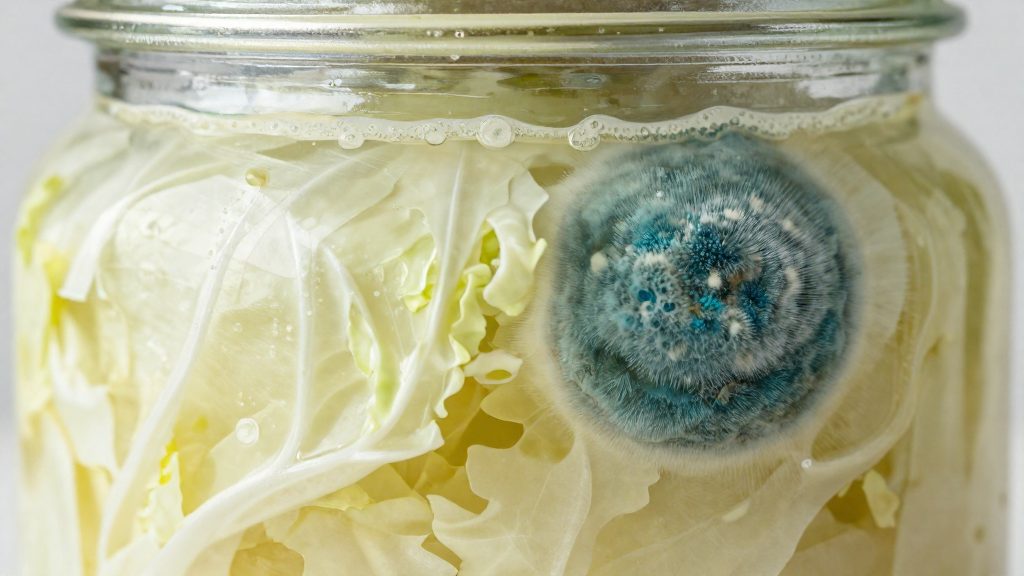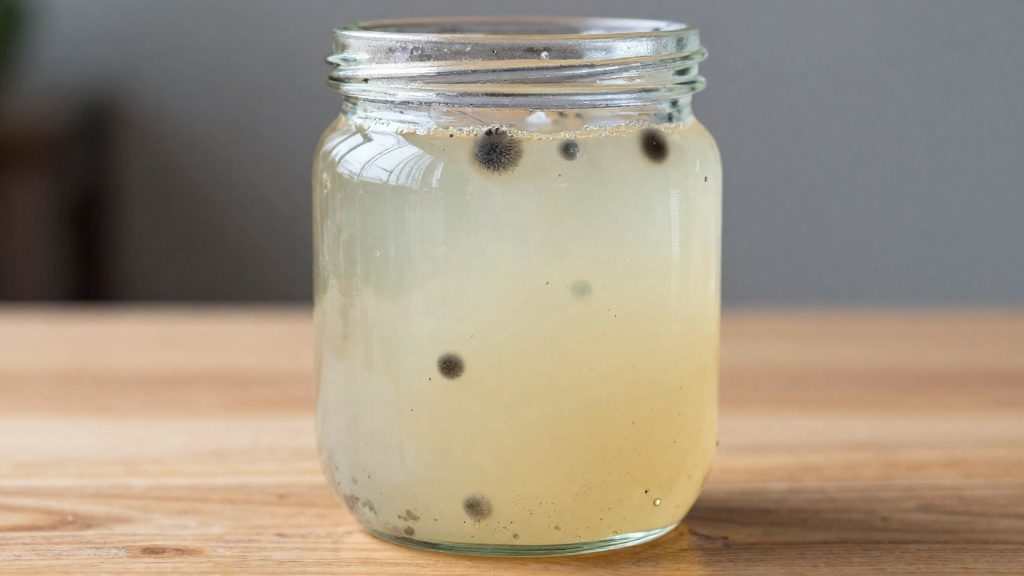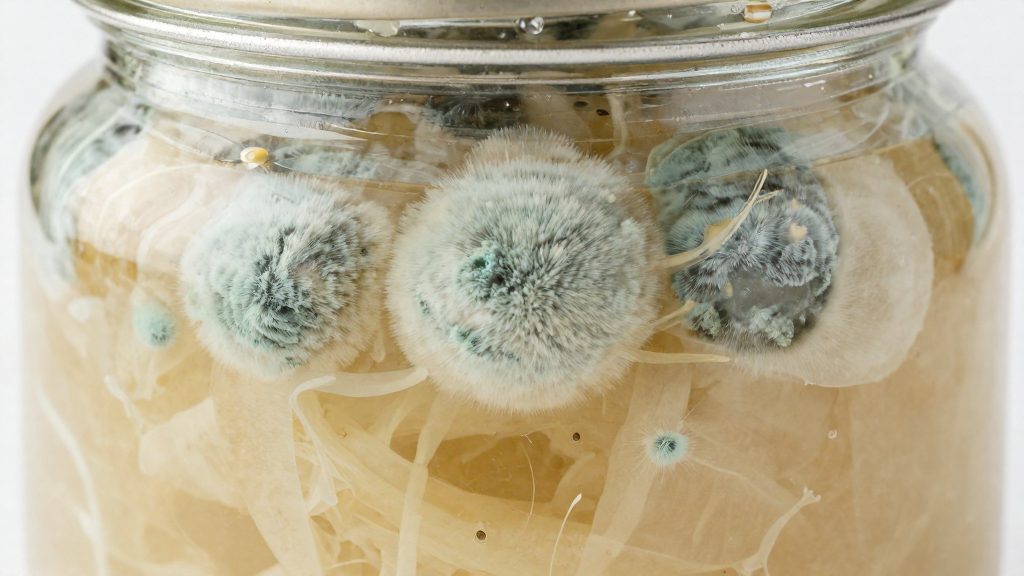
Whether moldy sauerkraut is safe to eat depends mainly on how much mold is visible and where it sits. According to the Oregon State University Extension Service, small mold patches on sauerkraut may be skimmed off, while large amounts of mold require discarding the batch. Mold usually forms on the surface in warm fermentation conditions, so the extent and position of surface growth are the first things to assess.
Is mold on sauerkraut safe to eat?
Why small patches and large growth get different responses
A small patch is a localized problem. The Oregon State University Extension Service says small mold patches may be skimmed off, and the rest of the batch can stay in its brine if no other discard sign is present. Large growth shows that the problem is no longer confined to one spot, and the Oregon State University Extension Service advises discarding the batch in that case. The reason lies in what mold does to the ferment. MakeSauerkraut.com (Holly Howe, 2024), a specialist publication, notes that mold can break down pectin and lactic acid. Lactic acid is the main preservative in a ferment, so the more mold present, the more of that protection may be lost. This is also why the specialist advises removing mold as soon as it appears.
Decision path: identify, judge extent, act
- Identify the growth. Decide whether it is flat kahm yeast or raised, fuzzy mold, and note the color (black, pink or orange means discard).
- Judge the extent. Note whether the growth is a small patch on the surface or a large amount spread across the batch. For rotten kraut, the Oregon State University Extension Service says to discard the rotten portions and that the unaffected portions are safe to consume. This does not override the mold and slime rules below.
- Check texture and smell. Slimy kraut indicates spoilage and should be discarded, and so should any ferment with an off smell, according to MakeSauerkraut.com (Holly Howe, 2024).
- Act on the result. Skim a small surface patch only if the mold is not black, pink or orange, the kraut is not slimy and it smells normal. Discard the batch when mold covers a large area, when the mold is black, pink or orange, when the kraut is slimy or smells off, or when you are unsure of its condition. The same specialist source advises discarding if you are unsure or sensitive to mold.
Mold or kahm yeast: how to tell
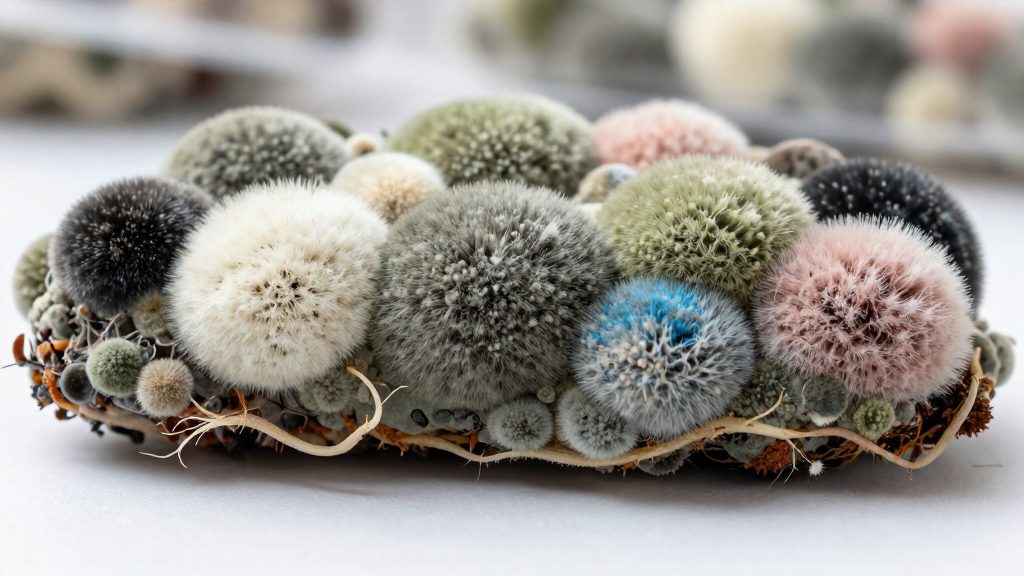
Two surface growths can appear on sauerkraut: kahm yeast and mold. They differ in texture, height and color, so check those three features before deciding anything.
| Feature | Kahm yeast | Mold |
|---|---|---|
| Texture | Thin, smooth film | Fuzzy growth |
| Height | Lies flat on the surface | Raised above the surface |
| Color | White to cream | White, black, blue, green or pink |
Surface texture and height are the first checks. Look at the top layer in daylight and tilt the jar slightly so you can see whether the growth sits flat or stands up. A flat, thin film points to kahm yeast. A raised, fuzzy growth points to mold.
Color comes second. A white-to-cream film is the typical kahm yeast appearance. Any black, blue, green or pink growth is mold, according to MakeSauerkraut.com (Holly Howe, 2024-08-29).
A practical sequence:
- Inspect the surface in good light before disturbing it.
- Note whether the growth is flat or raised.
- Look at the texture: thin film or fuzzy structure.
- Record the color of each patch, including any spots that differ from the rest.
- If the growth is raised or fuzzy, treat it as mold and assess it before taking any further step.
When to skim and when to toss
Some signs mean the whole batch goes, not just the affected part. According to MakeSauerkraut.com (Holly Howe, 2024), a specialist publication, ferments with black, pink or orange mold should be thrown out. The same publication says to discard any ferment with an off smell.
| Sign | Action stated in the sources |
|---|---|
| Black mold | Toss the ferment (MakeSauerkraut.com, 2024) |
| Pink mold | Toss the ferment (MakeSauerkraut.com, 2024) |
| Orange mold | Toss the ferment (MakeSauerkraut.com, 2024) |
| Any off smell | Toss the ferment (MakeSauerkraut.com, 2024) |
| Large amount of mold | Discard the batch (Oregon State University Extension Service) |
Telling mold apart from harmless growth matters before you decide. Kahm yeast is harmless but affects flavor. The specialist toss list does not name white, blue or green mold, so growth in those colors falls under the general rule below rather than a color-specific instruction.
Extension rules: small patches, large growth and slimy kraut
The Oregon State University Extension Service also treats texture as a separate warning sign. The first step is to check how much of the surface is affected and how the kraut feels underneath.
| Condition observed | Extension guidance | Action |
|---|---|---|
| Small mold patches on the surface | May be skimmed off | Remove the patches and keep the batch |
| Large amounts of mold | Requires discarding the batch | Discard the whole batch |
| Slimy texture | Indicates spoilage | Discard |
Texture is judged independently of mold. A batch can show only a small patch and still be slimy, and the Extension classifies slimy kraut as spoiled regardless of how little surface mold is visible. The guide sets no measurement for what counts as a “small” patch or “large” amount, so the judgement relies on visual assessment.
Why does mold grow on kraut?
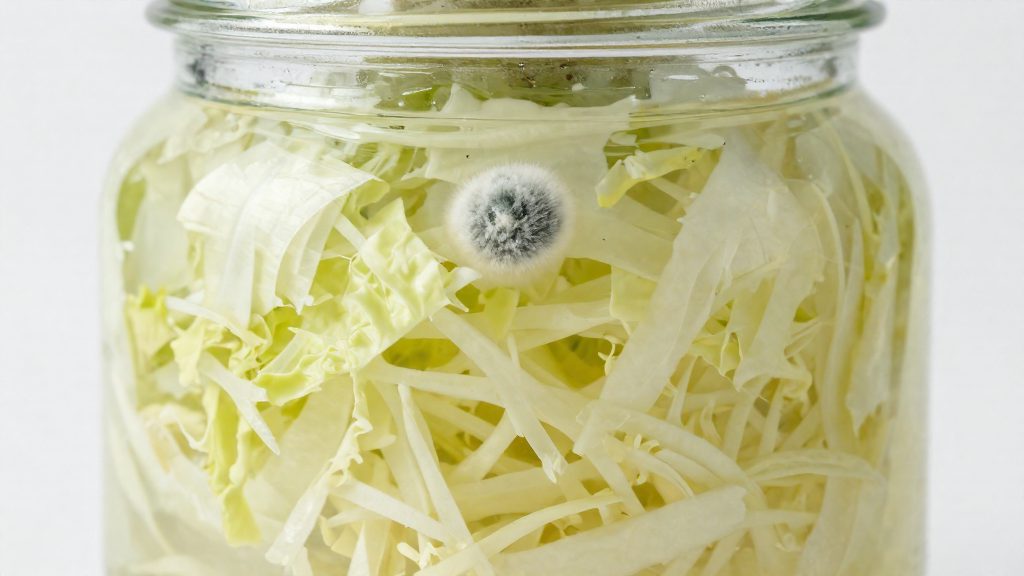
Mold on sauerkraut is driven by conditions that let surface organisms establish before the fermentation is well underway. Warm conditions favor surface growth, so a crock kept at elevated temperature is more likely to show mold at the top than one kept cooler. Mold usually appears on the surface in warm fermentation conditions, so where the first colonies show is a useful clue to what went wrong.
Oxygen access is the second factor. The Oregon State University Extension Service attributes white scum on top of kraut to weight on the cabbage and too little liquid to exclude air. When the top layer is not kept under liquid, it stays in contact with air, creating an exposed surface where aerobic organisms can grow. The same publication notes that this scum does not occur often and can be skimmed off.
Salt concentration is the third factor. MakeSauerkraut.com (Holly Howe, 2024-08-29) states that kahm yeast tends to appear when there is too little salt or the ferment is warm. This points to weak salt as a condition that favors film formation on the surface.
These three conditions often combine. Warmth, a partly exposed top layer, and low salt together give surface organisms the best opportunity to begin growing before the lactic acid fermentation takes over the batch.
How to prevent mold in a ferment
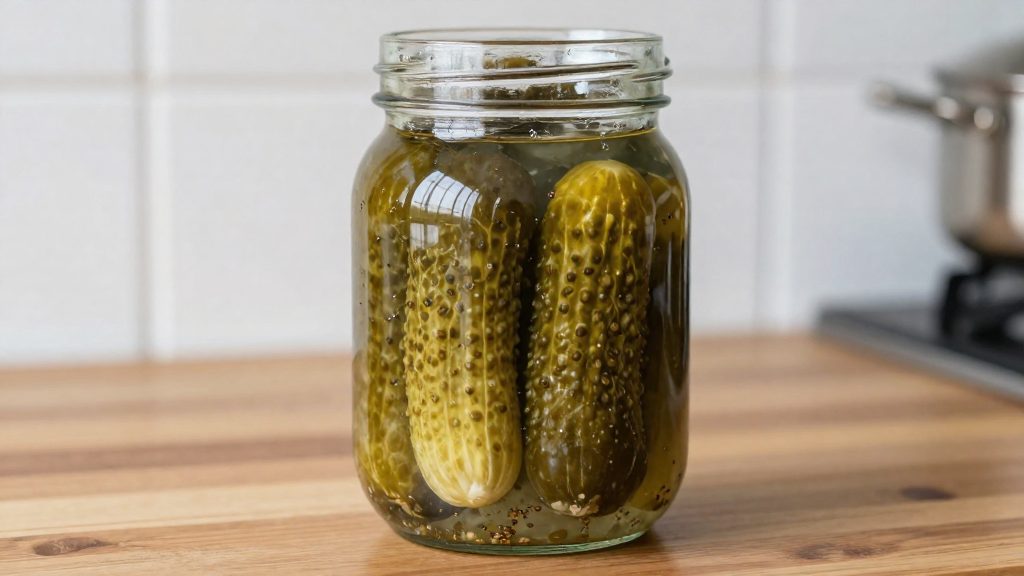
Prevention comes down to two things: keeping every piece of cabbage under brine, and limiting how much air reaches the surface. Mold needs air contact to establish itself, so the physical setup does most of the work.
Keep all cabbage under brine
- Submerge the shredded cabbage fully. Press the cabbage down as you pack it so the brine rises above the top layer.
- Use a weight. Place a clean, food-safe weight on top of the cabbage to hold it under the liquid. Any piece that floats above the brine is exposed to air and is the most likely starting point for surface growth.
- Top up the brine. If the level drops or the cabbage shows above the liquid, add brine made with the same salt concentration as your original batch. Do not add plain water, because that changes the salt ratio.
- Check the surface regularly. Lift the weight and look at the top layer during the fermentation period, and re-submerge any exposed pieces at once.
Salt ratio and temperature
The consulted sources do not specify a salt percentage or a temperature target for sauerkraut, so this guide does not give one. Use the salt ratio from a tested recipe and do not lower it casually.
On temperature, store the crock in a cool spot away from heat sources, such as a stove or a sunny window. For the exact range, check your recipe.
Cover and airlock choice
A lid or cover should keep cabbage below the brine and limit air exposure while still letting carbon dioxide escape. A fermentation crock with a water seal, or an airlock fitted to a jar lid, serves this purpose by allowing gas to leave without letting air back in. Use a lid that fits the vessel snugly and does not trap pressure. The consulted sources do not compare specific airlock or crock models, so any product choice should rest on how well it keeps the cabbage submerged and sealed.
Is the kraut under the brine still safe?
Kraut held below the brine line is the least exposed part of a batch. Cabbage that stays submerged is far less likely to be where growth starts.
In a partly exposed batch, the risk sits in the upper layer. Inspect the pieces at and above the brine line before deciding anything else. Distinguish kahm yeast from mold before acting. Only the raised growth calls for removal.
When part of a batch is affected, the handling depends on what is found:
- Rotten portions: cut them away. Oregon State University Extension Service states that the rotten portions should be discarded and that the unaffected portions are safe to consume.
- Unaffected kraut: keep it in the brine after removing the damaged pieces.
| Factor | Fully submerged batch | Partly exposed batch |
|---|---|---|
| Air contact | Limited, brine excludes air | Pieces above the brine line are exposed |
| Where mold usually forms | Lower risk, since mold typically forms on the surface | Upper layer, where exposed pieces sit |
| Action | Check periodically | Inspect the top layer, cut rotten pieces, keep unaffected kraut |
Check the batch whenever you open the crock.