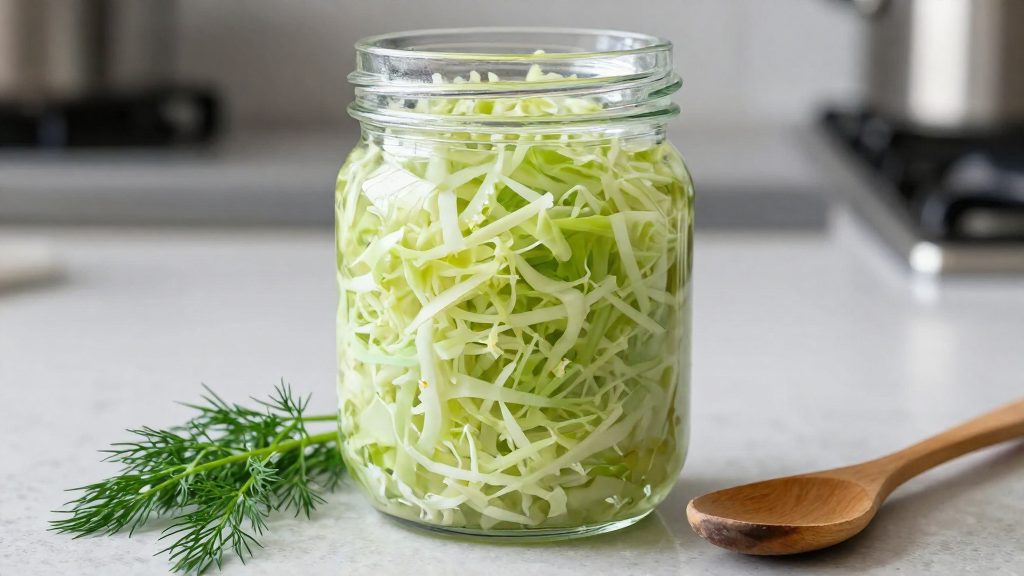
Yes. A sour, tangy or vinegar-like smell is a normal part of sauerkraut’s aroma. According to MakeSauerkraut.com (Kraut Source), a sour, vinegar-like, fresh or tangy smell is expected in sauerkraut. What matters is the intensity and the character of the smell. A mild sour note that sits alongside the cabbage’s own aroma is usually a sign of normal fermentation, while a harsh, sharp smell that dominates the jar calls for a closer look.
Is a vinegar smell in sauerkraut normal?
Sour and vinegar-like: the normal range
The sour note comes with the acidity that builds as the cabbage ferments. Clemson Cooperative Extension (HGIC) states that fully fermented kraut reaches a safe acidity of pH 4.6 or below, so souring is expected as the batch matures. That pH is a safety threshold, not a guide to smell. The word “vinegar” describes where the smell sits on the sour spectrum. It does not, on its own, mean the batch has spoiled.
Mild note versus harsh, sharp smell
| Smell | Classification (MakeSauerkraut.com (Kraut Source)) |
|---|---|
| Sour, tangy, fresh | Normal |
| Vinegar-like | Normal |
| Yeasty, beer-like or alcohol | Can point to kahm yeast |
| Truly putrid | Batch should be discarded |
A mild vinegar note stays in the background. You still notice the cabbage and the fresh, tangy character. A harsh, sharp smell stings the nose and overrides everything else. The source separates putrid smells from sulfur smells such as rotten egg, which it says are not the same thing. Judge a sulfur smell on its own terms rather than automatically treating it as putrid.
Sensory check: smell, taste, texture and colour
Work through these checks in order:
- Smell: Sniff the surface and the brine. Compare the aroma with previous batches you know were healthy.
- Taste: Only if the smell is not putrid and there is no mold, take a small taste. A sour, tangy flavor with the cabbage still present is consistent with normal fermentation. A flat or unpleasant flavour that does not match the rest of the batch warrants a second look.
- Texture: Kraut should feel crisp and firm. Slimy or mushy pieces suggest a problem, and the smell test alone will not reveal this.
- Colour: Look for an even colour through the cabbage. Patches that differ noticeably from the rest of the batch should be checked alongside the smell.
- Acidity: If you want a measured result, a pH meter or test strips can confirm acidity. This does not replace the sensory check.
Why does sauerkraut smell like vinegar?
A vinegar-like smell is normal in sauerkraut and comes from acetic acid, the compound that gives vinegar its sharp aroma. Acetic acid is made in two ways. Heterofermentative lactic acid bacteria produce it during fermentation, which needs no oxygen. Aerobic acetic acid bacteria also produce it by oxidizing ethanol, which does need oxygen. Knowing which step needs air explains why the smell is strongest near the surface of the crock.
Heterofermentative bacteria produce acetic acid directly
Early in fermentation, lactic acid bacteria dominate the crock. Heterofermentative bacteria, including Leuconostoc species that often lead the early stage of kraut fermentation, break down sugar into several products at once: lactic acid, acetic acid, ethanol and carbon dioxide. Because they release acetic acid during fermentation itself, no oxygen is required for this step. Batches with a larger share of these organisms carry more vinegar notes than batches where lactic acid bacteria convert nearly all the sugar.
Ethanol is oxidized to acetic acid by aerobic bacteria
The ethanol formed during fermentation is a precursor, not an end product. Aerobic acetic acid bacteria, such as Acetobacter species, oxidize ethanol into acetic acid, but only when oxygen is available. In fully submerged cabbage, oxygen is scarce, so this conversion stays limited. Once the cabbage is exposed to air, the conversion can speed up and the vinegar aroma becomes more noticeable.
Surface oxygen increases acetic formation
The top layer of kraut and any brine touching air is where oxygen reaches the ferment. This is where surface oxygen supports the aerobic step most, so the top layer often smells sharper than the core. The table below separates the two pathways by oxygen requirement.
| Pathway | Main organisms | Oxygen needed? | Product |
|---|---|---|---|
| Heterofermentation of sugar | Heterofermentative lactic acid bacteria | No | Acetic acid, ethanol, CO₂ |
| Ethanol oxidation | Aerobic acetic acid bacteria | Yes | Acetic acid |
Lactic acid vs. acetic acid: what is the difference?
Lactic acid and acetic acid both make fermented vegetables taste sour, but they differ in flavour, aroma and the microbes that produce them. In a typical sauerkraut ferment, lactic acid is the main acid. It is produced by lactic acid bacteria, mainly Lactobacillus species, and gives a mellow, clean tang that reads as fresh rather than harsh.
Acetic acid is the acid of vinegar. It is produced by heterofermentative lactic acid bacteria and, where oxygen is available, by acetic acid bacteria. It has a sharper, more pungent character. It hits the nose first and gives a biting sourness that is immediately recognisable as vinegar. Because it is more aggressive on the palate, even a small share of acetic acid can dominate the flavour of the kraut.
The two acids differ in the following ways:
| Characteristic | Lactic acid | Acetic acid |
|---|---|---|
| Typical producers | Lactobacillus and related lactic acid bacteria | Acetic acid bacteria (for example, Acetobacter) |
| Taste | Mellow, clean tang | Sharp, pungent bite |
| Aroma | Fresh, tangy | Vinegar-like, nose-stinging |
| Overall flavour | Rounded, balanced sourness | Harsh, dominant sourness |
Lactic sourness is perceived as rounded and lingers without a sharp edge. Acetic sourness registers faster and feels more abrupt, so the same total acidity can taste noticeably different depending on which acid carries it.
How temperature and time change the smell
Fermentation temperature sets how fast sauerkraut develops and how strongly its flavor shifts toward sharp and acidic. According to Clemson Cooperative Extension (HGIC), kraut fermented at 70–75°F is ready in about 3 to 4 weeks, but it contains more acid and less flavor. The same cabbage held at 60–65°F can take 5 to 6 weeks. Time and temperature therefore trade off against each other: a warmer room finishes sooner but pushes the taste toward the acidic end, while a cooler room gives a longer, slower ferment.
| Fermentation temperature | Time to ready (per Clemson) | Reported result |
|---|---|---|
| 60–65°F | 5 to 6 weeks | Slower ferment, longer wait before tasting |
| 70–75°F | About 3 to 4 weeks | Ready sooner, with more acid and less flavor |
| Above 75°F | Not specified by the consulted source | Kraut may become soft |
Reading the timeline
The ranges in the table are estimates, not stop signals. Start tasting once the minimum window for your temperature has passed. If your kitchen runs between 70 and 75°F, check the batch around week three. If it runs between 60 and 65°F, expect to wait at least five weeks before the batch is ready.
Texture at higher temperatures
Above 75°F, the main risk documented is texture. Kraut may soften, so warmth does not simply speed up a good batch. Keep the crock in the 60–75°F range to avoid that outcome while still keeping the ferment on schedule.
Is it kahm yeast or mold?
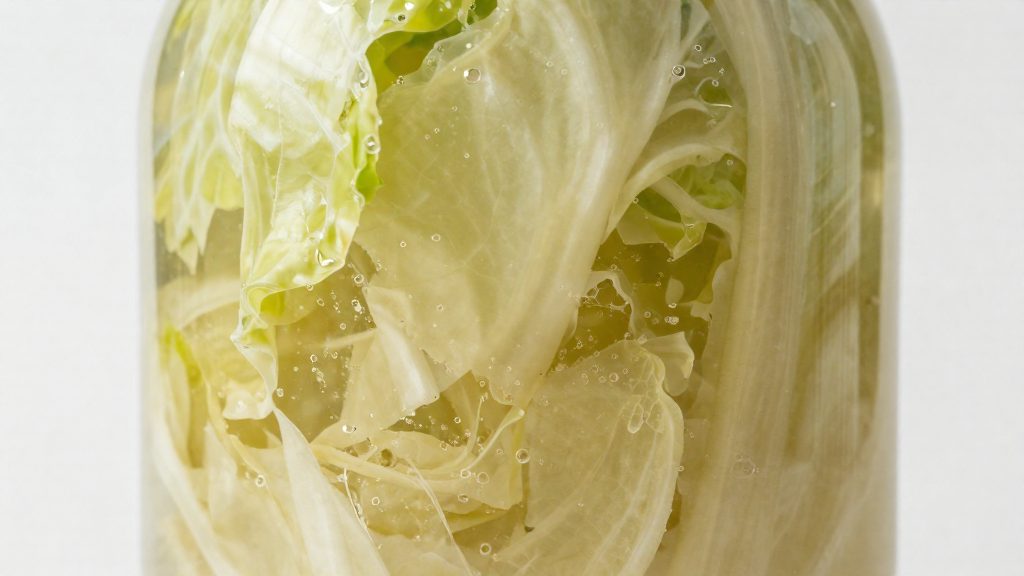
Kahm yeast and mold can both appear on the brine surface of a sauerkraut crock, but they differ in appearance, texture and smell. According to MakeSauerkraut.com (Kraut Source, a fermentation specialist site), a yeasty, beer-like or alcohol smell can point to kahm yeast, so smell is the first cue to check. Appearance and texture then confirm the diagnosis. Look at the surface in good light, and lift the weight or plate gently if you need a closer view.
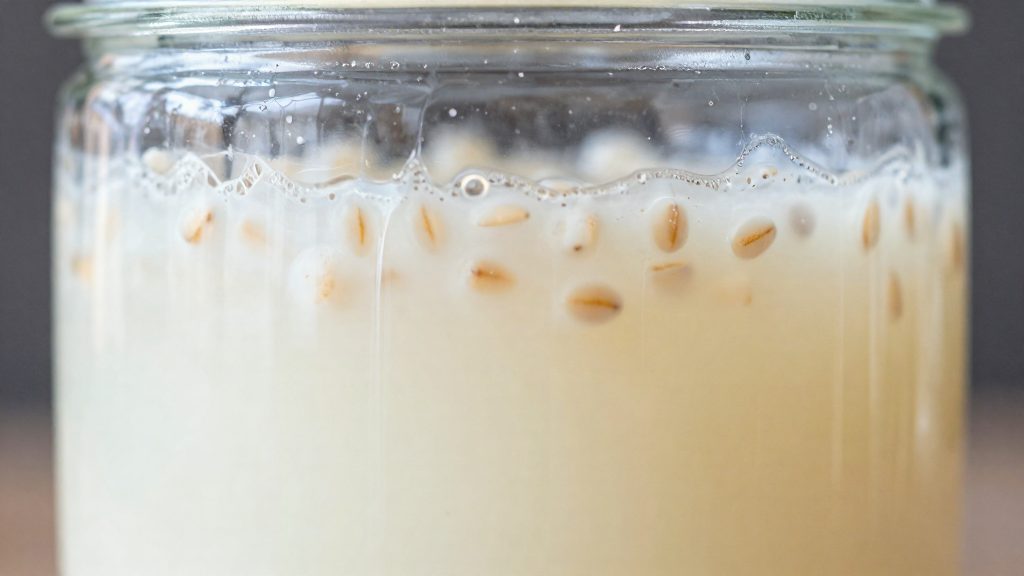
Kahm yeast forms a thin, white film that lies across the brine and wrinkles when it is disturbed or dries. It is usually even across the surface rather than clustered in spots. The smell is yeasty and similar to beer or alcohol, and the kraut itself should still smell sour or tangy. Sauerkraut is normally sour, vinegar-like, fresh or tangy, so a sour aroma on its own does not indicate kahm yeast.
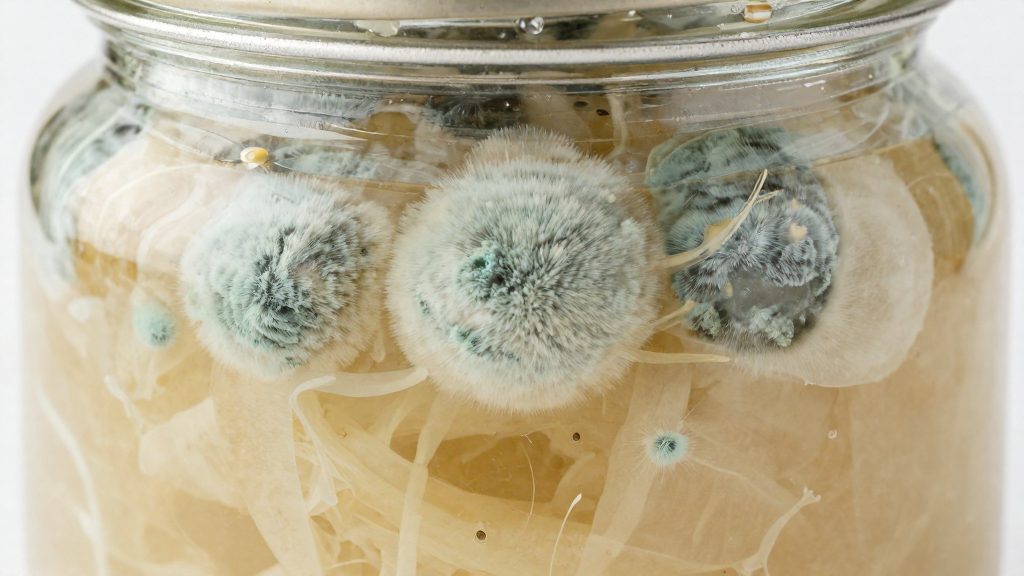
Mold looks different. It grows as fuzzy spots that stand above the surface rather than as a flat sheet. Mold can appear green, black or other colours, so any colored, raised, fuzzy patch should be treated as mold, not as kahm yeast. Do not scoop it off and keep eating the kraut. Discard the batch. Judge mold mainly by its appearance.
| Cue | Kahm yeast | Mold |
|---|---|---|
| Colour | White | Green, black or other colours |
| Form | Thin, flat film | Distinct fuzzy spots |
| Texture | Wrinkles when disturbed | Raised and fuzzy |
| Smell | Yeasty, beer-like or alcohol | Not stated |
When should you throw sauerkraut away?
Smell alone rarely settles whether sauerkraut is safe, so combine the type of odor with the acidity of the finished kraut and the other signs of spoilage. A putrid smell is different: according to MakeSauerkraut.com (Kraut Source, a fermentation specialist site), a truly putrid batch should be discarded.
Odors are easy to confuse, so the table below separates the main types.
| Smell | Classification in the consulted sources | Next step |
|---|---|---|
| Sulfur, such as rotten egg | Not the same as putrid | Check acidity and other signs |
| Putrid | Batch should be discarded | Discard the entire batch |
The consulted sources do not specify a discard rule for sulfur smells. Acidity alone cannot settle the question, so check pH together with texture, colour and any mold. If you are unsure, discard the batch.
Using pH 4.6 as the finish line
Measure the kraut with a calibrated pH meter or pH test strips. A reading above 4.6 means the batch has not yet reached the safe acidity level, so it is not finished.
Fermentation time varies with temperature, so the pH reading is a more reliable check than the calendar.
Salt and submersion: keeping the ferment on track
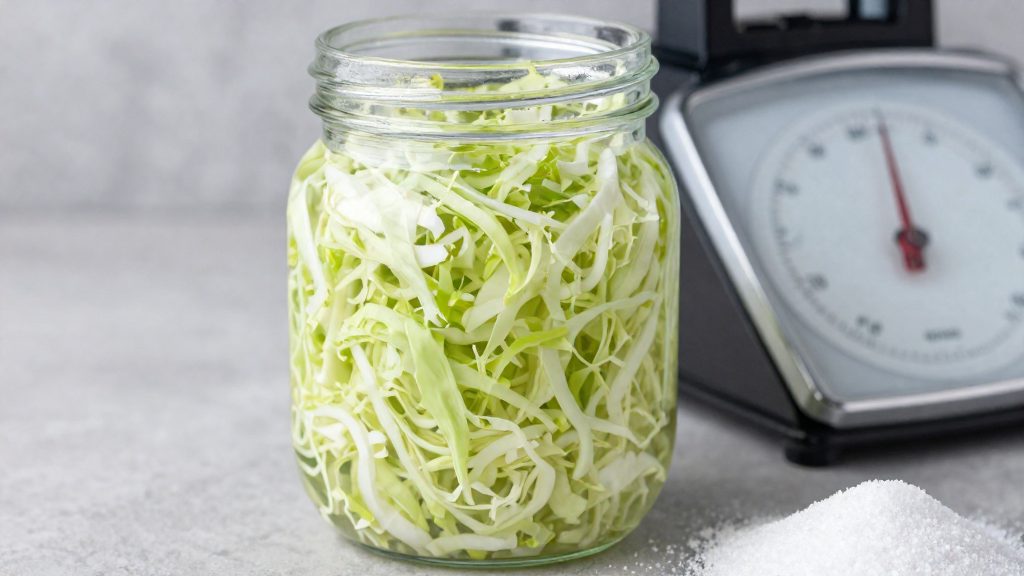
Salt and submersion are the two controls you set before fermentation starts. According to Clemson Cooperative Extension (HGIC), the recommended final salt concentration for sauerkraut is 2.25% to 2.5%. In practice, that works out to about 3 tablespoons of canning or pickling salt per 5 pounds of cabbage. Weigh your cabbage, then measure the salt against that weight rather than estimating by the head.
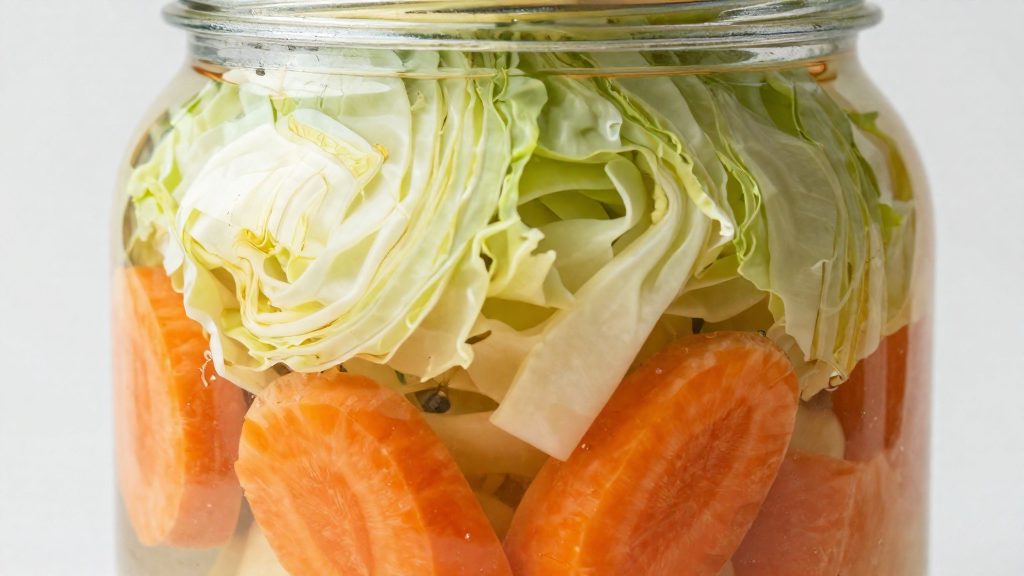
Keep the cabbage completely under brine. Clemson specifies 1 to 2 inches of brine covering the cabbage. Any shred that sits above the liquid is exposed to air, which is where scum and surface growth can develop. Press the cabbage down firmly in the crock or jar so the brine rises above it, and check the level each day.
If the juice drops below the cabbage, top it up with brine made from 1½ tablespoons of salt per quart of water. Mix the salt into the water until it dissolves before adding it. Do not top up with plain water, because that lowers the salt concentration of the whole batch.
Remove any scum that forms on the surface. Scum is a sign of surface growth, and skimming it off keeps the brine clean while the kraut ferments.
Weigh the salt and cabbage together, check brine depth daily, and top up with correctly mixed brine. These three steps keep the salt level and submersion within the ranges above, which is the baseline Clemson sets for a safe ferment.
| Control | Value | Source |
|---|---|---|
| Final salt concentration | 2.25% to 2.5% | Clemson Cooperative Extension (HGIC) |
| Salt per 5 lb cabbage | About 3 tablespoons canning or pickling salt | Clemson Cooperative Extension (HGIC) |
| Brine above cabbage | 1 to 2 inches | Clemson Cooperative Extension (HGIC) |
| Top-up brine | 1½ tablespoons salt per quart of water | Clemson Cooperative Extension (HGIC) |
Frequently asked questions
Does a warmer room make my sauerkraut smell more vinegar-like?
Temperature changes how fast the batch souring progresses. According to Clemson Cooperative Extension (HGIC), kraut fermented at 70–75°F is ready in about 3 to 4 weeks but carries more acid and less flavor, while kraut at 60–65°F takes 5 to 6 weeks. A sharper smell in a warm batch is therefore more likely to reflect a faster, more acidic ferment than a fault.
How do I tell a vinegar smell from kahm yeast?
A vinegar-like or sour smell is classed as normal, whereas a yeasty, beer-like or alcohol smell can point to kahm yeast, according to MakeSauerkraut.com (Kraut Source). The two aromas differ in character, so check whether the smell is sharp and acidic or yeasty and boozy. Kahm yeast often appears as a thin white film on the surface, which is a visual cue to look for alongside the aroma.
What should I do if the smell turns rotten or sulfurous?
MakeSauerkraut.com (Kraut Source) advises discarding a batch with a truly putrid smell, but it treats sulfur smells such as rotten egg as a separate category. For sulfur smells, judge the batch by its overall intensity and by any mold or off-colour areas rather than by smell alone.