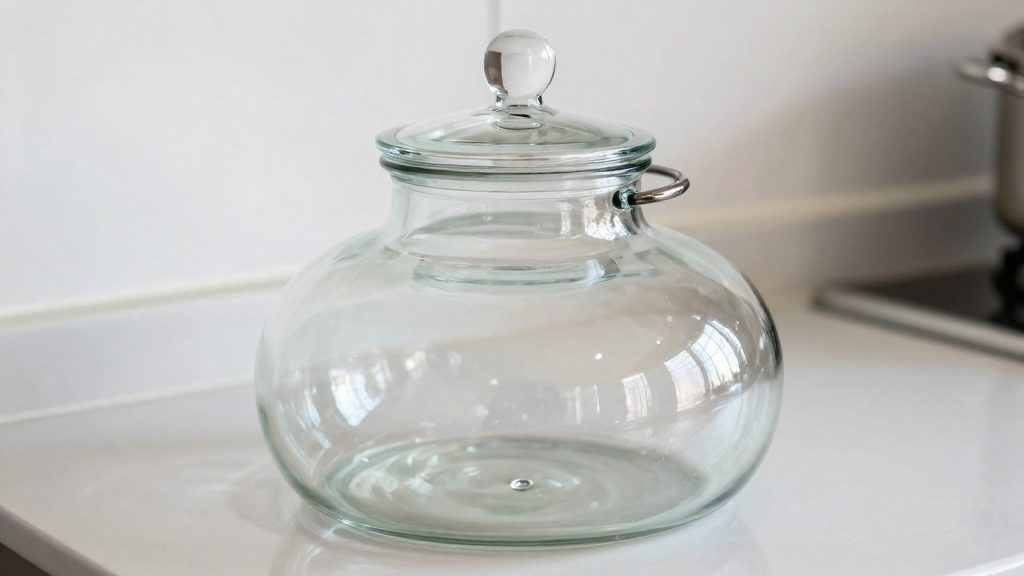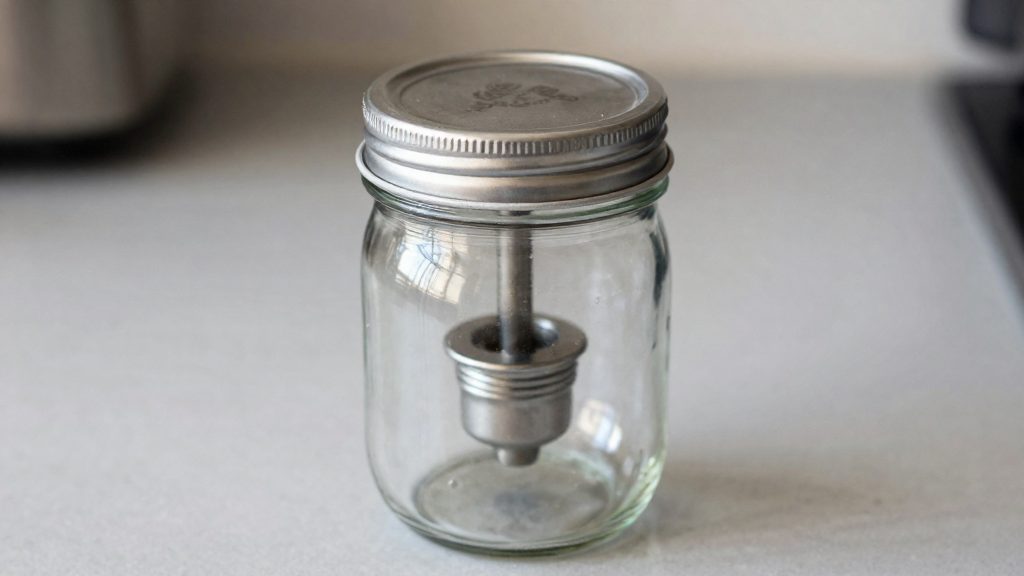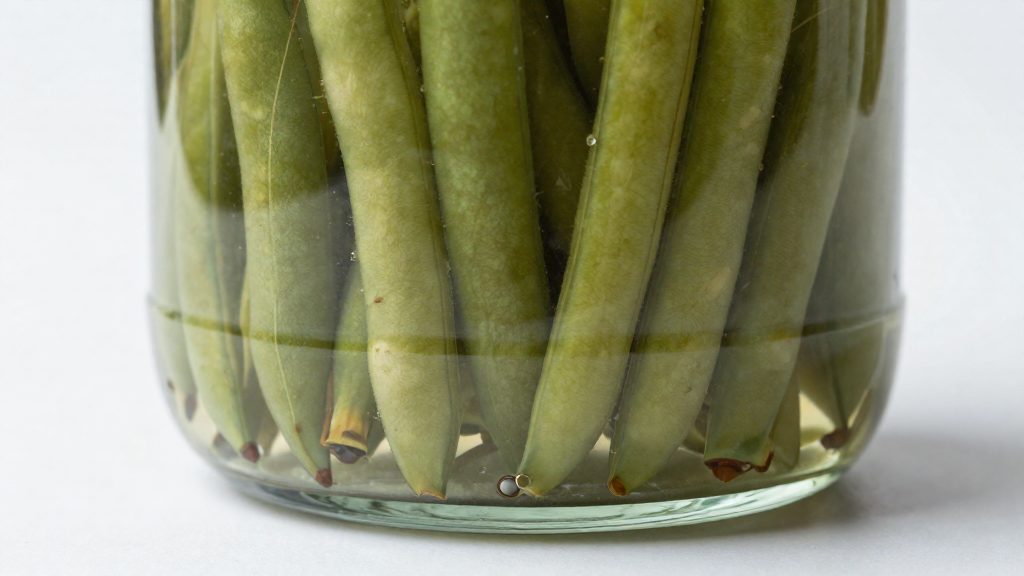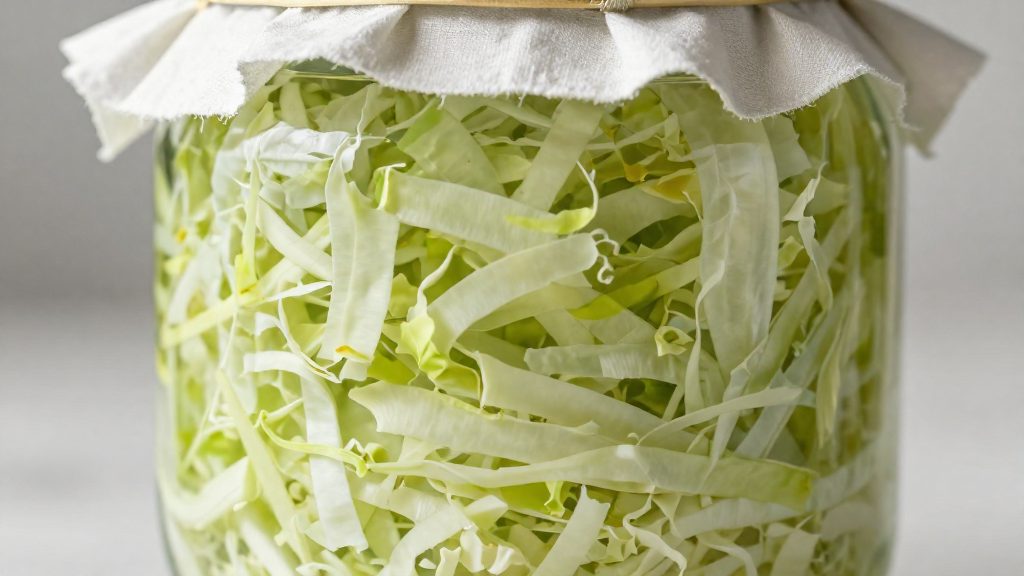
Not strictly, but the cabbage must stay below the brine surface. According to Clemson Cooperative Extension (HGIC) (2026), the cabbage should remain fully submerged to limit air exposure and favor lactic acid bacteria. A weight is the simplest way to hold shreds under the liquid, but the source lists specific options: a heavy plate or glass lid that fits inside the container, a sealed jar of water, or a double plastic bag filled with brine.
Do You Really Need a Weight to Ferment Cabbage?
Keeping the cabbage under brine matters more than the specific tool. According to Clemson Cooperative Extension (HGIC) (2026), the cabbage should be covered by 1 to 2 inches (about 2.5 to 5 cm) of brine. Shredded cabbage floats and releases liquid, so it needs holding down throughout the fermentation.
The extension service lists these options for keeping cabbage submerged:
| Option | How it is used |
|---|---|
| Heavy plate or glass lid | Sits directly on the cabbage and must fit inside the container |
| Sealed jar filled with water | Set on top of the plate or lid to add weight |
| Double plastic bag filled with brine | Placed on top of the cabbage; the brine-filled bag conforms to the container opening |
When a jar serves as the weight, scum forms on the surface and must be removed. The extension service also notes that if the juice does not cover the cabbage, you can add brine made by boiling salt in water and letting it cool, using 1½ tablespoons of salt per pint of water. This brine top-up is the step to use when weights alone leave the cabbage exposed.
Why Cabbage Must Stay Under the Brine
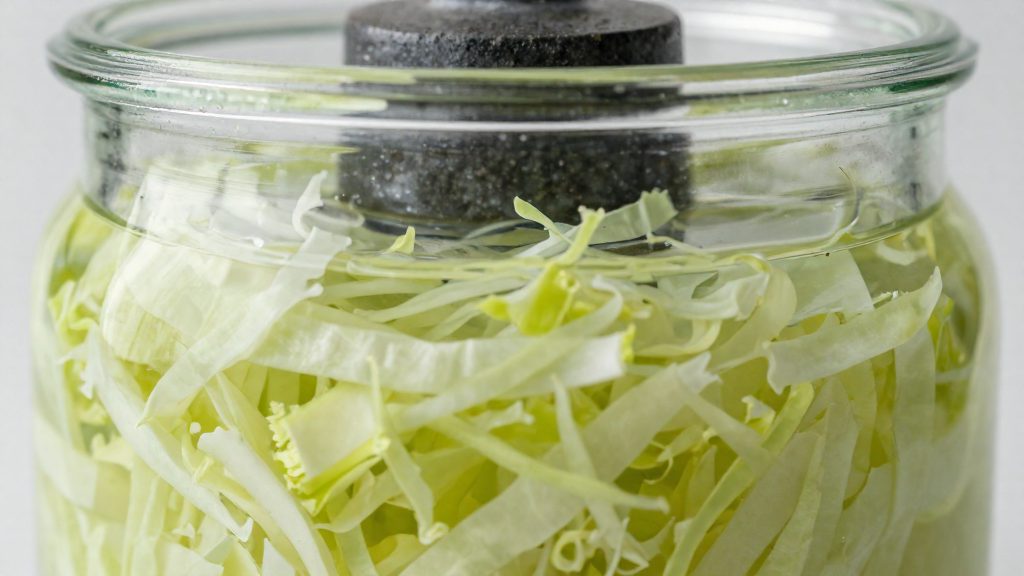
Cabbage has to remain fully submerged in its brine for the whole fermentation. According to Clemson Cooperative Extension (HGIC) (2026), submersion limits air exposure and favors lactic acid bacteria, the microorganisms that carry out the fermentation. The cabbage should be covered by 1 to 2 inches of brine. Keeping the vegetable below the liquid surface is the purpose of every weighting method, and a weight is only useful if it holds the cabbage down through the whole process.
Weighting methods
Clemson Cooperative Extension (HGIC) (2026) describes the following options for keeping cabbage under the brine:
| Method | How it is used |
|---|---|
| Heavy plate | Placed directly on the cabbage, sized to fit inside the container |
| Glass lid | Fits inside the container and presses the cabbage down |
| Sealed jar of water | Set on top of a plate or glass lid for extra weight |
| Double plastic bag of brine | Filled with brine and pressed onto the surface |
| Jar used as a weight | Filled and placed on the cabbage, with scum removed as it forms |
Topping up the brine
If the cabbage does not release enough juice to cover itself, add brine rather than leaving pieces exposed. Clemson Cooperative Extension (HGIC) (2026) gives the ratio of 1½ tablespoons of salt per pint of water. Boil the water with the salt, let the solution cool completely, then pour it over the cabbage until the 1-to-2-inch layer is restored.
Skimming when jars act as weights
When a jar serves as the weight, foam forms on the brine surface. Clemson Cooperative Extension (HGIC) (2026) advises removing this scum.
Which types of weights to choose?
Cabbage must stay fully submerged in brine during fermentation. According to Clemson Cooperative Extension (HGIC) (2026), the cabbage should sit under 1 to 2 inches of brine. This limits contact with air and favors the lactic acid bacteria that drive the ferment. A weight is only useful if it keeps the shreds below the liquid surface for the whole fermentation, not just during the first hours.
The source lists three common options:
| Weight | Details from the source |
|---|---|
| Heavy plate or glass lid | Must fit inside the container and rest directly on the cabbage |
| Sealed jar filled with water | Can be placed on top of the plate or lid for extra downward pressure |
| Double plastic bag filled with brine | Filled with brine and placed on top of the cabbage |
The brine top-up is a separate fix. If the liquid does not cover the cabbage, add brine that has been boiled and then cooled, made at 1½ tablespoons of salt per pint of water. The top-up brine is a separate preparation from the base salting. The base recipe uses 3 tablespoons of canning or pickling salt for 5 lb of cabbage, giving a final concentration of about 2.25 to 2.5%. The top-up brine follows its own ratio of 1½ tablespoons of salt per pint of water.
When you choose a weight, favor one that keeps the cabbage submerged without trapping gas or forcing liquid out of the container. Check the level daily during the first days, since the cabbage releases liquid as it wilts and the brine level can drop.
Can You Ferment Cabbage Without Weights?
Yes, but only if something else keeps the cabbage under the liquid. Cabbage must stay fully submerged in brine to limit air exposure and favor lactic acid bacteria. According to Clemson Cooperative Extension (HGIC) (2026), the cabbage should be covered by 1 to 2 inches of brine. A heavy plate, a glass lid that fits inside the container, or a brine-filled double plastic bag can take the place of a purpose-built fermentation weight.
Options listed by Clemson Cooperative Extension (HGIC) (2026) include:
- A heavy plate or a glass lid that fits inside the container, optionally topped with a sealed jar filled with water.
- A double plastic bag filled with brine, placed on top of the cabbage.
If you use a jar as the weight, remove the foam that forms on the surface during fermentation.
If the juice does not cover the cabbage, add more brine. Boil a salt solution, cool it, then use 1½ tablespoons of salt per pint of water. For the base recipe, Clemson Cooperative Extension (HGIC) (2026) uses 3 tablespoons of canning or pickling salt for 5 lb of cabbage, giving a final concentration of about 2.25 to 2.5%.
Temperature sets how long the cabbage ferments. The optimal range is 60 to 70°F (15 to 21°C), per Clemson Cooperative Extension (HGIC) (2026):
| Fermentation temperature | Approximate time |
|---|---|
| 60–65°F | About 5 to 6 weeks |
| 70–75°F | About 3 to 4 weeks |
Below 60°F, fermentation may not start. Above 75°F, the sauerkraut can turn soft.
How much salt and brine?
According to Clemson Cooperative Extension (HGIC) (2026), the standard recipe uses 3 tablespoons of canning or pickling salt for 5 lb of cabbage, giving a final salt concentration of about 2.25 to 2.5%. The salt is measured against the cabbage weight, not the volume of the crock, so the same ratio applies whether you ferment a small batch or a large one. Use the salt type the recipe specifies, because the ratio is calibrated for it.
Cabbage releases its own juice as it is salted and pounded, but that juice does not always cover the shreds. When it falls short, the extension recommends a top-up brine made by boiling salt in water, cooling it, and adding it until the cabbage is covered. The ratio is 1½ tablespoons of salt per pint of water. Let the brine cool completely before adding it, so the cabbage is not heated.
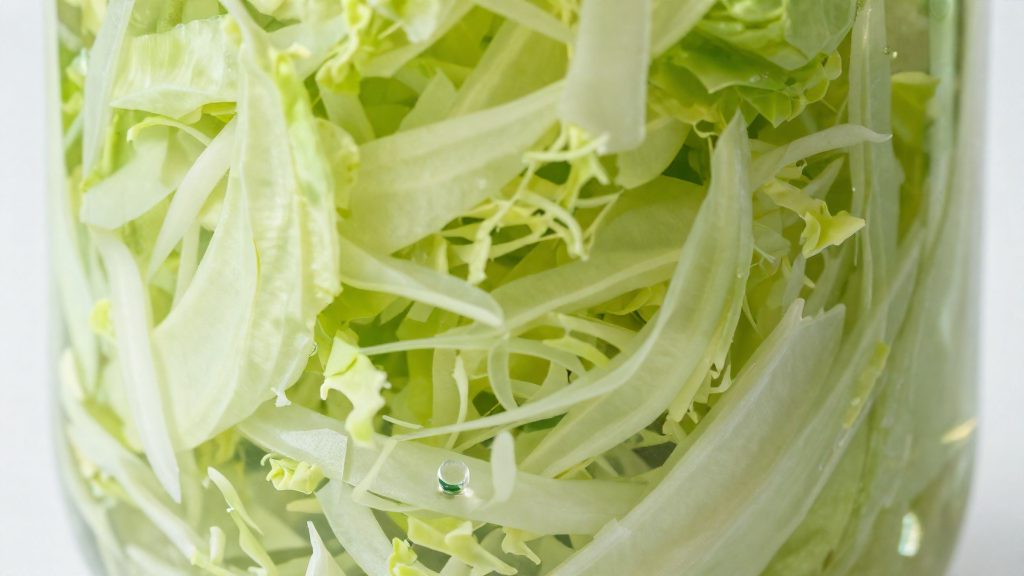
The cabbage must stay below the liquid surface throughout fermentation. Keeping the shreds submerged limits contact with air and favors lactic acid bacteria over other microbes. The table below summarizes the three brine figures.
| Parameter | Value | Use |
|---|---|---|
| Dry salt, standard recipe | 3 tbsp per 5 lb cabbage | Base salting step |
| Resulting salt concentration | About 2.25 to 2.5% | Target final concentration |
| Top-up brine | 1½ tbsp salt per pint of water | Added when juice does not cover the cabbage |
| Submersion depth | 1 to 2 inches of brine above the cabbage | Target liquid level |
Temperature and Fermentation Time
Room temperature sets how long cabbage takes to ferment. According to Clemson Cooperative Extension (HGIC) (2026), the optimal range for sauerkraut is 60 to 70°F (15 to 21°C). Within that range, the warmer the room, the shorter the fermentation. Temperature also affects the finished texture, so it matters for the result as well as the timing.
Temperatures outside the optimal range cause specific problems:
- Too cold: Below 60°F, fermentation may not start.
- Too warm: Above 75°F, sauerkraut can become soft.
The source gives approximate durations for two bands, shown below. It does not specify a time for 65 to 70°F, so check the jar regularly in that range and judge by taste, smell, and bubbling activity.
| Room temperature | Approximate fermentation time |
|---|---|
| Below 60°F | Fermentation may not start |
| 60 to 65°F | About 5 to 6 weeks |
| 70 to 75°F | About 3 to 4 weeks |
| Above 75°F | Sauerkraut may become soft |
To hold a steady temperature, place the crock away from heat sources such as ovens, radiators, and sunny windows, and away from cold drafts near exterior doors. A stable spot matters more than a precise setting, because sudden swings slow the process and make the timeline harder to predict.
What to Do About Scum or Mold
Scum is the most common surface problem in cabbage fermentation, and the Clemson Cooperative Extension (HGIC) guidance (2026) gives a clear response: remove it. The same source notes that scum forms when a jar is used as the weight, so check the surface regularly and skim off any film that appears. Keeping the cabbage fully submerged is the main preventive step, because the source states that the cabbage must stay under the brine to limit air and favor lactic acid bacteria.
If the brine level drops, the source recommends a brine top-up. When the juice does not cover the cabbage, add brine made by boiling salt in water and letting it cool, using 1½ tablespoons of salt per pint of water. Then press the vegetables back under the surface and reset the weight so the cabbage is covered by 1 to 2 inches of brine.
Temperature also affects the result. The source gives 60 to 70 °F (15 to 21 °C) as the optimal range. Above 75 °F (24 °C), sauerkraut can turn soft, so a warm kitchen is a reason to move the crock to a cooler spot.
| Situation | Action supported by the source |
|---|---|
| Scum forms on the surface | Remove it, especially when a jar serves as the weight |
| Juice does not cover the cabbage | Add cooled boiled brine at 1½ tablespoons salt per pint of water |
| Cabbage is exposed above the brine | Re-submerge it under the weight |
| Room is above 75 °F (24 °C) | Move the crock to a cooler place, since kraut may soften |
The Clemson source gives no instructions for mold, so this article cannot say how to deal with it. Do not assume mold can be treated like scum, and do not scrape it off and keep eating the batch. Skimming is advised only for the scum that forms when a jar is used as the weight. If you see anything other than ordinary scum, do not eat the batch until you have checked current official food-safety guidance for Canada. When in doubt, throw it out.
Frequently asked questions
Does the weight have to stay in place for the whole fermentation?
Yes. According to Clemson Cooperative Extension (HGIC) (2026), shredded cabbage floats and releases liquid, so it must stay submerged throughout fermentation, not only at the start. If pieces rise above the brine later on, press them back under and reset the weight so the cabbage remains covered by 1 to 2 inches (about 2.5 to 5 cm) of brine.
What should I do if something other than ordinary scum appears on the surface?
Skimming applies only to the scum that forms when a jar is used as the weight. Anything else should not be eaten until it has been checked against current Canadian food-safety guidance, and when in doubt, discard the batch.
Is the top-up brine the same strength as the base brine?
No. The top-up ratio given by Clemson Cooperative Extension (HGIC) (2026), 1½ tablespoons of salt per US pint (about 473 mL) of water, works out to roughly 5% salt. That is about twice the final 2.25 to 2.5% concentration of the base recipe, so use the top-up brine only to cover cabbage that a weight leaves exposed.