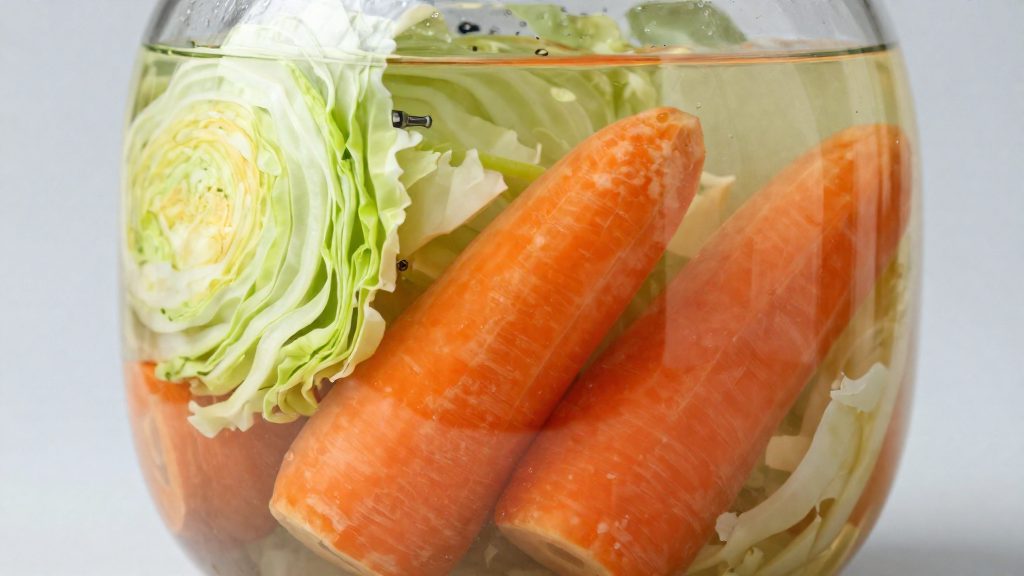
Botulism is a serious illness, sometimes fatal, caused by a toxin produced by C. botulinum bacteria. Home fermenters pay attention to it because fermentation vessels can share conditions that C. botulinum needs, and because most fresh vegetables fall into the low-acid category that Health Canada identifies as a risk group. The sections below cover the illness itself, why vegetables are the concern, how symptoms appear, and who is most exposed.
Why botulism worries home fermenters
What the illness is
Botulism is caused by a toxin released by C. botulinum, not by the bacteria acting directly on the body. Health Canada (2026) describes it as a serious illness that can be fatal, which is why even low-probability exposure receives close attention in home food preparation.
Why vegetables fall into the concern zone
Health Canada (2026) defines low-acid foods as those with a pH above 4.6, and notes that most fresh vegetables, except tomatoes, fall into this group. Extension, a US university Cooperative Extension publication, states that a fermentation should bring the pH below 4.6 as fast as possible.
The concern is tied to whether acidification happens in time, not to fermentation as a practice.
How symptoms present
Symptoms usually appear 12 to 36 hours after eating contaminated food. Health Canada (2026) lists the following:
| Category | Symptoms |
|---|---|
| Common early symptoms | Nausea, vomiting, fatigue, dizziness, headache |
| Vision and throat | Double vision, dry throat and nose |
| Serious outcomes | Respiratory failure, paralysis, death |
Who faces the highest risk
Health Canada (2026) identifies the following higher-risk groups:
- Pregnant people
- Children under 5
- Adults over 60
- People with weakened immune systems
Anyone in these groups should treat botulism as a more serious possibility, because the same exposure can lead to more severe outcomes.
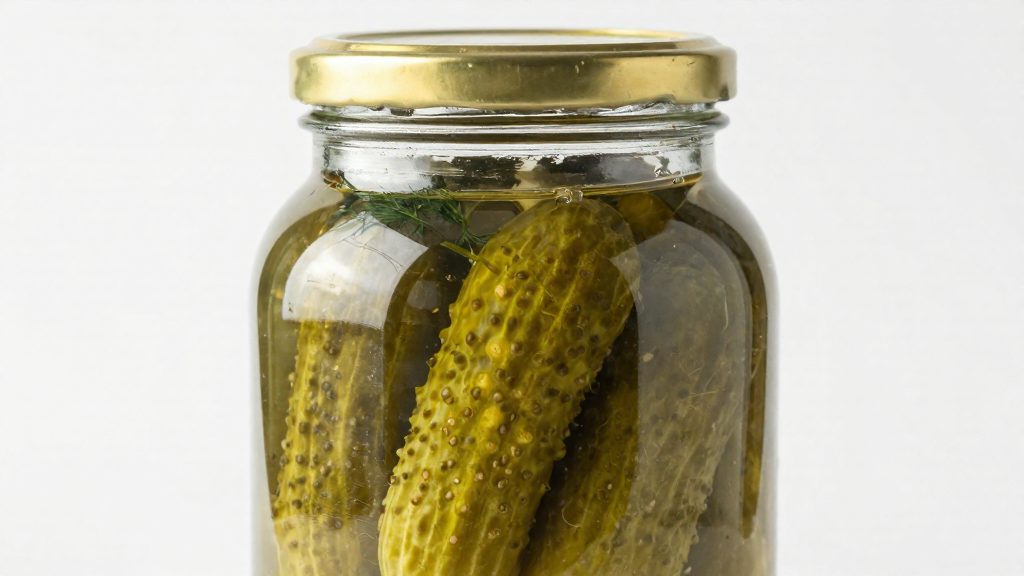
Can lacto-fermented vegetables really cause botulism?
Lacto-fermented vegetables carry botulism risk only when the process is done incorrectly. A University of Alberta food microbiologist, Gänzle, states that properly done vegetable fermentation poses no food safety hazards. The risk therefore depends on whether a ferment creates the conditions the toxin needs, not on fermentation as a method.
What proper technique looks like
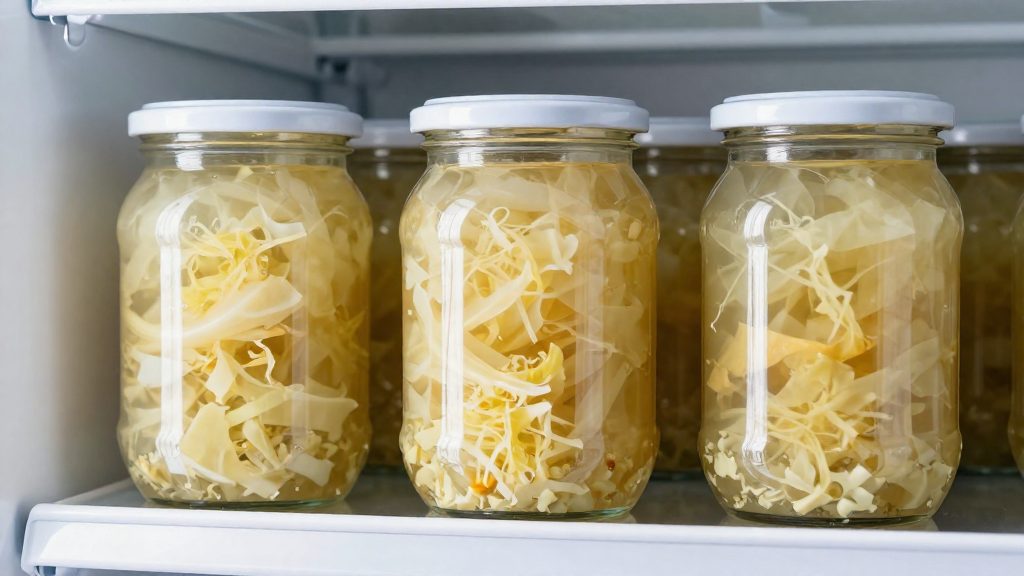
Gänzle describes the standard practice: vegetables are packed tightly into jars of salted water. The vegetables stay packed and submerged in this liquid, and the fermentation is allowed to run its full course.
Where the risk comes from
Shortcuts that leave the toxin-forming conditions in place are the real hazard. One risky shortcut is relying on salt alone. A ferment that does not acidify keeps the conditions the toxin needs.
Why a normal appearance is not a safety signal
Health Canada (2026) notes that the toxin does not change a food’s colour, smell or taste. A jar can look and smell normal and still be unsafe, which is why sensory checks cannot confirm safety.
What conditions let C. botulinum grow?
Botulism comes from a toxin made by C. botulinum bacteria, and the toxin forms only when the bacteria find the right environment. Health Canada (2026) describes these bacteria as growing in moist, oxygen-free conditions. The Extension network (US university Cooperative Extension) names four conditions needed for toxin formation: anaerobic conditions, pH above 4.6, temperatures above refrigeration, and high water activity. These conditions act together, so removing one can block or slow toxin formation even when the others are present.
Oxygen-free (anaerobic) conditions
Anaerobic conditions are the first requirement. C. botulinum grows without oxygen, so a sealed or submerged environment with little air exposure favours its growth. A jar of vegetables held under brine has far less oxygen than an open bowl, which is why the oxygen-free condition is relevant to fermentation vessels.
pH above 4.6
pH above 4.6 is the second requirement. Health Canada (2026) defines low-acid foods as those with a pH above 4.6, and most fresh vegetables except tomatoes fall into that group. Extension states that a fermentation should bring the pH below 4.6 as fast as possible. Acid production is therefore the step that removes this condition, and the speed of acidification determines how long a batch stays in the range where toxin formation is possible.
Temperatures above refrigeration
Temperatures above refrigeration are the third requirement. Keeping a food cold slows or prevents growth, while any temperature above refrigeration allows it to proceed. A ferment kept at room temperature is in a range where growth is possible if the other conditions also hold.
High water activity
High water activity is the fourth requirement. Moist foods provide the water the bacteria need, and vegetables fermented in liquid brine are moist throughout. Water activity is a measure of the water available for microbial growth, not the total amount of water in a food.
| Condition | What it means | Relevance to vegetable ferments |
|---|---|---|
| Oxygen-free | Little or no air exposure | Vegetables held submerged in sealed or weighted vessels |
| pH above 4.6 | Low-acid conditions, before pH has fallen below 4.6 | Fresh vegetables start low-acid, so acid production must bring pH below 4.6 |
| Above refrigeration | Room or warmer temperatures | Standard fermentation temperatures fall in this range |
| High water activity | Moist, water-rich food | Brined vegetables remain moist throughout |
Why salt alone does not make a ferment safe
Salt shapes how a ferment behaves, but it cannot be relied on as a safety measure. Salt alone does not stop C. botulinum.
Why salt alone is not enough
Salt does not kill the bacteria that cause botulism. Its role is to shape which organisms dominate the jar. By slowing spoilage organisms, it gives the desired fermenting organisms room to work. The Extension network notes that salt helps these organisms work faster and produce acid, so the outcome depends on acid production, not on the salt itself.
Salt and acid production: the ratio matters
The ratio of salt to vegetables determines how quickly acid builds up. Too little salt can leave the batch without enough control over competing organisms, while the correct ratio supports rapid acid production. Because the sources do not specify a target figure, the practical approach is to weigh the salt against the weight of the vegetables rather than estimating by eye. Recording the ratio for each batch makes results comparable from one ferment to the next.
Cabbage versus other vegetables
Cabbage has enough water of its own, so it needs only dry salt. Other vegetables are packed in jars of salted water.
| Vegetable type | Liquid source | Salt form |
|---|---|---|
| Cabbage | Its own water | Dry salt only |
| Other vegetables | Added salted water | Dissolved in water |
How do you keep vegetables safely submerged?
Keeping every piece under the brine is the main physical control in a vegetable ferment. Because the aim is to limit air exposure, the way you pack, weight, and top up the jar matters as much as the brine itself.
Weighting the vegetables below the brine
Vegetables float or drift upward as they release gas and liquid, so a weight holds them under the surface. Options commonly used in home fermentation include:
- Food-safe glass weights sized to a wide-mouth jar
- Ceramic weights that sit inside a fermentation crock
- A plate or flat lid that covers all pieces, with a weight placed on top
Choose a weight that fits the opening and covers the entire surface of the vegetables.
Tight packing to exclude air
Tight packing is the second control. Pressing pieces firmly reduces the air pockets between them.
Topping up the brine when the level drops
As a ferment settles, the liquid level can fall and leave pieces exposed. Check the jar regularly and add brine of the same salt strength, rather than plain water, which would dilute the salinity your recipe depends on.
| Method | Suited to | What to confirm |
|---|---|---|
| Glass weight | Wide-mouth jars | Every piece stays under the liquid |
| Ceramic weight | Fermentation crocks | Weight fits inside the opening |
| Plate and weight | Large batches in crocks | Plate covers all pieces |
| Self-brining cabbage | Sauerkraut | Enough released water to cover |
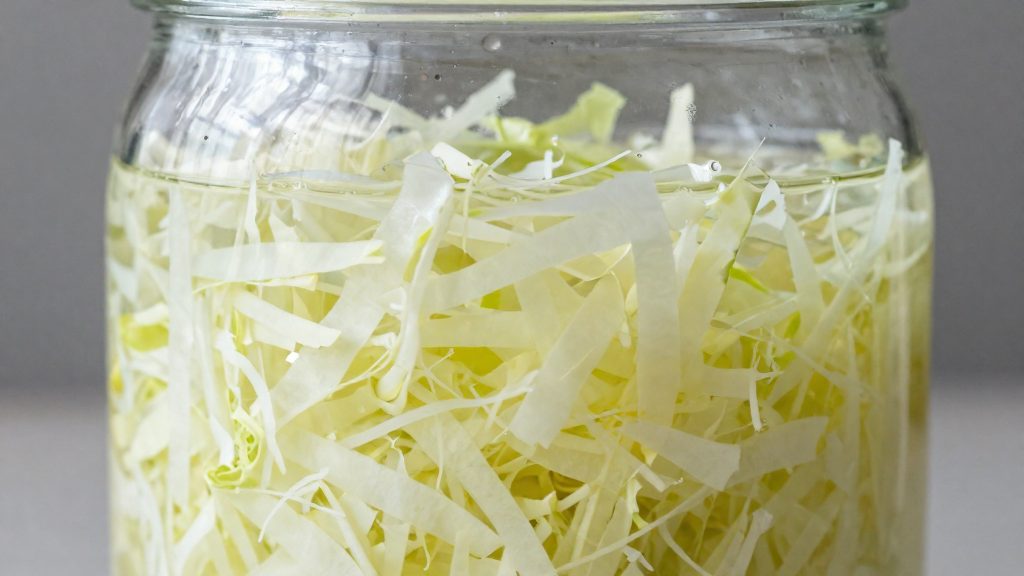
How do you know your ferment has reached a safe pH?
You confirm a safe pH by measuring it. The target is a pH below 4.6. A reading below 4.6 is the practical check on whether a batch has left the low-acid range.
Choosing a test tool
Two tools are commonly used for home fermentation:
| Tool | How it gives a reading | What to check before use |
|---|---|---|
| pH test strips | Colour change compared against a printed chart | Follow the packaging instructions and compare the colour under consistent lighting |
| Calibrated digital pH meter | Electrode produces a numeric value on a display | Calibrate the meter before taking readings |
Choose one tool and use it the same way each time.
Calibrating a digital meter
A calibrated digital meter must be checked against reference solutions as the manufacturer’s manual directs. Use the buffer solutions named in the manufacturer’s manual, rinse the electrode between samples, and never record a reading from an uncalibrated meter. Follow the manual for storage and recalibration frequency.
Tracking the trend across readings
A single reading shows only where the ferment stands at that moment. Take readings at intervals and compare them. A falling trend toward and below 4.6 shows the fermentation is progressing as intended. A reading that stays above 4.6 means the target has not been reached, and the batch needs closer attention.
Salt does not replace the reading. A pH below 4.6 is the target, but it is one check among several: keep every piece submerged, follow the method, and discard the batch if you have any doubt.
Which ferments need extra caution?
The main concern is low-acid vegetables. Green beans are a typical example. A brine that does not bring their pH below 4.6 leaves them in the range where toxin formation can occur, provided the other conditions are also present.
A submerged ferment in a sealed vessel can meet the oxygen-free and high-moisture conditions, so the speed of acidification matters more than the presence of salt. A ratio used for cabbage should not be assumed to transfer to green beans.
Fermented hot sauces form a second group. Most fresh vegetables other than tomatoes are low-acid, so a chilli mash that contains garlic, onion or other non-tomato vegetables should be treated as low-acid until its pH is measured below 4.6. Judge the acidity of the finished blend, not of its main ingredient.
| Ferment | Factor that raises risk |
|---|---|
| Green beans and other low-acid vegetables | pH above 4.6 at the start of fermentation |
| Hot sauces with low-acid additives | Added garlic, onion or non-tomato vegetables raise the blend’s pH |
| Garlic in oil | Low acidity (pH above 4.6), an oxygen-limited environment, and room-temperature storage |
When should you throw it out?
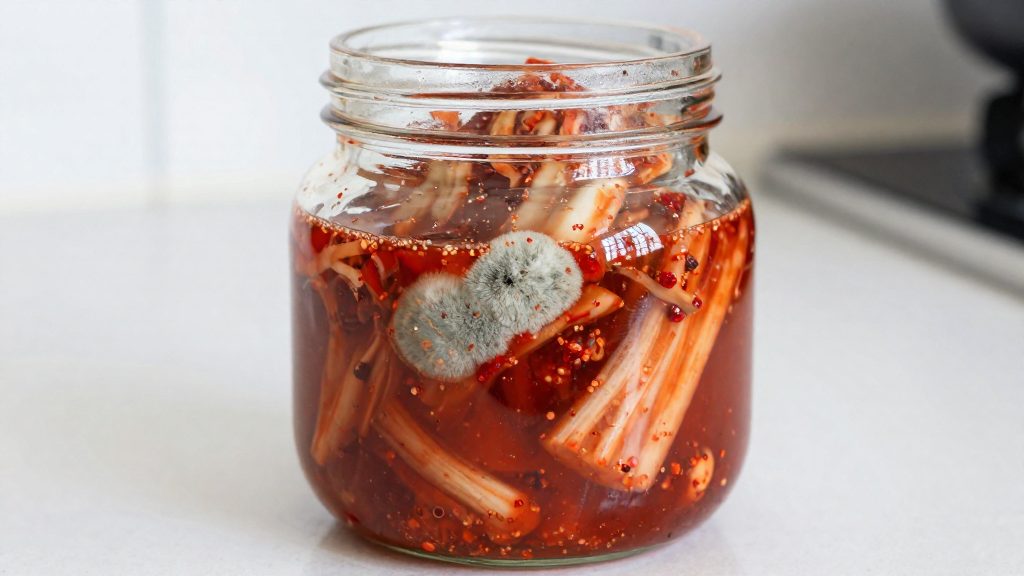
Health Canada (2026) gives one rule for suspect food: When in doubt, throw it out! Discarding a doubtful jar costs only the vegetables.
Why sensory checks cannot settle the question
Sensory signs are the checks most home fermenters rely on, but none of them detects the toxin.
| Check | Shows whether toxin is present? |
|---|---|
| Colour | No |
| Smell | No |
| Taste | No |
Decision rules for discarding a batch
- Discard any batch you are unsure about. This applies whether the doubt comes from the process, the container or the batch’s history.
- Treat non-tomato vegetable ferments as low-acid until proven otherwise. A vegetable batch you cannot show has reached the acidity needed should be treated as suspect.
- Look at the process, not just the jar. Doubt usually points to a departure from the method, so a batch with a known process lapse should be discarded.
When to seek medical care
Seek medical attention immediately if you or anyone who ate the food develops symptoms, because botulism is a medical emergency. Do not wait to see whether they pass. Tell the clinician that the food was home-fermented, so the suspect batch can be identified.
Frequently asked questions
Why is garlic in oil a botulism concern if it is not fermented?
Garlic is a low-acid food with a pH above 4.6, so the concern comes from its low-acid status, not from any lack of acidity. Stored in oil at room temperature, garlic in oil creates an oxygen-limited environment that can favour toxin formation.
What should I do if someone who ate a home ferment develops symptoms?
Seek emergency medical care immediately, and do not wait to see whether the symptoms pass. Symptoms can take 12 to 36 hours to appear, so a delayed onset does not rule out botulism as the cause.
Is there a safe salt percentage for a vegetable brine?
Extension notes that salt alone does not stop C. botulinum, so use a tested recipe from a reliable source and confirm the pH rather than relying on salt quantity.