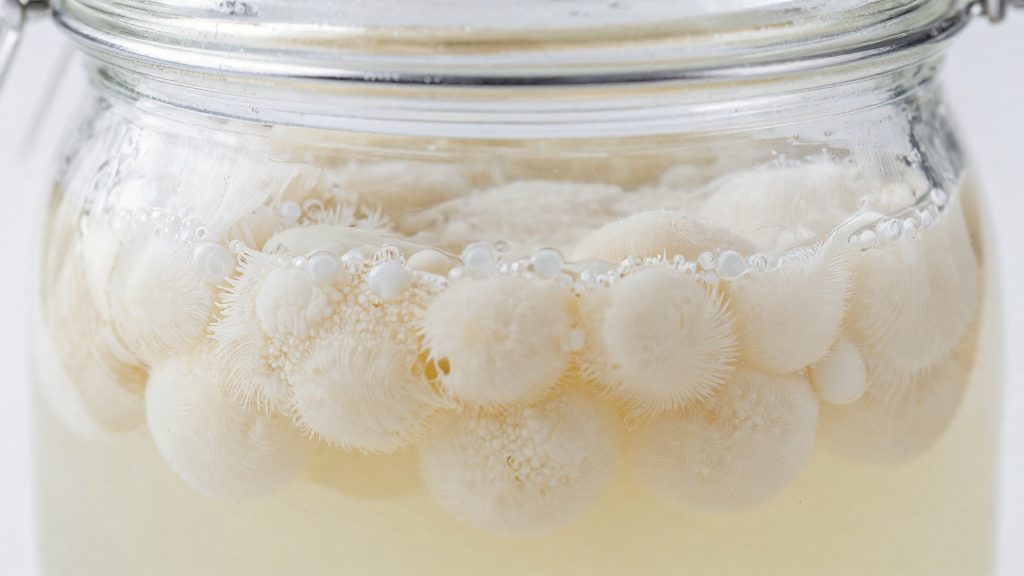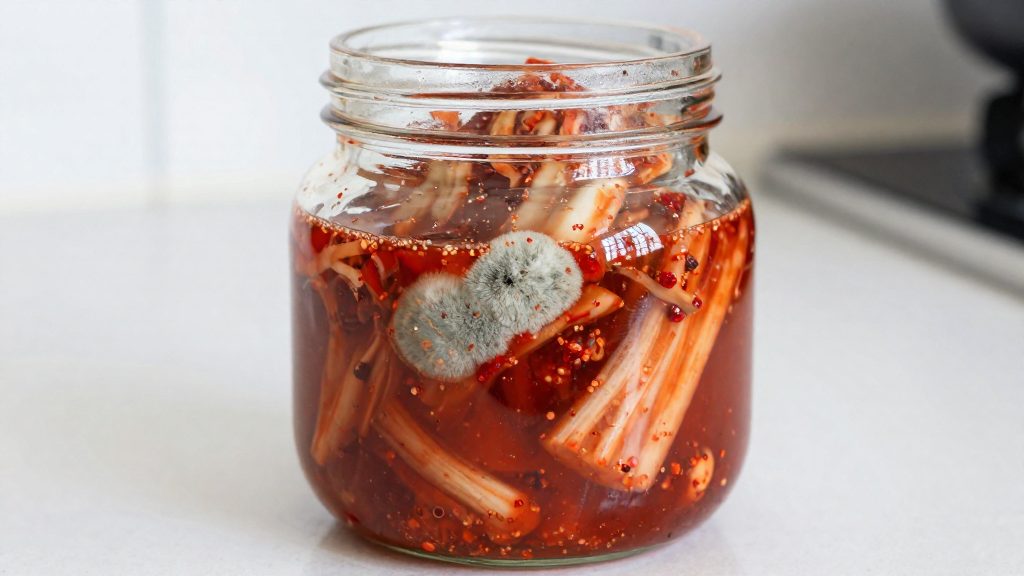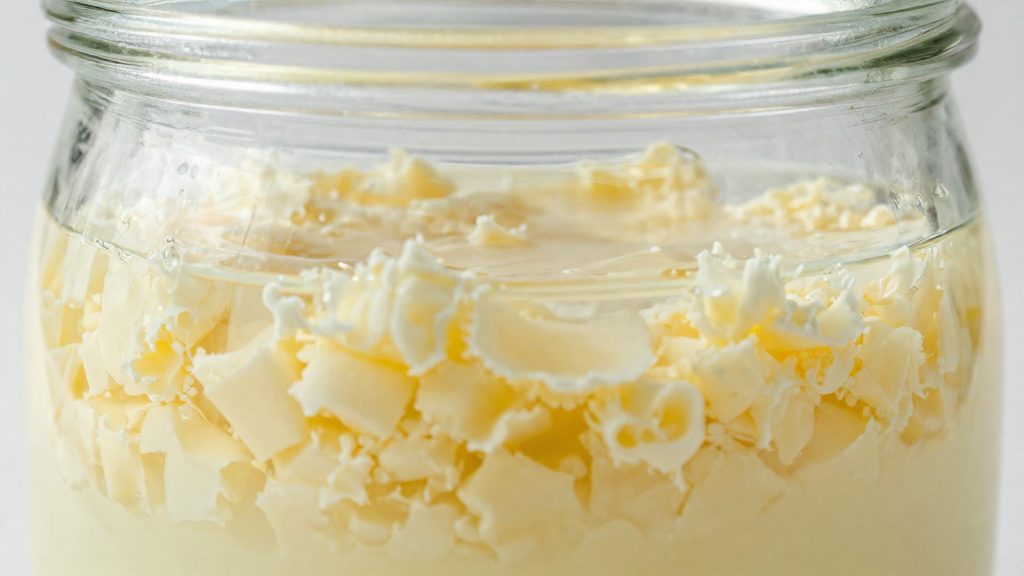
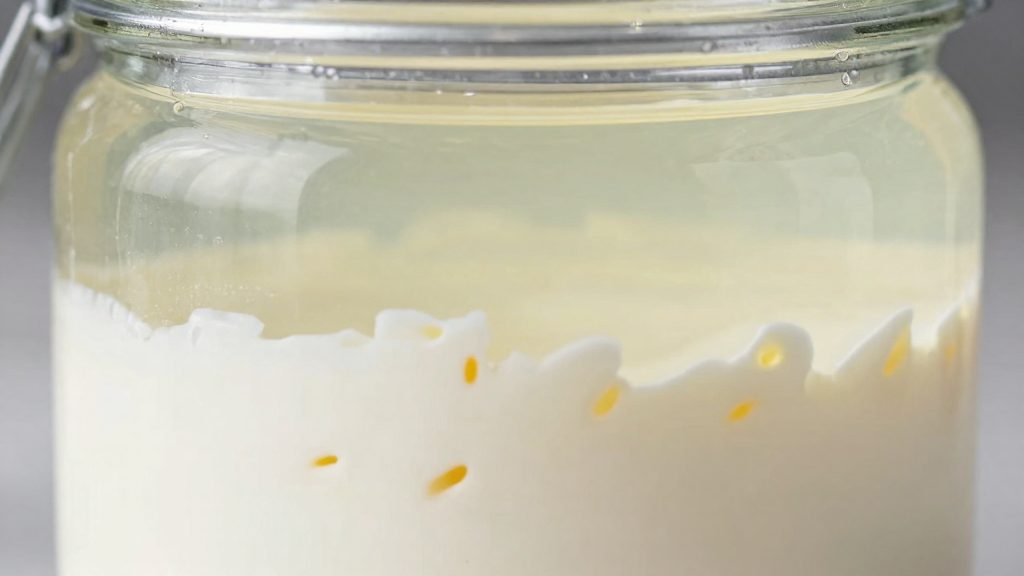
Separated kefir typically shows two distinct parts in the jar: clumped curds and a thinner liquid, the whey. According to Cultures for Health (2022-06-23), this split is usually a sign of over-culturing, meaning the grains sat in milk for too long. The split looks alarming, but the source describes it as a fixable state, not a finished product. The sections below describe the two layers, the texture of the separated milk, how to tell over-culturing from mold, and what to do next.
What does separated kefir look like?
Curds and whey layers in the jar
Over-cultured kefir can split into a mass of curds and whey. The curds are the thickened milk solids that clump together, and the whey is the thinner liquid that separates from them. Because the two parts sit apart, the jar no longer looks uniformly thick from top to bottom.
To read the layers, hold the jar at eye level and note where the clumps sit relative to the liquid. Do not shake it first, because the untouched layers show how the batch separated.
Texture and colour of separated milk
| Part | Texture | What to note |
|---|---|---|
| Curds | Lumpy, clumped mass | Size of clumps and whether they hang together |
| Whey | Thin, watery liquid | How easily it runs when the jar is tilted |
Compare the batch with a previous, well-cultured batch made with the same milk and grains to judge any change in appearance.
Telling separation apart from normal settling
Curds and whey with no colour change point to over-culturing, while coloured spots, pink milk or coloured grains point to possible mold (see the mold section below).
Why does kefir separate?
Kefir separates when the milk ferments past its normal endpoint. The grains and their bacteria and yeasts convert lactose into lactic acid, and as acidity rises, milk proteins coagulate. The result is a split into solid curds and whey. According to Cultures for Health (2022-06-23), separation usually means the grains have sat in milk too long, a state called over-culturing.
The main driver is elapsed time. Kefir left at room temperature keeps fermenting after it is ready, so the longer the grains stay in the milk, the more acid accumulates until the proteins can no longer stay suspended. Cultures for Health also notes that over-cultured kefir commonly develops a strong yeast or cheese smell and a tangier flavour than usual, which indicates the same process has gone further than intended.
Several conditions change how quickly this happens:
| Factor | Effect on separation | Basis |
|---|---|---|
| Time left in milk | Longer contact means more acid and a higher chance of curds forming | Cultures for Health (2022-06-23) |
| Fermentation temperature | Warmer surroundings speed up microbial activity, so the milk reaches the over-cultured stage sooner. | General fermentation principle |
| Grain-to-milk ratio | More grains in the same volume of milk ferment faster. | General fermentation principle |
Timing is the variable a home fermenter can check most directly. Tasting the kefir at intervals during fermentation shows how quickly a given setup is progressing, and the time that produces the desired tang under your conditions becomes the reference point for future batches.
Is kefir safe after it separates?
According to Cultures for Health (2022-06-23), separated kefir can be consumed as long as it smells and tastes okay. The verdict depends on how the kefir smells and tastes.
Cultures for Health’s sensory acceptance criterion
The supplier’s test has two parts, and both must pass:
| Check | Acceptable according to Cultures for Health |
|---|---|
| Smell | The kefir smells okay |
| Taste | The kefir tastes okay |
The judgement rests on whether the kefir is still pleasant and recognisable.
Why separation alone does not indicate spoilage
Separation on its own does not trigger a discard decision under this criterion. A separated batch can still be used if it shows no mold or colour change on the surface, in the milk or on the grains, and it also smells and tastes okay.
Limits of sensory checks for harmful bacteria
Smell and taste are useful for detecting obvious off-flavours, but they cannot confirm the absence of harmful bacteria. A passing sensory check means the kefir meets the supplier’s sensory criterion. It does not mean the kefir has been tested for microorganisms.
Signs of mold or spoilage
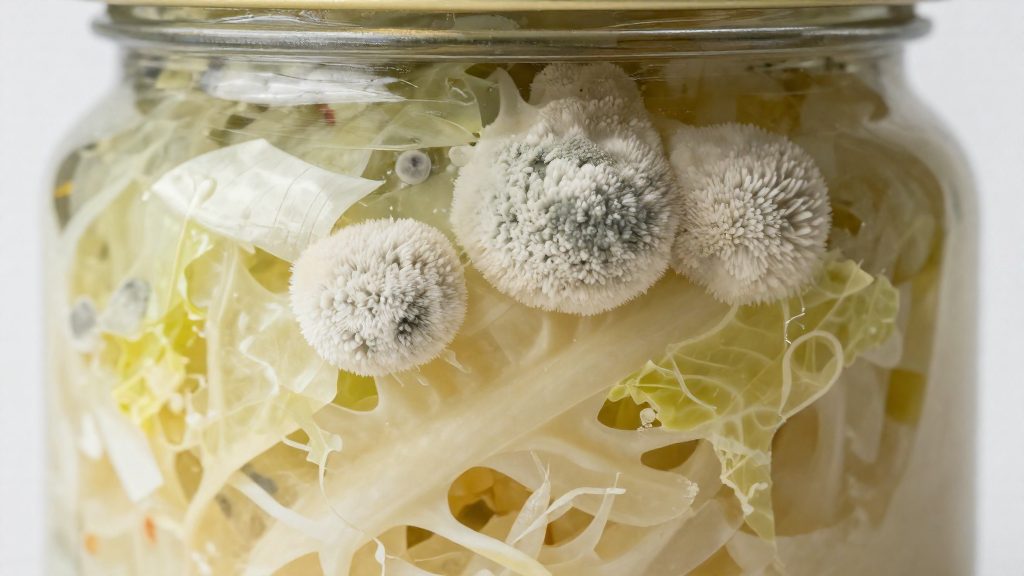
According to Cultures for Health (2022), mold on kefir usually shows up as surface spots or a pink discoloration of the milk, so visual inspection is the first check. Over-culturing has a different pattern, and telling the two apart depends on looking at the colour before relying on smell.
Visual markers
| Marker | What to look for | What it indicates |
|---|---|---|
| Surface spots | White, green, orange, red or black spots on top of the kefir | Possible mold |
| Pink discoloration | Pink tint in the milk | Possible contamination |
| Grain colour | Grains turning pink, orange, red, green or black | Grains may be contaminated |
Check the surface in good light and look at the grains separately, since colour changes on the grains are easy to miss when they sit under the liquid.
Odour and flavour markers
The yeast, cheese, and tangier-flavour signs do not, by themselves, identify mold, so read them alongside the visual markers above.
Separating the two patterns
- Over-culturing: separation into curds and whey. No colour change is described.
- Possible mold: coloured spots on the surface, pink milk, or grains that have changed to pink, orange, red, green or black.
How to fix separated kefir
Cultures for Health (2022-06-23) describes a three-part recovery for over-cultured kefir that has split into curds and whey: recombine the contents, strain out the grains, then return the grains to fresh milk. The procedure is mechanical and takes only a few minutes.
| Step | Action | Purpose |
|---|---|---|
| 1. Recombine | Stir with a spoon, or close the lid and shake the jar | Disperses the curds back into the whey so the mixture is uniform |
| 2. Strain | Pour the mixture through a strainer over a clean bowl | Separates the grains from the liquid |
| 3. Restart | Place the grains in a clean jar of fresh milk | Gives the grains new substrate to ferment |
Step 1: Stir or shake the curds and whey together
Separation leaves the curds clumped together and the whey as a thinner liquid alongside them. Stirring or shaking breaks up the clumps and mixes the two layers. A thorough mix matters because the grains need to be sorted out of a liquid that has no large lumps left in it.
Step 2: Strain the grains out
Pour the blended mixture through a fine strainer set over a clean bowl. The grains are retained in the strainer while the liquid passes through. Use a gentle hand while separating the grains from the liquid. Once the strainer is empty of liquid, the grains are ready to move to the restart step.
Step 3: Return the grains to fresh milk
Transfer the strained grains into a clean jar and add fresh milk. Cover the jar and let it culture at room temperature again. Resting the grains in new milk gives them a fresh food source after the over-culturing that caused the separation.
Adjust the milk quantity, grain-to-milk ratio and fermentation time to the batch size and your usual routine.
What can you do with curds and whey?
A split batch divides into curds (the thick, soft fraction) and whey (the thin liquid). The two parts behave differently in the kitchen, and each suits different tasks.
Using curds in cooking and baking
The curds have a texture closer to fresh soft cheese than to drinking kefir. They work best in recipes that already call for soft cheese, such as spreads, dips, or fillings. They can also be stirred into batters and doughs where a moist, tangy element is wanted.
- Cooked dishes: Stir curds into sauces or fillings at the end of cooking rather than boiling them, which keeps the texture smoother.
- Baking: Add curds as part of the liquid in quick breads or pancakes. Because the taste is sharper than usual, start with a small portion and adjust sugar or salt to balance it.
Using whey as a fermentation or drink base
Whey carries acidity and live culture from the batch, so it can support a new ferment or be used as a drink base. It is the part most often reused, and it is usually the more sour of the two.
- Ferment base: If you keep the whey, use it only after the smell, taste and appearance check, and discard it if there is any mold or colour change.
- Drinks: Stir whey with fruit, honey, or another sweetener, then chill it. Repeat the smell and taste check before drinking.
Storing curds and whey before use
Splitting does not stop the culture from acting, so refrigeration is the sensible holding method. Keep curds and whey in separate sealed containers, label each with its date, and store them cold. Judge each portion by smell, taste, and appearance before every use. If either part smells or tastes off, do not use it.
When should you throw kefir out?
The decision to discard depends on whether mold has appeared, whether the grains show signs of grain contamination, and whether the kefir still smells and tastes okay.
Grain contamination as a disposal trigger
Do not save grains showing colour change to start a new batch, because contaminated grains would carry the problem forward.
Whole-batch and grain disposal rule
If mold develops, the whole batch should be thrown out, grains included. The rule applies to the entire jar, not only the visibly affected part. Straining the grains out of a moldy batch does not make the batch safe to keep.
Decision checklist before discarding a batch
- Check the whole jar for mold.
- Inspect the grains’ colour. Pink, orange, red, green or black grains may be contaminated: do not reuse those grains, and discard the batch if mold is present.
- Smell and taste the liquid.
- Keep grains only from batches that pass steps 1 and 2.
Frequently asked questions
Is separated kefir safe to drink?
According to Cultures for Health (2022-06-23), separated kefir can be consumed if it smells and tastes normal. Check for mold and colour changes first, because a batch that fails the smell or taste test should not be eaten.
How can I tell over-culturing from mold?
Over-culturing shows up as curds and whey with no change in colour. White, green, orange, red or black spots on the surface, or pink milk, point to mold instead, and grains that turn pink, orange, red, green or black may be contaminated.
How do I rescue a separated batch?
Stir or shake the curds and whey back together, then strain out the grains and place them in fresh milk, as Cultures for Health (2022-06-23) describes. Do not reuse grains that have changed colour, and discard the whole batch, grains included, if mold develops.