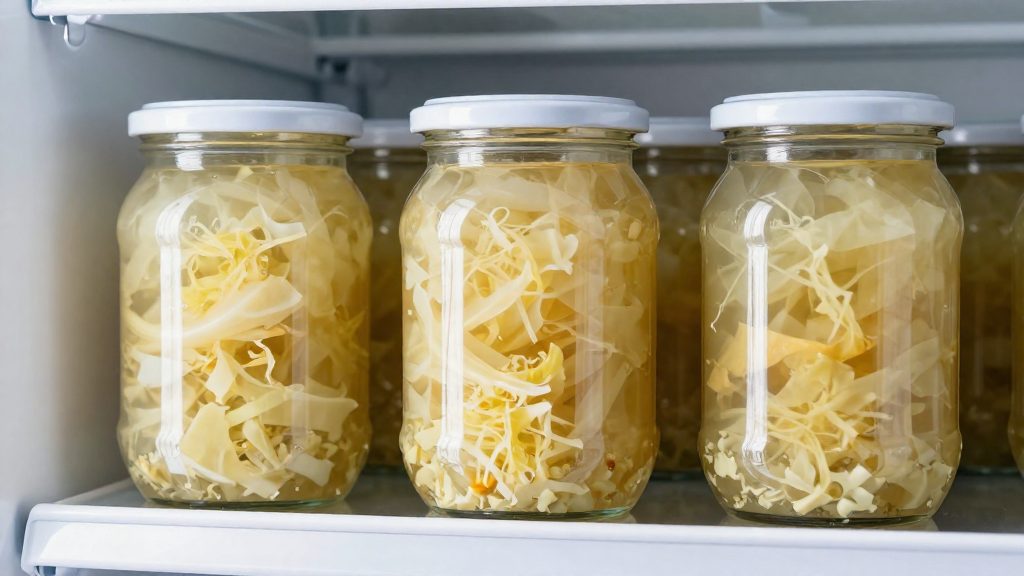
Refrigeration slows the lactic acid fermentation that continues after a jar is sealed, which keeps vegetables crisp, tangy and close to their intended flavor for longer. Unheated ferments still contain active cultures and need cold storage, while heat-treated products are shelf-stable and do not. According to Virginia Cooperative Extension (Virginia Tech), that difference determines how a jar should be stored.
Why refrigerate fermented vegetables?
Slowing fermentation after jarring
Once vegetables are packed in brine and sealed, lactic acid bacteria keep converting sugars into acid. At room temperature this activity continues, so acidity, sourness and texture keep shifting from week to week. Moving the jar to the refrigerator reduces that activity, so the ferment changes far more slowly. Cold storage slows fermentation but does not sterilize the contents, which is why unheated ferments need to stay cold.
Preserving crunch, flavor and texture
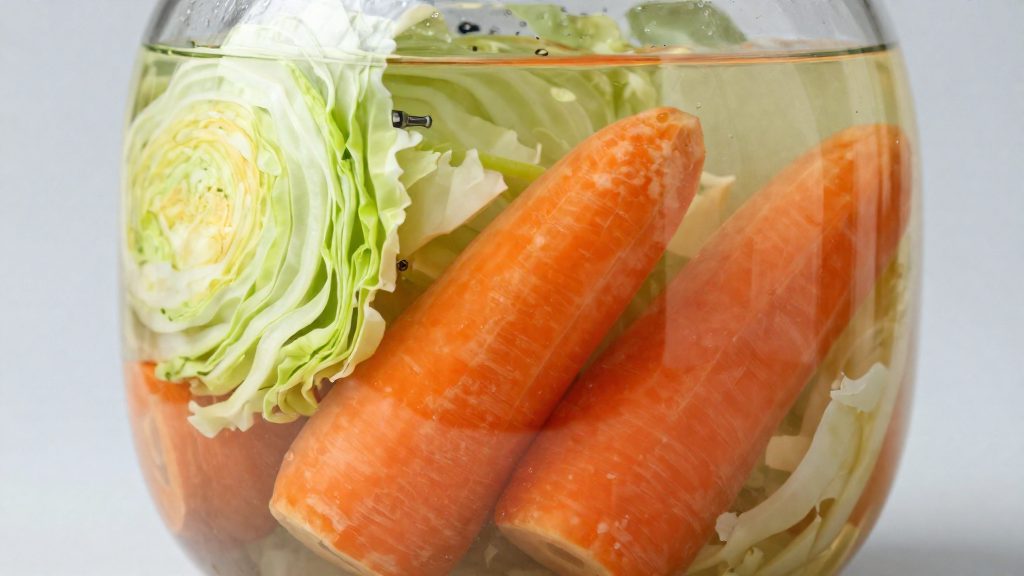
Continued fermentation at room temperature tends to soften cabbage, carrots and cucumbers over time. Keeping the jar cold helps the vegetables hold their firmness and keeps the flavor from becoming progressively sharper. According to NC State Extension, fermented foods can be stored in the refrigerator for up to 3 months, and kimchi and sauerkraut can also be frozen.
Unheated ferments versus heat-treated products
Storage requirements depend on whether the product was heat-treated during processing.
| Product type | Refrigeration | Reason |
|---|---|---|
| Unheated fermented vegetables (raw, brined in a jar) | Required | Live cultures remain active and keep fermenting |
| Heat-treated, shelf-stable products | Not needed | Processing makes them suitable for ambient storage |
Source for the table: Virginia Cooperative Extension (Virginia Tech).
Home-made jars are normally unheated, so they belong in the refrigerator. Utah State University Extension notes that nearly all fermented foods need either canning or refrigeration for preservation.
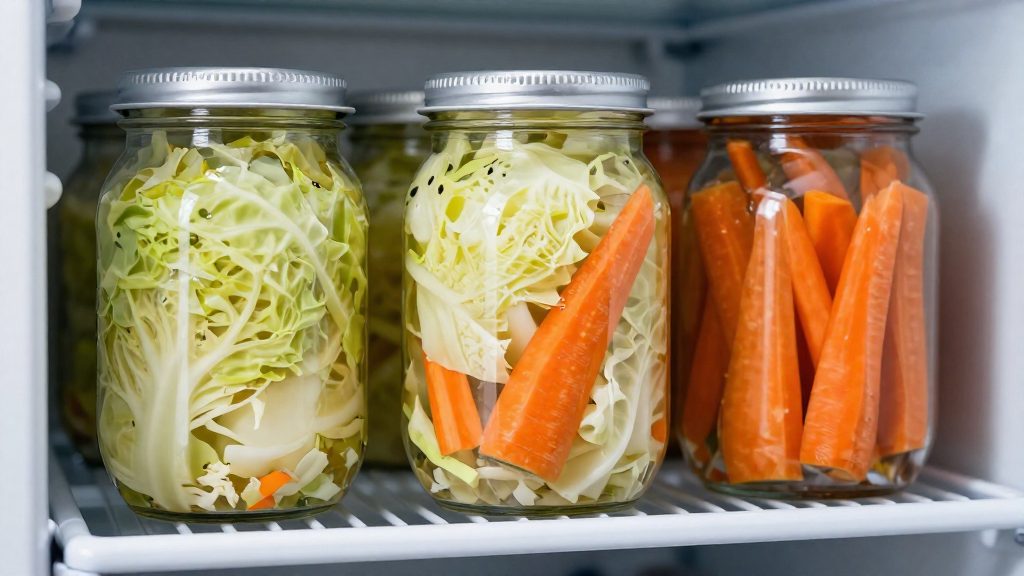
When is a ferment ready for the fridge?
A vegetable ferment is ready for cold storage once its pH has dropped below 4.6, the acidity level at which the Virginia Cooperative Extension (Virginia Tech) considers fermented vegetables safe. A calibrated pH meter is the method the source gives for measuring this threshold.
The safety threshold: below pH 4.6
Fermented vegetables must reach a pH below 4.6 before they can be considered safe. Until then, the brine is not acidic enough to reliably inhibit harmful microorganisms, and the jar should stay at fermentation temperature.
The recommended target: pH 4.1 or below
Reaching 4.6 meets the minimum, but the Virginia Cooperative Extension (Virginia Tech) advises continuing the fermentation to a pH of 4.1 or below for added safety. Refrigeration is required in the 4.2–4.6 range and recommended at 4.1 or below to maintain quality. Reaching these values is a minimum safety criterion, not a guarantee.
| Measured pH | Status for cold storage | Source guidance |
|---|---|---|
| Above 4.6 | Not yet safe; keep fermenting | Must reach below 4.6 |
| 4.2–4.6 | Refrigeration required | Virginia Cooperative Extension (Virginia Tech) |
| 4.1 or below | Refrigeration recommended; preferred target | Virginia Cooperative Extension (Virginia Tech) |
Measuring with a calibrated pH meter
Use a pH meter that has been calibrated according to the manufacturer’s instructions, and test a sample of the liquid from the ferment rather than relying on taste. Record the reading and the date, then retest over successive days until the value stops changing or falls into the target band. The Virginia Cooperative Extension (Virginia Tech) specifies a calibrated meter for measuring pH.
Best containers and lids for fridge storage
Sealed canning jars can build dangerous CO2 pressure during fermentation, so the container you choose matters for refrigerated ferments.
| Container type | Gas handling in the fridge | Guidance on record |
|---|---|---|
| Plastic container with a snap-shut lid | Lets gas escape | Named by Virginia Cooperative Extension (Virginia Tech) for refrigerated ferments |
| Sealed canning jar | Traps gas and can build dangerous CO2 pressure | Flagged as a hazard by Virginia Cooperative Extension (Virginia Tech) |
Plastic containers with snap-shut lids
A plastic container with a snap-shut lid is the option Virginia Cooperative Extension (Virginia Tech) names for refrigerated ferments. Use this type for refrigerated ferments.
Why sealed canning jars are a hazard
Sealed canning jars can build up dangerous CO2 pressure, so they are not the container to use for refrigerated ferments. Pressure risk is the reason to avoid this container, not the jar’s appearance.
Keep vegetables submerged under the brine
Vegetables should sit 1–2 inches (about 2.5–5 cm) below the brine for the entire fermentation. Any piece that rises above the liquid is exposed to air, so the goal is to keep every piece under the surface from the first day. According to Virginia Cooperative Extension (Virginia Tech), this submersion depth is the standard target, and produce should be weighted so it stays under the brine.
To hold produce down, press it firmly into the vessel after packing, then place a weight on top. Common options include a glass fermentation weight, a plate that fits inside the container, or a small food-safe bag filled with brine (not plain water). The weight should rest on the vegetables and sit low enough that the brine covers it. Check the level daily during the first days of fermentation, and press down again if any pieces have floated up.
Salt choice matters as much as the depth. According to Virginia Cooperative Extension (Virginia Tech), canning or pickling salt is recommended because additives in other salts can hurt fermentation.
| Salt type | Status | Reason given |
|---|---|---|
| Canning or pickling salt | Recommended | Recommended for fermenting vegetables |
| Iodized salt | Not recommended | Additives can hurt fermentation |
| Sea salt | Not recommended | Additives can hurt fermentation |
Follow a tested recipe and weigh the salt against the water you use. Use canning or pickling salt in the brine, and do not substitute iodized or sea salt.
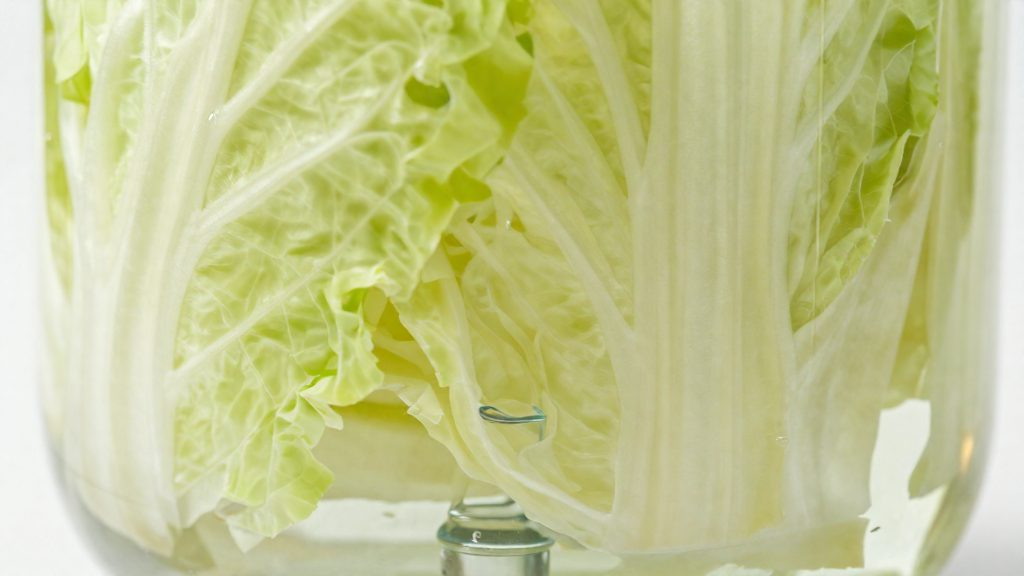
What temperature should the fridge be?
Unheated fermented vegetables should be kept at or below 5°C (41°F), according to Virginia Cooperative Extension (Virginia Tech). This is a ceiling, not a target range. Any fridge setting at or below that value meets the guideline, and a fridge that runs warmer does not. Heat-treated, shelf-stable products fall outside this limit. Health Canada also issues fridge temperature guidance, but this article cites only the 5°C ceiling above.
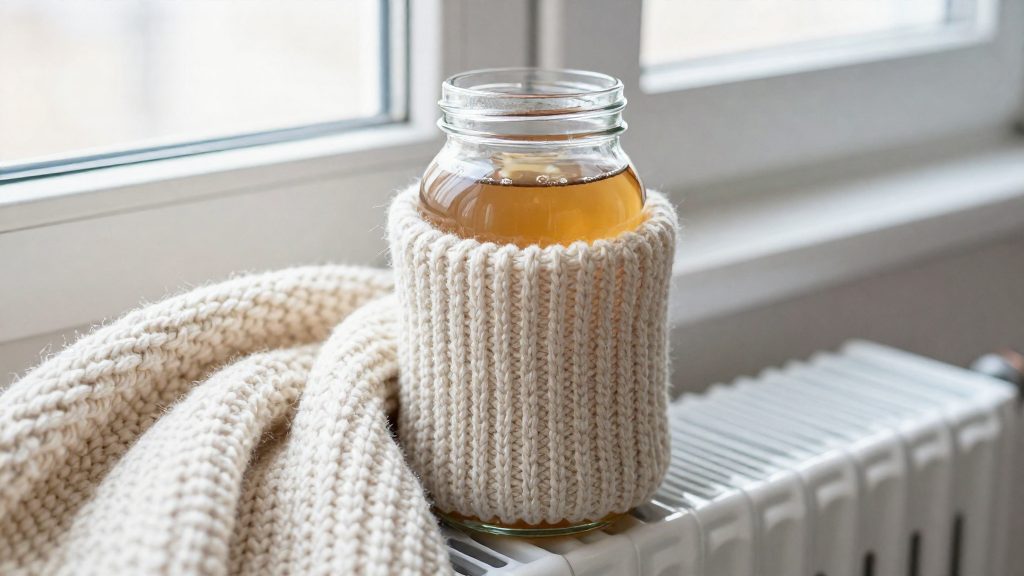
Fermenting and storing use very different temperatures. Virginia Cooperative Extension (Virginia Tech) gives the fermenting range as 15.6–22°C (60–72°F), which is why a ferment that has finished on the counter must move to the fridge rather than stay at room temperature.
| Stage | Recommended temperature |
|---|---|
| Fermenting | 15.6–22°C (60–72°F) |
| Refrigerated storage of unheated ferments | At or below 5°C (41°F) |
Temperature swings from door openings
Each time the door opens, warm room air enters and the internal temperature rises until the compressor brings it back down. To limit these swings, open the door less often and keep jars away from the door shelves, where the air changes fastest. Interior shelves at the back or middle are more stable.
Checking with a standalone fridge thermometer
The built-in dial shows a setting, not the actual air temperature at each shelf. A standalone fridge thermometer gives a direct reading of conditions where the jars sit. Place it on the same shelf as your ferments, away from the cooling vent, and check it over several days rather than once. If the reading exceeds 5°C (41°F), lower the fridge setting and recheck before relying on it.
How long do fermented vegetables last in the fridge?
According to NC State Extension, fermented foods can be stored in the refrigerator at 41°F (5°C) or below for up to 3 months. That window applies once the ferment is in cold storage. Write the date you moved each jar into the fridge on the lid or a label, so you can tell which batches are still inside the three-month period.
Freezing is the longer option, and NC State Extension names it specifically for kimchi and sauerkraut. If you freeze a batch, keep it separate from the refrigerated jars.
| Storage method | Foods named in the source | Duration or condition |
|---|---|---|
| Refrigerator at 41°F (5°C) or below | Fermented foods in general | Up to 3 months |
| Freezer | Kimchi and sauerkraut | Maximum duration not specified |
Flavor and texture change over extended storage. Rotate stock so the oldest jars are used first.
Signs your ferment has gone bad
Spoilage shows up in three places: the surface, the smell, and the texture of the vegetables. Each can be checked by eye, nose, or hand, but none proves on its own that a jar is safe. According to Utah State University Extension, foods that appear safe can still contain harmful pathogens, so these checks are warning signs, not clearances.
Surface growth: kahm yeast versus mold
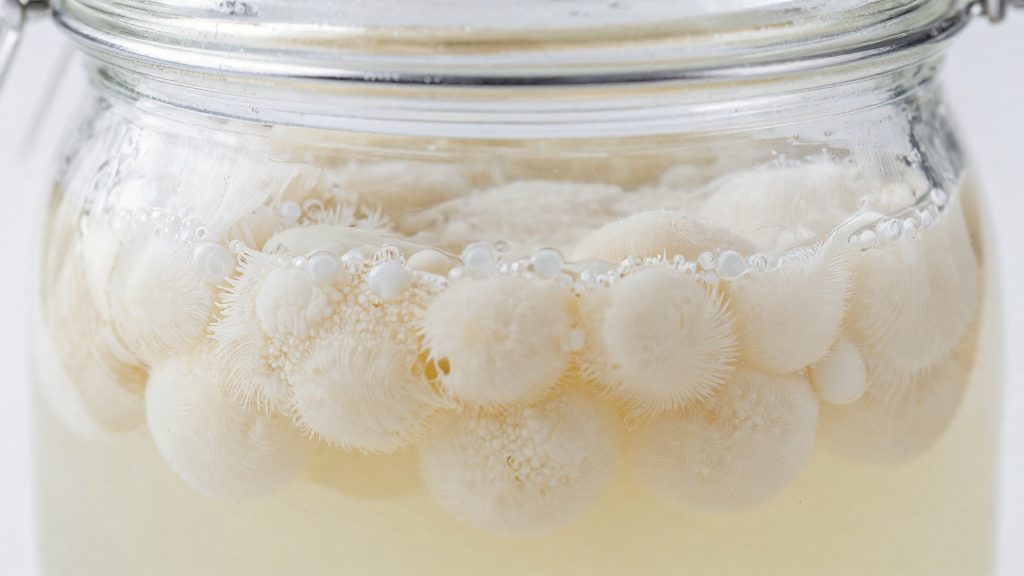
Kahm yeast is a thin, flat, white to cream film that can form on the brine surface. It is a yeast, not a mold, but it is hard to tell apart from early mold. If you cannot clearly tell the two apart, discard the batch.
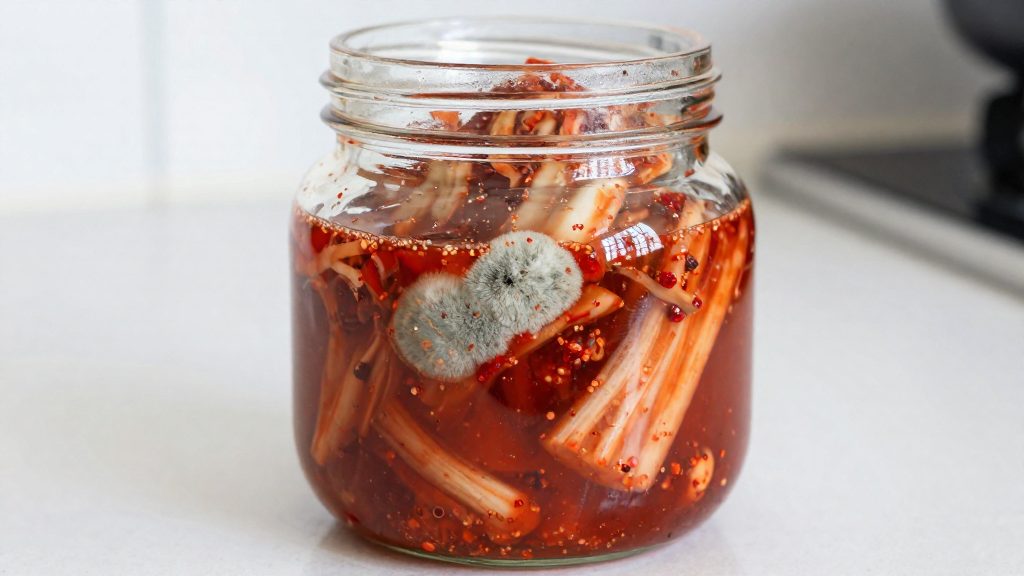
Mold looks different. It grows as fuzzy or raised patches, often in green, black, blue, or pink, and may have a powdery look. Mold on the vegetables or on the surface is a reason to discard the batch rather than trust a skim-and-taste approach.
Off odors
A properly fermented vegetable smells sour, sharp, or lightly yeasty. Rotten, putrid, or sulfurous smells, or a sharp chemical odor, indicate spoilage. Smell is a useful signal, but it is not a complete test, because some harmful organisms do not produce a strong odor.
Slimy or mushy texture
Vegetables should stay crisp and firm. A slimy texture that feels slippery to the touch, or vegetables that have turned soft and mushy, show that the structure has broken down. Mild softening can happen in older batches, but slime means the batch should be discarded, and so does mush together with any other warning sign.
Summary of warning signs
| Sign | Likely meaning | Action |
|---|---|---|
| Thin, flat, white film on brine | Possible kahm yeast or early mold | Discard the batch if you cannot clearly tell them apart |
| Fuzzy or raised spots, green, black, blue, or pink | Mold | Discard the batch |
| Rotten, putrid, or sulfurous smell | Spoilage | Discard the batch |
| Slippery, slimy vegetables | Spoilage | Discard the batch |
| Soft, mushy vegetables with other signs | Breakdown | Discard the batch |
Why appearance alone is not enough
A jar can look clean and smell acceptable and still be unsafe, which is why visual and sensory checks cannot replace measurement. Use these signs to decide when to discard, and do not treat a clean look as proof that a ferment is safe to eat.
Frequently asked questions
How cold should my fridge be for fermented vegetables?
Unheated jars should stay at 5°C (41°F) or below, and any fridge setting at or below that point meets the guidance, according to Virginia Cooperative Extension (Virginia Tech).
Is a pH reading enough to confirm a stored jar is safe?
A calibrated pH meter can confirm the minimum threshold of a pH below 4.6, with 4.1 or below advised for added safety, according to Virginia Cooperative Extension (Virginia Tech). Those readings are a minimum criterion, not a guarantee, so visible mold, a putrid smell or slime still means the batch should be discarded, and tasting is never a safety test.
Which lid works for a fermented jar kept in the fridge?
Choose a container that lets gas escape, such as a plastic container with a snap-shut lid, because sealed canning jars can build up dangerous CO2 pressure. Virginia Cooperative Extension (Virginia Tech) gives this container as the example for refrigerated ferments.