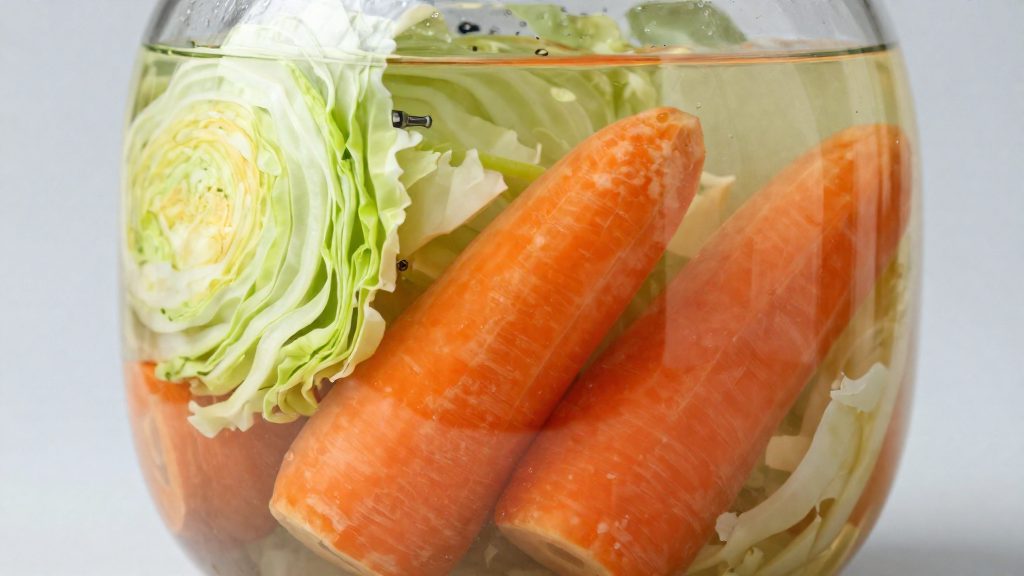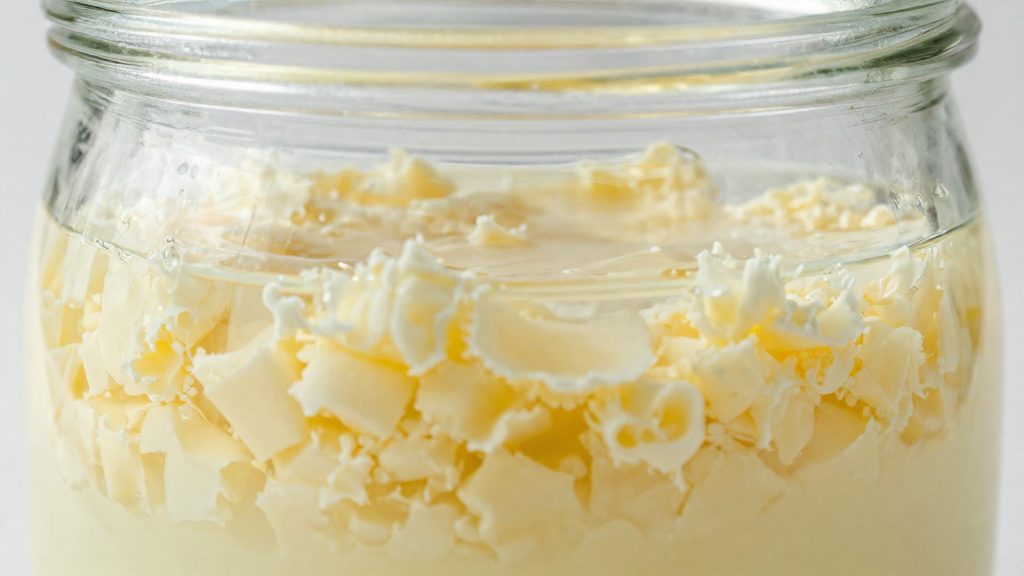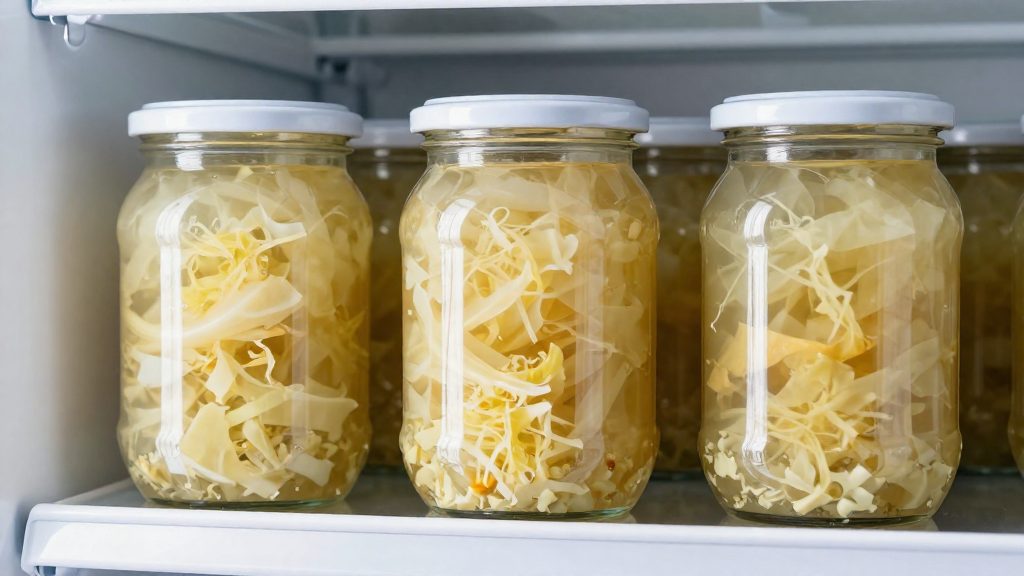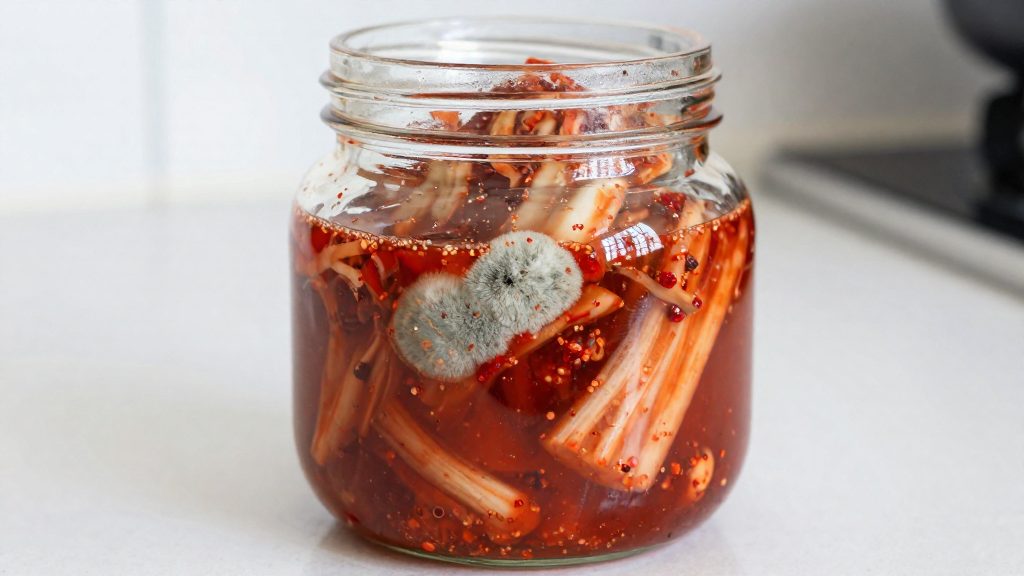
Normal kimchi fermentation changes the brine, the colour and the texture of the vegetables, and acidity is the marker that shows the batch is progressing safely. According to the University of Georgia Extension (CAES Field Report), kimchi is considered safe once its pH falls below 4.6, which happens after about 2 weeks of fermentation.
What does normal kimchi fermentation look like?
The first two weeks
During the first days, the pH is still relatively high. The University of Georgia Extension (CAES Field Report) notes that early on, the pH may not be low enough to prevent some pathogens. For this reason, appearance alone is not a reliable guide during the first stage.
Visible changes during normal activity
Kimecopak, a Canadian kimchi packaging manufacturer, lists the following as normal parts of the process:
| Change | What it looks like | Source |
|---|---|---|
| Brine | Cloudy brine, often with the liquid turning murky as the fermentation proceeds | Kimecopak |
| Colour | Kimchi becomes darker than when it was packed | Kimecopak |
| Texture | Vegetables become softer as they break down in the brine | Kimecopak |
Reading the signs together
No single change confirms that fermentation is healthy. Cloudy brine can appear alongside a darker colour and softer vegetables in a jar that is fermenting normally, so the combination is less informative than the acidity reading. When the signs are ambiguous, the pH reading gives a more objective result than colour or clarity.
Mold: the clearest sign kimchi has gone bad
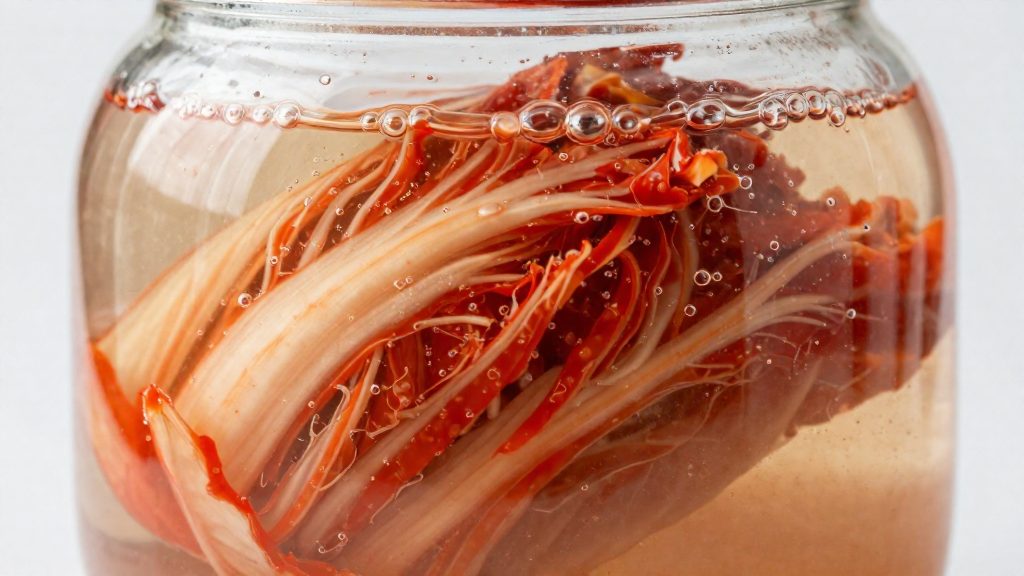
Mold is the most unambiguous spoilage sign in homemade kimchi. Mold appears as fuzzy, raised growth, not as the flat film that sometimes forms on the brine. University of Georgia Extension (CAES Field Report) lists mold as a spoilage sign in homemade kimchi and treats it as a safety concern, not only a quality issue. Kimecopak, a Canadian kimchi packaging manufacturer, identifies fuzzy green, black, blue, pink or grey growth as the colours that mean the whole jar must be discarded.
How to recognise mold by colour
Check the surface, the cut edges of the vegetables and the inside of the lid. Growth can appear in any of these places.
- Green: fuzzy, tufted patches, often starting as isolated dots.
- Black: dark, powdery or fuzzy spots, sometimes mistaken for pepper flakes or dried chili.
- Blue: blue-green or bluish fuzz, which may spread across the surface.
- Pink: pink or reddish fuzz, which is also mold and not a sign of extra fermentation.
- Grey: grey or dusty fuzz, often on the surface or along the jar wall.
Any of these colours, if fuzzy, means mold. Colour alone does not tell you the species, so the action is the same for all of them.
Why skimming does not make it safe
Mold is not confined to the visible spots. Its threads, called hyphae, grow through the food and can extend beneath the brine surface, so removing the top layer leaves growth behind. For this reason the guidance is to discard the entire jar, not to scoop off the affected part. Vegetables that look unaffected may still carry hyphae, and the brine itself cannot be assumed clean.
Smell, slime and texture warning signs
Three sensory signs mark kimchi as spoiled and not merely fermented: a putrid smell, slimy vegetables and a bitter taste. According to Kimecopak, a Canadian kimchi packaging manufacturer, any of these means the batch should be discarded. Normal fermentation produces a sour aroma, but a putrid odour is different in kind. The smell to watch for is ammonia, sewage or rotten egg. Once you notice it, the batch is finished, and tasting it to confirm is not necessary.
Smell is the first check, and it works best when you open the jar and sniff before you stir or serve. Compare the aroma with the batch’s earlier smell and with the sour, fresh-vegetable scent of a healthy jar. Ammonia and sulphur-type notes stand out clearly against that baseline.
Texture is the second check. Lift a piece of cabbage or radish with clean utensils and look at its surface. The slimy vegetables warning sign is a slick, slippery coating on the pieces themselves. This is different from brine that has turned cloudy, which the same source describes as normal. Discard the batch if the vegetables feel slimy.
Taste is the last check, and it is the least reliable. If kimchi tastes bitter, discard it. Do not taste a batch to decide whether it is safe if it already smells or feels wrong.
Seafood kimchi needs a separate approach. Kimecopak notes that histamine cannot be detected by smell or taste, so the sensory checks above do not confirm that seafood kimchi is safe. Treat any doubt about a seafood batch as a reason to discard it.
Is white film on kimchi mold or kahm yeast?
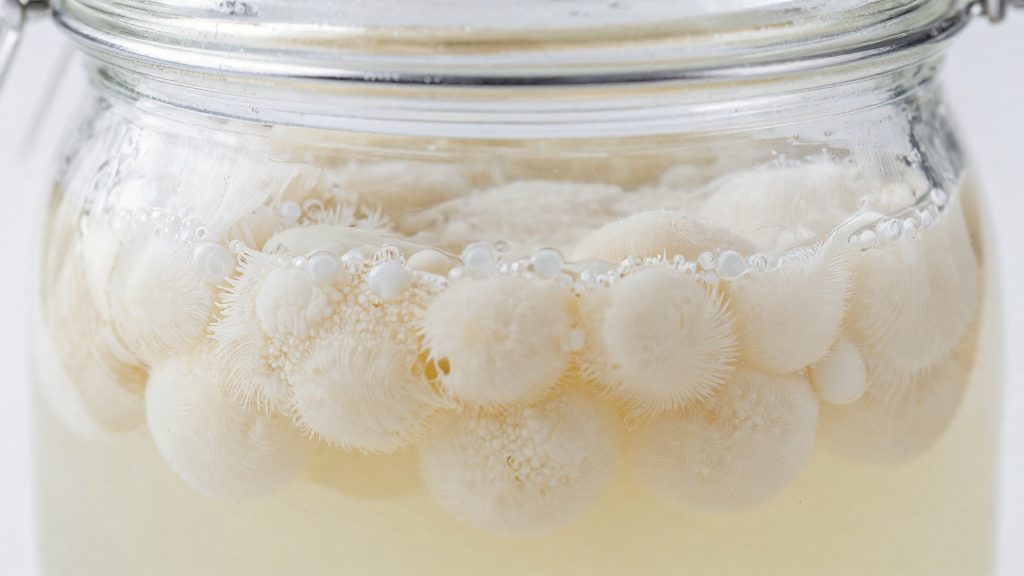
A flat white film on the brine is usually harmless kahm yeast, according to Kimecopak (Canadian kimchi packaging manufacturer). Mold is a different problem. The two are told apart by where the growth sits, how it looks and how it feels, so check all three before deciding.
Kahm yeast forms on the brine surface where vegetables or the liquid meet air. It spreads as a thin, flat sheet that can look wrinkled, like a skin on the liquid. It stays on the surface and doesn’t rise into the vegetables. Mold grows as raised, fuzzy or powdery patches, often in distinct spots or rings. The colour helps too: kahm yeast is white, while mold can be green, black, blue, pink or grey.
| Feature | Kahm yeast film | Mold |
|---|---|---|
| Location | Flat across the brine surface | Scattered patches, often on vegetables or the jar rim |
| Texture | Flat, thin, wrinkled | Fuzzy, raised or powdery |
| Colour | White | Green, black, blue, pink or grey |
Kahm yeast is most likely when vegetables are not fully submerged. Keeping everything below the brine level, using a weight or a fermentation crock with a water seal, and keeping the lid closed limits the surface exposed to air. The brine surface is the first spot to watch: a flat white film is usually harmless kahm yeast. If any growth looks fuzzy, raised or coloured, discard the whole jar.
Is sour, fizzy or bulging kimchi still safe?
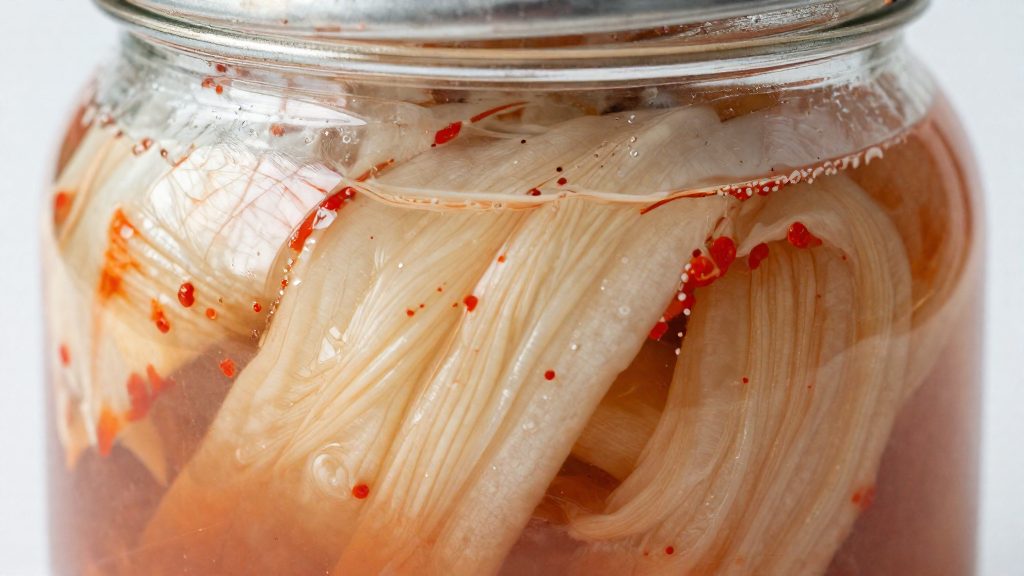
Yes, when the sourness, fizziness and bulging lid come from normal fermentation. These are expected results of the process, not signs of spoilage. Fermenting kimchi produces carbon dioxide, which makes the brine fizz and pushes against the lid. Acid builds up at the same time.
Carbon dioxide and bulging lid pressure
Kimecopak, a Canadian kimchi packaging manufacturer, lists fizziness and a bulging lid among normal fermentation signs. A bulge means gas is accumulating inside the jar. The pressure is the practical concern. A tightly sealed jar holds the gas in, so the lid can swell or the jar can lose its seal.
Venting the jar safely
The University of Georgia Extension recommends leaving jars loosely covered at room temperature for the first 48 hours, then moving them to the fridge at 5 °C (41 °F) or below. A loose cover lets gas escape during the early, most active phase. If a jar has already bulged, vent it with these steps:
- Check the lid for a bulge before touching it.
- Open the lid slowly over a sink or bowl, since released gas can push brine out.
- Reseal loosely, or cover the jar with a cloth, instead of clamping the lid shut.
- Keep the vegetables submerged under the brine after venting.
Sourness within the expected range
| Sign | Status | Basis |
|---|---|---|
| Sourness | Normal | Acid build-up; safe once pH is below 4.6 |
| Fizziness | Normal | Carbon dioxide from fermentation |
| Bulging lid | Normal; vent the jar | Gas pressure inside the jar |
Sourness grows as fermentation continues, so a sharper taste alone does not mean the kimchi has spoiled.
How long does kimchi last in the fridge?
Homemade kimchi moves through two storage phases. The University of Georgia Extension (CAES Field Report) advises leaving jars loosely covered at room temperature for the first 48 hours, then moving them to the fridge at 41°F (5°C) or below. The recipe’s specified salt level is essential to safety during this stage, so the 48-hour routine works only when the salt quantity follows a tested recipe.
The fridge does not stop fermentation. Kimchi keeps fermenting in cold storage, so its flavour and texture keep changing for as long as it stays there.
| Stage | Temperature | Timing | What to expect |
|---|---|---|---|
| Initial fermentation | Room temperature, jars loosely covered | First 48 hours | Active fermentation |
| Refrigerated storage | 41°F (5°C) or below | After 48 hours | Fermentation continues |
| Extended cold storage | 41°F (5°C) or below | After a few months | Very sour, mushy texture |
Texture changes with time. After a few months in the fridge, kimchi can become very sour and mushy, according to Tasting Table. Whether that counts as spoiled depends on personal preference. Judge the jar by its texture and taste rather than by a calendar date.
When to throw it out
Discard decisions for kimchi depend on severity. Spoilage in homemade kimchi is treated as a safety concern, not only a quality issue, so when a sign of spoilage appears, the batch is discarded even if the rest looks acceptable.
Signs that require immediate disposal
Normal signs do not cancel out spoilage signs. A bulging lid is a normal sign of gas build-up, though the jar should be vented carefully. If it comes with a putrid smell or slimy vegetables, the jar is discarded. Likewise, an unusual texture combined with any of the above is a reason to throw the batch away.
Signs that need monitoring only
The following are part of normal fermentation and do not, by themselves, call for disposal:
| Sign | Status | Action |
|---|---|---|
| Sourness | Normal | Monitor |
| Fizziness | Normal | Monitor |
| Bulging lid | Normal | Monitor |
| Flat white film on the brine | Usually harmless kahm yeast | Skim and monitor |
| Very sour, mushy texture after several months in the fridge | Depends on preference | Check for mold before deciding |
A flat film is distinct from fuzzy growth. If the film stays flat and smooth, it is generally kahm yeast. If it turns fuzzy at any point, it becomes a discard sign.
Disposing of contaminated jars and utensils
As a general precaution, discard the contents without scooping out only the visible part, since mold can extend beyond what you see. Seal the discarded material in a bag before putting it in the bin. Wash the jar, lid, weights and utensils with hot soapy water, and do not reuse contaminated utensils in a new batch. Use fresh, clean tools for the next ferment.
Frequently asked questions
How do I tell harmless kahm yeast from dangerous mold?
A flat white film on the brine is usually kahm yeast, which is a surface layer rather than a sign of spoilage. Growth that is fuzzy in green, black, blue, pink or grey means the whole jar should be thrown out, not just the top layer.
Is a strong sour smell a sign that kimchi has gone bad?
Not on its own. Sharp sourness and a fizzy feel are part of normal fermentation, but a putrid odour like ammonia, sewage or rotten egg means the batch should be discarded.
Do seafood kimchi batches need different rules?
Yes. Histamine in seafood kimchi cannot be detected by smell or taste, so a batch that looks and smells acceptable can still be unsafe, and histamine risk is the reason to be stricter with discarding.