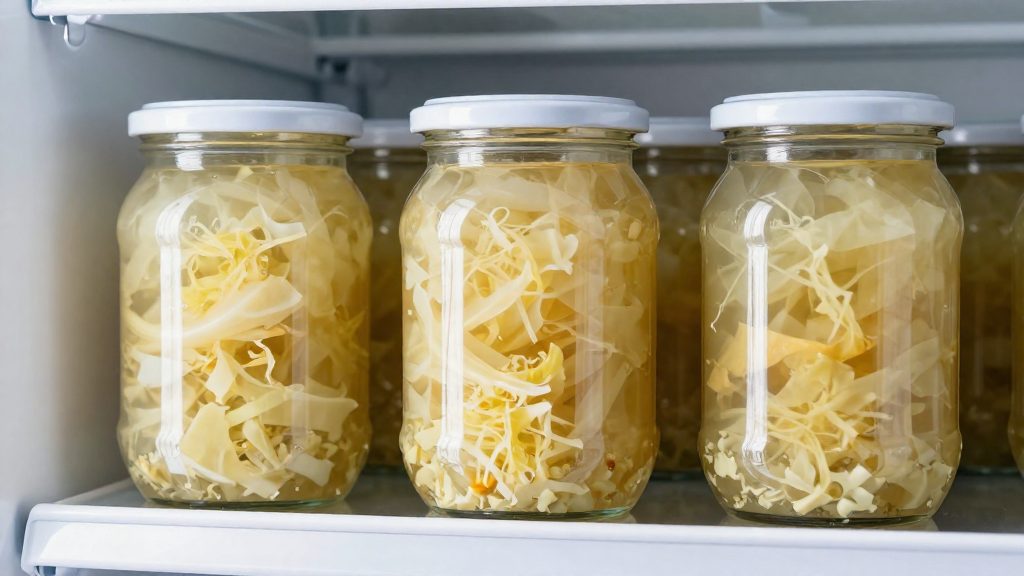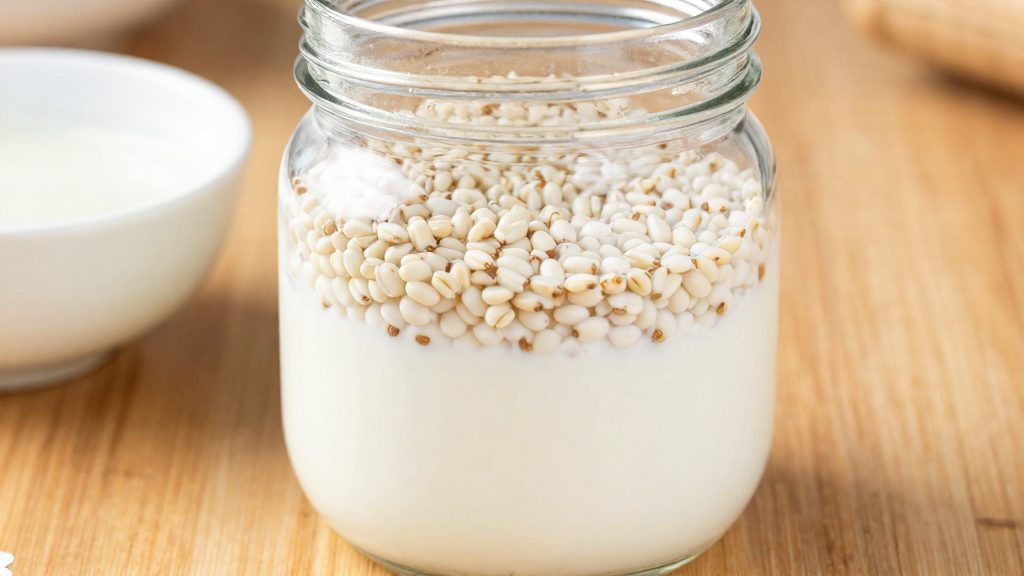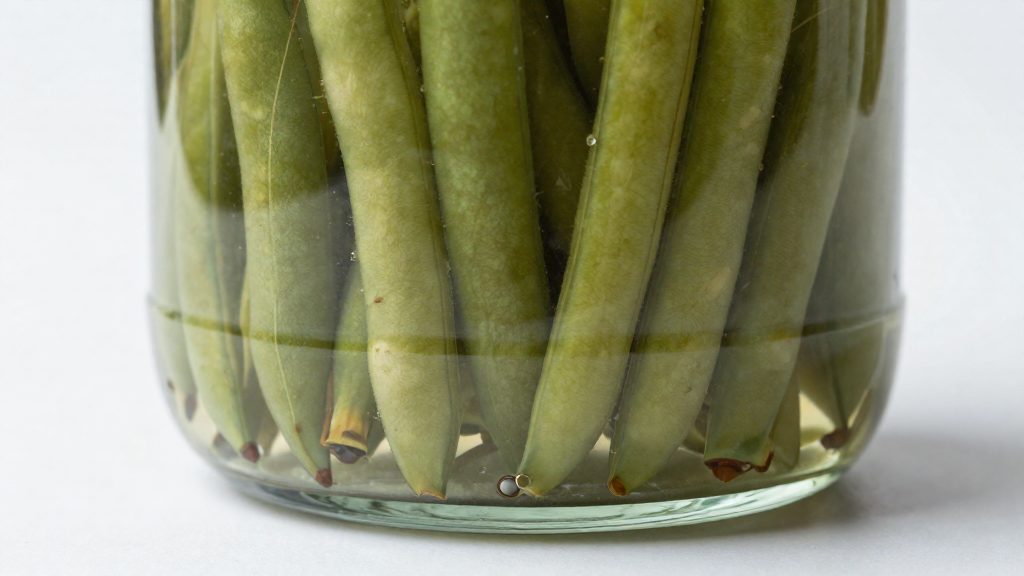
Temperature sets how fast the microbes in a ferment work, and it also shapes what they produce. Yeasts and lactic acid bacteria speed up their metabolism as the environment warms and slow down as it cools, so the same batch can take days in a warm kitchen and weeks in a cold one. Because acid, carbon dioxide and aroma compounds form in parallel, a change in temperature affects rate, acidity, flavor and texture together, not timing alone.
Why does temperature matter for fermentation?
How microbial speed changes with temperature
Fermentation depends on microbial metabolism, the process by which yeasts and bacteria convert sugars into acids, alcohol and carbon dioxide. Cooler conditions slow that conversion. Kombucha Kamp (2026) notes that cold brews ferment slowly and unpredictably, with weak carbonation, sluggish SCOBY activity and a higher risk of mold. A slow start gives unwanted organisms more time to compete with the intended cultures, so a cold ferment is less predictable as well as slower.
Acidity and the pH endpoint
Acid production is the core of lacto-fermentation. Utah State University Extension states that fermented foods must reach a pH of 4.6 or below, checked with a pH meter or strips. Temperature controls how long it takes to get there. Speed alone does not confirm safety; the pH reading does.
Flavor and texture shifts
Warmer temperatures change the finished product, not just its timing. Clemson Cooperative Extension (HGIC) (2018) reports that sauerkraut fermented at higher temperatures becomes more acidic and less flavorful, and that excessive heat can leave it soft. Acidity, flavor and texture are therefore linked: pushing a ferment faster by heat moves its profile toward sharper acidity and a flatter taste.
Why steady warmth matters more than an exact number
Kombucha Kamp (2026) states that steady warmth matters more than hitting one exact figure. Utah State University Extension advises keeping the temperature stable throughout fermentation and warns that counter fermentation is not safe because temperatures vary with weather and with home heating and cooling. Repeated swings start and stop microbial activity, which makes the rate, acidity and flavor of each batch harder to predict.
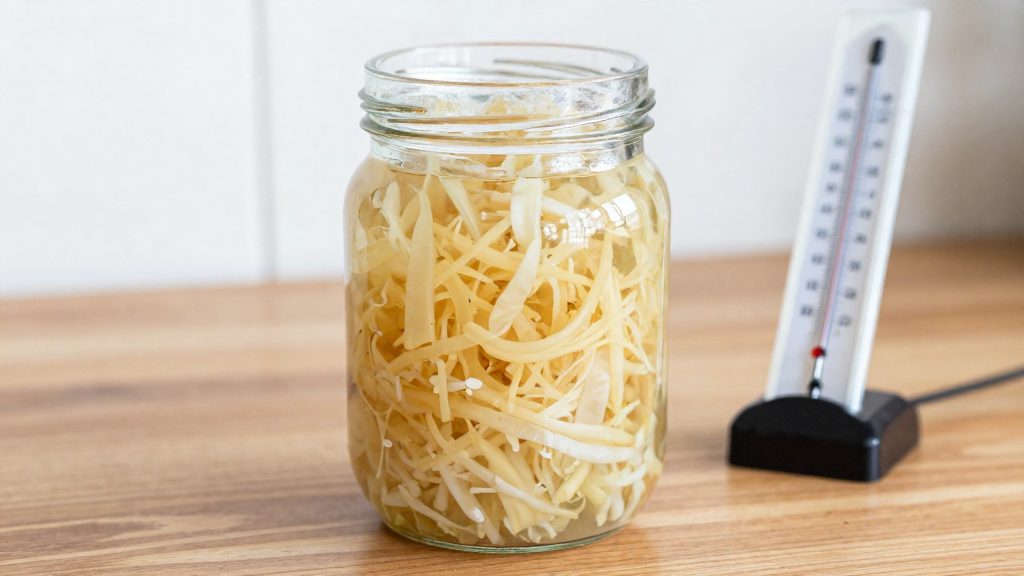
Ideal temperature ranges by ferment
Kombucha and sauerkraut have published target windows, and they sit in different bands, so one room temperature will not suit both. Kombucha Kamp (2026) recommends 75–85°F (24–29°C) for kombucha, with about 80°F (27°C) as the ideal. Clemson Cooperative Extension (HGIC) (2018-04-30) names 60–70°F (about 15.5–21°C) as the best range for sauerkraut.
| Ferment | Target window | Reference point | Source |
|---|---|---|---|
| Kombucha | 75–85°F (24–29°C) | About 80°F (27°C) | Kombucha Kamp (2026) |
| Sauerkraut | 60–70°F | Best range | Clemson Cooperative Extension (HGIC) (2018-04-30) |
Sauerkraut zones outside the best range
Clemson’s guidance splits the temperature scale into four zones for sauerkraut:
- Below 60°F: the kraut may not ferment at all.
- 60–70°F: the best range.
- 70–75°F: fermentation runs faster, but the kraut is more acidic and has less flavor.
- Above 75°F: the kraut may turn soft.
Kefir and kimchi
For kefir and kimchi, the reference point is the target temperature on the starter culture packet. Utah State University Extension recommends following that target for fermented foods, and recommends a controlled water-bath incubator to hold it.
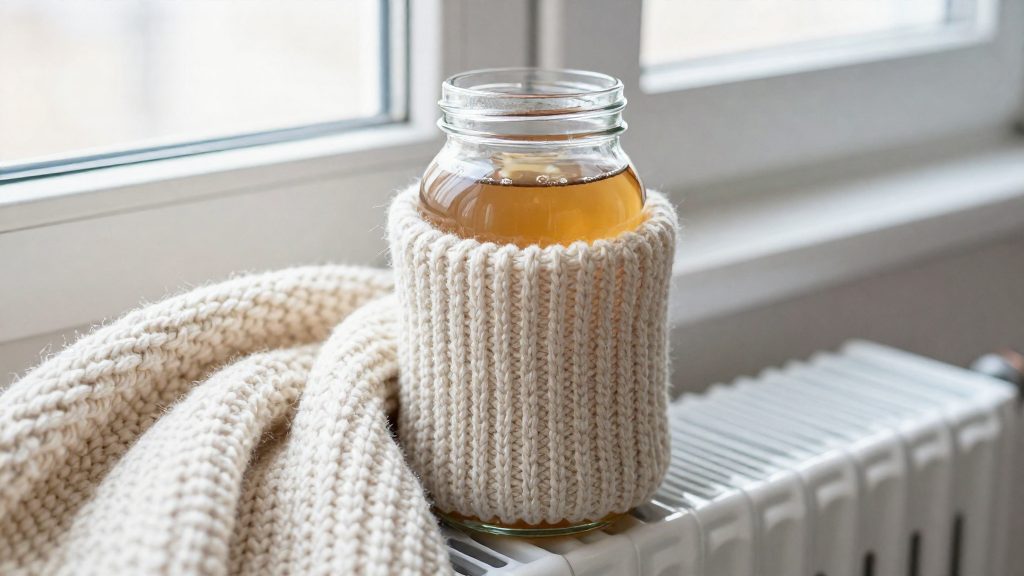
How do you keep kombucha warm in winter?
Kombucha ferments best when it stays in a steady warm range. Kombucha Kamp (2026) recommends 75–85°F (24–29°C), with about 80°F (27°C) as ideal. In winter, the aim is to hold the brew inside that band without large swings, not to reach a specific reading once.
| Target | Value (Kombucha Kamp, 2026) |
|---|---|
| Recommended range | 75–85°F (24–29°C) |
| Ideal temperature | About 80°F (27°C) |
| Warm rest for bottles, second ferment | 24–48 hours |
Insulating the jar
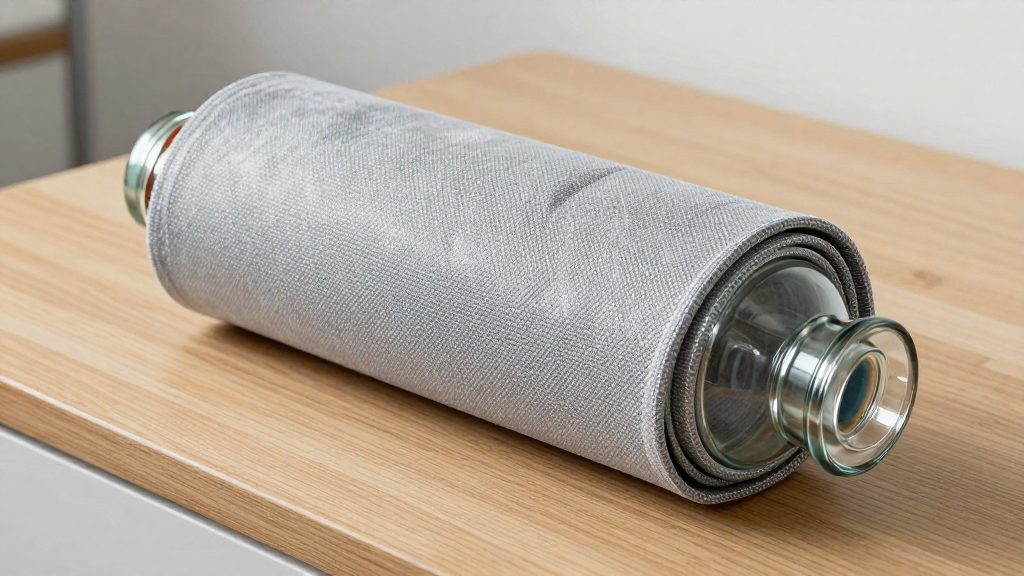
Wrap the vessel in towels or blankets to slow heat loss. The insulation slows heat loss and shields the jar from cold air, but it does not add heat, so the room must already be warm enough. This is the simplest winter step, and it needs no powered equipment.
Choosing a warmer room
Move the jar to a room that stays warmer than the rest of the house. Avoid spots near drafts, exterior doors and cold outside walls. Check the room over several days rather than relying on one reading, since the goal is consistency.
Restoring carbonation afterwards
Bottling and a short warm rest can restore fizz. Kombucha Kamp (2026) describes setting bottles somewhere warm for 24–48 hours to restore carbonation in a second ferment. Keep the bottles in that warm spot for the full window, then check carbonation before deciding on the next step.
Safe ways to insulate a sauerkraut crock
An insulated enclosure keeps a crock’s surrounding air near the target temperature without placing a heat source against the vessel. It works by slowing heat loss from a space that already sits in a stable room, so the crock avoids the swings of an unheated counter. Common options include a closed interior cupboard, a cardboard or foam box, or a cooler wrapped in blankets. Leave the lid and airlock accessible so you can check the batch without disturbing the insulation.
Build the enclosure in this order:
- Choose an interior cupboard or room corner away from exterior walls, windows and drafts.
- Wrap towels, blankets or folded insulation around the sides and base of the crock. Keep the top clear for the lid, weight and airlock.
- Limit how often you open the enclosure, since each opening lets accumulated warmth escape.
Plan the hold time before you start. According to Clemson Cooperative Extension (HGIC) (2018), sauerkraut held at 60–65°F takes 5–6 weeks to ferment. Set a calendar date for the expected finish, and do not judge the batch before that point.
Checking the cabinet temperature
Place a thermometer inside the enclosure, next to the crock, rather than on an outer wall. A wall reading reflects the room, not the ferment. Read the thermometer at a consistent time each day and write the value down. A cabinet that drifts widely between readings is not holding the batch, even if its average looks acceptable.
Heating mats, wraps and thermostats
Heating mats and wraps are the main electric aids for keeping a jar or crock warm in a cold room, and a thermostat controller determines whether either one holds the ferment in range. Kombucha Kamp (2026) lists heating mats, wraps or pads, and a thermostat-controlled heater among winter warming options. Choose a device by how well it fits the vessel and how precisely it can be controlled.
Heating mats compared with wraps and pads
A heating mat sits under the vessel and warms it from the base. A wrap or pad curls around the vessel and warms it from the sides. Many such devices do not regulate their own output, so check whether yours does. If it does not, add a controller to hold a set temperature. A mat suits vessels with a flat, full-contact base, such as a wide-mouth jar on a counter. A wrap suits tall jars and crocks whose sides are exposed to cold air.
Thermostat controllers and probe placement
Set the controller to a target inside your ferment’s range instead of the device’s maximum.
Place the probe against the vessel wall or in the liquid, not on the heating surface. A probe touching the mat reads the heater, so the contents can drift well away from the setpoint without the controller reacting. After setup, verify the reading with a separate thermometer and compare the two over several hours before loading the ferment.
Matching heat output to vessel size
In practice, a larger vessel holds more liquid or vegetable mass, so it takes longer to warm and to cool. Choose a device whose heating area covers the vessel’s base, and trial it with the vessel filled with water first, comparing readings over several hours. If the temperature overshoots or sags, change the device before adding the ferment.
| Ferment | Target range | Reference point | Source |
|---|---|---|---|
| Kombucha | 75–85°F (24–29°C) | About 80°F (27°C) ideal | Kombucha Kamp (2026) |
| Sauerkraut | 60–70°F | 60–65°F takes 5–6 weeks; 70–75°F takes 3–4 weeks | Clemson Cooperative Extension (HGIC) (2018) |
Warming methods to avoid
Some common winter fixes heat a ferment faster than they hold it steady, and cultures stall or spoil when temperature swings. For kombucha, Kombucha Kamp (2026) gives a range of 75–85°F (24–29°C), with about 80°F (27°C) as ideal. Any method that pushes a jar above 85°F (29°C) or lets it drift in and out of range works against that goal.
| Method | Main risk in winter | Basis |
|---|---|---|
| High-heat devices and hot surfaces | Uneven, excessive heat on one side of the vessel | Kombucha Kamp (2026) |
| Space heaters needing manual adjustment | Temperature drifts between checks | Kombucha Kamp (2026) |
| Sunny windowsills and oven pilot-light warmth | Daily or unmeasured temperature swings | Inference from Utah State University Extension’s warning on temperature variation (undated) |
High-heat devices and direct hot-surface contact
Kombucha Kamp (2026) advises avoiding high-heat devices and direct contact with hot surfaces. Common examples include radiators, heating vents and the tops of warm appliances. A jar resting against a hot surface receives heat concentrated on the side in contact, so the liquid near the glass can run well above the rest of the vessel.
Space heaters that need frequent manual adjustment
Kombucha Kamp (2026) notes that space heaters and similar DIY methods need frequent adjustment. A heater that is set and then forgotten can overheat a room as the weather changes, or cool off overnight.
Sunny windowsills and oven pilot-light warmth
A windowsill gets sun during the day and loses heat at night, so the jar follows a daily cycle rather than holding one temperature. An oven with only its pilot light on is not a measured environment, and its temperature is not controlled. An oven can also be switched on for cooking while a jar is inside, which exposes the ferment to unplanned heat.
How do you know a cold ferment is still safe?
A cold ferment is judged on its acidity, which must reach the safety threshold of pH 4.6 or below. A surface that may show mold is also a reason for caution, because the sources give no way to declare a film harmless. A cold room does not lower the threshold; it only slows how quickly the pH falls.
Temperature stability as a safety factor
| Condition | Documented outcome |
|---|---|
| Sauerkraut below 60°F (15.5°C) | May not ferment (Clemson Cooperative Extension (HGIC), 2018-04-30) |
| Sauerkraut at 60–70°F (15.5–21°C) | Best range (Clemson Cooperative Extension (HGIC), 2018-04-30) |
| Sauerkraut above 75°F (24°C) | May turn soft (Clemson Cooperative Extension (HGIC), 2018-04-30) |
The table shows that below 60°F sauerkraut may not ferment, and that heat above the best range changes the result. Swings between these zones make outcomes harder to predict.
Telling mold from kahm yeast
Kahm yeast is the thin white film that can form on the surface of a ferment. For telling it apart from mold, the practical approach is a careful visual inspection in good light. Home visual identification is unreliable. If you are unsure whether a surface growth is kahm yeast or mold, discard the batch rather than skimming it. Because cold brews carry a documented mold risk, a surface inspection should accompany every pH reading on a slow ferment, not replace it.
Checking pH and when to discard
A pH reading is the only check that confirms a ferment has reached a safe acidity.
Retest timing
Treat each reading as a checkpoint rather than a fixed schedule. Test once the ferment has had time to acidify under steady warmth, and repeat the test only after conditions have held steady in the meantime.
Calibrating meters and strips
Follow the manufacturer’s instructions for your meter. For pH strips, confirm that the scale includes 4.6 so the result can distinguish the threshold. Use a clean probe or a fresh strip for each test, and take the reading from the liquid rather than from surface film or residue.
Deciding what to do with a failed test
The sources give one threshold and no formal discard rule. The result is therefore binary:
| Test result | What the sources support |
|---|---|
| 4.6 or below | Meets the threshold stated by Utah State University Extension |
| Above 4.6 | Not verified as safe; the sources give no further rule |
| No reading taken | Not verified |
A batch that stays above 4.6 after steady warmth has not met the stated standard. Do not decide whether to keep it based on smell or appearance alone.