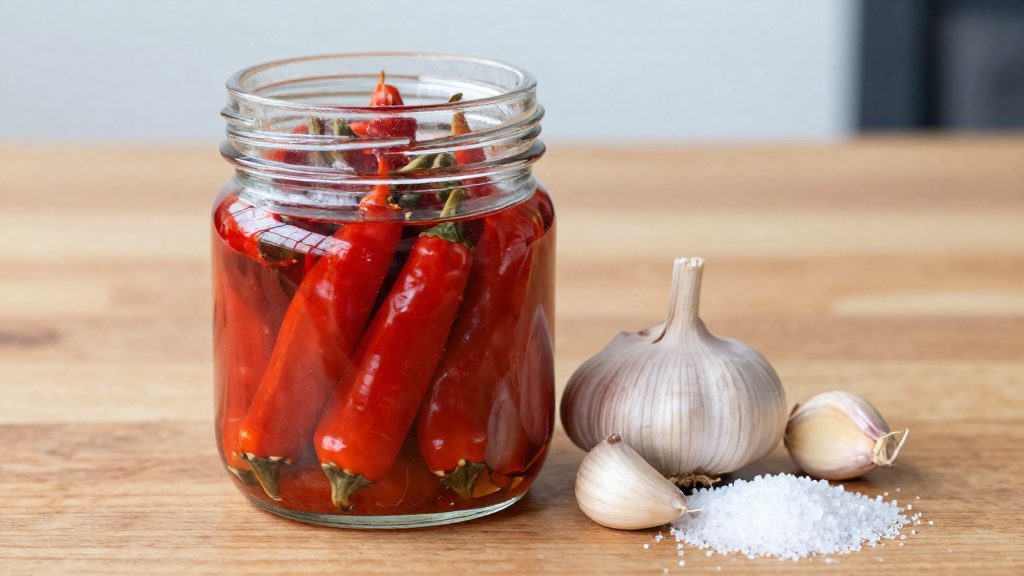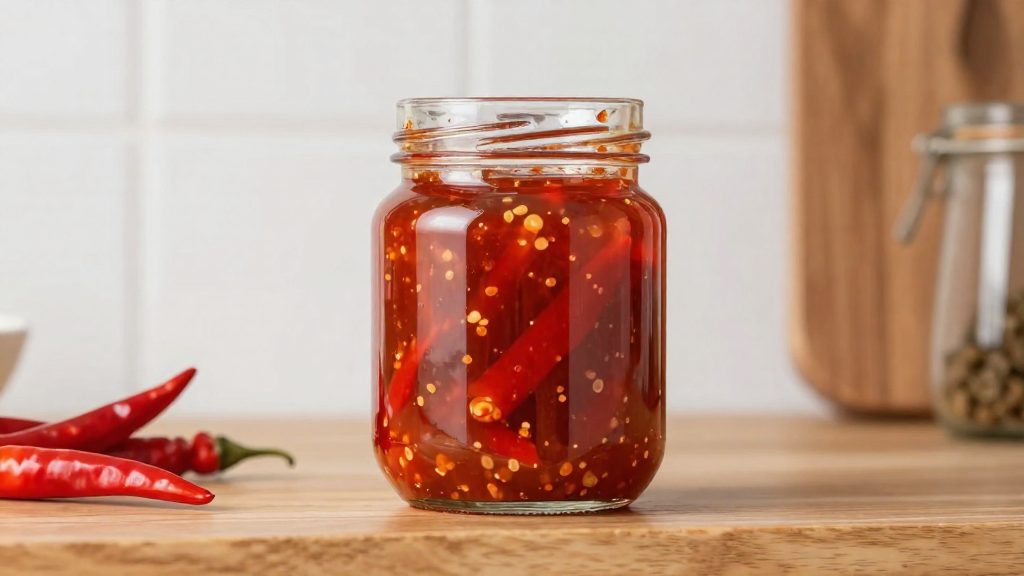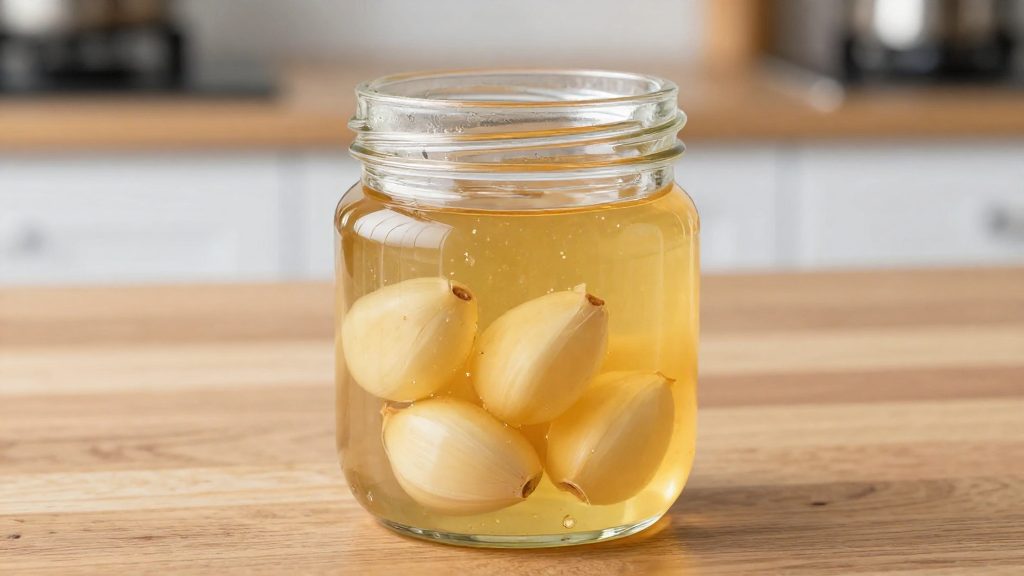
Fermented garlic honey is not considered safe. Joy Waite-Cusic, a food safety expert with Oregon State University Extension, gave this verdict in Ask Extension (2023-03-27). Home cooks therefore have no validated basis for treating the method as reliable, and a popular recipe does not fill that gap.
Is fermented garlic honey safe?
The Oregon State Extension verdict
The Oregon State University Extension expert’s assessment concerns the method as it is commonly described: raw garlic cloves submerged in honey, left at room temperature. Ask Extension (Oregon State University, 2023-03-27) classifies this process as not safe, Ask Extension (Oregon State University, 2023-03-27) classifies this process as not safe.
The evidence gap
The central problem is the absence of data showing the process is safe. Garlic and honey are not standard fermentation partners, and no published test data is cited that validates the combination. The table below summarises what the consulted sources do and do not establish.
| Question | What the consulted sources show |
|---|---|
| Is there data proving the process is safe? | No. Ask Extension (Oregon State University, 2023-03-27) states there is none. |
| Does the garlic itself change the risk? | Yes. Garlic has high water activity, which can create a moist interface with the honey where bacteria could grow (Ask Extension, 2023-03-27). |
| Does the honey alone provide protection? | Not stated |
The last row is included because it is a common assumption. The consulted sources do not establish that honey, on its own, makes the mixture safe, so it should not be relied on.
Why homemade recipes overstate safety
Online recipes typically present garlic honey as a simple, low-risk project, but they rarely reference testing or validation. A recipe’s confidence is not evidence of safety. Repeated successful batches are anecdote, not validation, and they cannot replace the verdict of a food safety expert. The only expert assessment on record for this method is the negative one from Oregon State University Extension.
Why botulism is the main concern
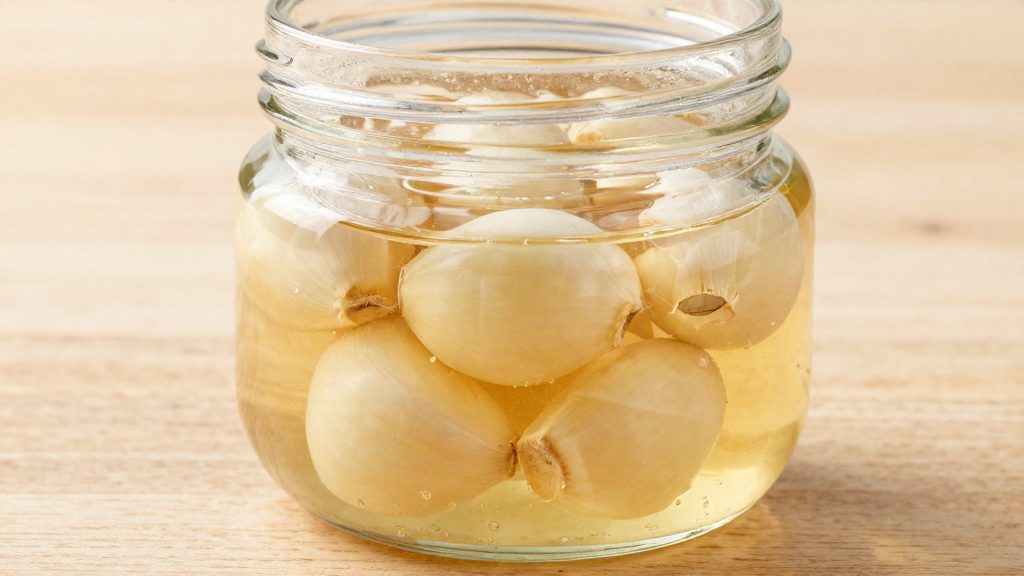
Botulism is the main concern with garlic honey because the two ingredients can together supply what Clostridium botulinum needs to grow: viable spores, a moist surface, and a pH that stays too high for long enough. Neither ingredient is a problem alone. Honey by itself has too little available water for bacteria to grow. The risk comes from the interaction between the honey and the garlic.
Spores in the honey. According to Ask Extension (Oregon State University, 2023), honey often contains Clostridium botulinum spores. Spores are dormant forms of the bacterium, so they remain in the honey and are not removed by the honey itself. The starting population is therefore already present before any garlic is added.
Spores on the garlic. The same source notes that soil-grown garlic may carry these spores even after peeling. Peeling removes the skin, not the contamination, so each clove can add its own spores to the jar.
The moist interface. Garlic has high water activity, which means it holds water that bacteria can use. Where the clove and the honey meet, a moist zone forms.
| Factor | Source | Effect on growth |
|---|---|---|
| Spores in raw honey | Honey often contains the spores | Provides the starting population |
| Spores after peeling | Soil-grown garlic may carry them | Peeling does not remove them |
| High water activity | Garlic at the honey interface | Creates a moist zone for growth |
What Health Canada says
Health Canada’s published guidance on garlic in oil and a spokesperson’s comment to the press are both relevant to garlic honey. A Health Canada spokesperson told Scientific American (2026-09-28) that fermenting garlic in unpasteurized honey at room temperature can pose a risk of botulism. The warning concerns the combination of unpasteurized honey, garlic and an unrefrigerated environment, so the risk is not limited to one ingredient.
Health Canada’s guidance on botulism (2013-02-08) explains why garlic needs special handling. The agency says botulism bacteria thrive in moist, oxygen-free conditions, and it names garlic as a common food stored in oil. Its rule for oil-stored vegetables and herbs is specific:
| Storage element | Health Canada requirement | Source and date |
|---|---|---|
| Garlic stored in oil | Keep at 4 °C or lower, never at room temperature | Health Canada (2013-02-08) |
| Oil-stored garlic usage | Use within one week | Health Canada (2013-02-08) |
| Unpasteurized honey ferment | Fermenting garlic in unpasteurized honey at room temperature can pose a botulism risk | Health Canada spokesperson, reported by Scientific American (2026-09-28) |
For the honey preparation, the warning is about temperature. Honey on its own has too little available water for bacteria to grow.
The practical consequence is that a garlic honey made with unpasteurized honey should not be treated as a shelf-stable pantry item. The cold-storage and one-week rule applies to vegetables and herbs in oil, not to garlic honey.
Can you make it safely at home?
Home cooks can take a few measurements, but none of them can confirm that garlic honey is safe. Ask Extension (Oregon State University, 2023-03-27) states that fermenting garlic in honey is not considered safe, and that no data shows the process is safe. The controls below reduce uncertainty, but they do not change that finding.
Honey pH is not a fixed value
Honey’s pH varies widely. Garlic sits well above pH 4.6, and honey’s pH varies widely, so the mixture stays low-acid unless acid develops quickly. Testing the honey before adding garlic gives a starting reading, but it says little about the finished mixture, which is what matters.
The 24-hour acid target
Acid development is the control that matters most. Ask Extension (Oregon State University, 2023-03-27) says safe fermentation requires acid to develop quickly, ideally within 24 hours. Scientific American (2026-09-28) adds that bacteria in honey can draw water out of the garlic and multiply if the pH does not drop fast enough. Foods with a pH above 4.6 are low-acid (Health Canada, 2024-06-10), and the sources say acid should ideally develop within 24 hours; they do not give a validated pH target for this mixture. A reading taken days later shows the outcome, not whether the mixture was safe during the critical window.
Testing with pH strips
- Any strip reading is an unvalidated indication only: no source supports pH-strip testing as proof that garlic honey is safe.
A strip reading near pH 4.6 is uncertain, and a result close to the threshold should be treated as a failed check.
Limits of home equipment
| Control | What it can show | What it cannot show |
|---|---|---|
| pH strips | Approximate acidity of a sample | Exact pH, or whether a specific microbe is present |
| Clean jar and lid | Physical containment of the mixture | Acid development or bacterial activity |
| Smell, colour and taste | Nothing reliable for this purpose | Botulism does not change them (Health Canada, 2024-06-10) |
A strip reading at 24 hours cannot show that a batch is safe, and no reading turns this method into a validated one. A strip reading does not replace the expert finding from Oregon State University Extension.
Safer garlic ferments to try
Garlic is low-acid (above pH 4.6), so consider an alternative only if it comes from a tested recipe. The goal is to get acidity established before spoilage organisms multiply. Do not take a salt figure from an unverified blog. Choose a tested recipe and follow its salt level exactly.
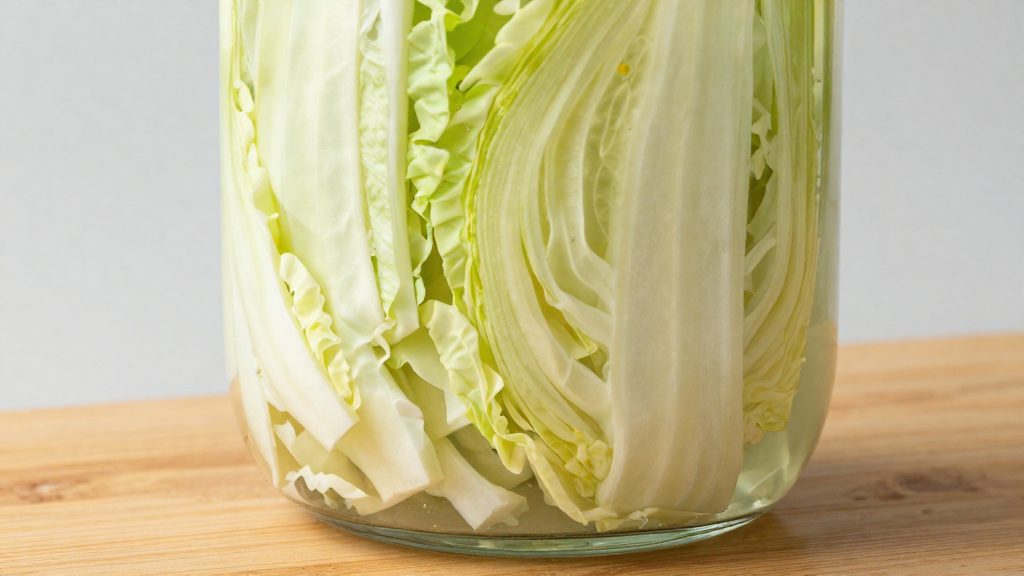
Lacto-fermented garlic in saltwater brine
Lacto-fermented garlic is made by submerging peeled cloves in a salt and water solution. Naturally present bacteria convert sugars into lactic acid, which lowers the pH of the brine over the course of the ferment. The process depends on the cloves staying fully below the liquid surface. Exposed pieces are more prone to spoilage, so a fermentation weight or a cloth-covered jar is a practical way to keep them submerged. Keeping the cloves under the brine is a basic practice, but it does not remove the need for a tested recipe.
Check the cloves and brine during the ferment. Discard any batch that shows fuzzy mould, a slimy texture, or an off smell that differs from the normal sour aroma. Mould growing on the surface above the brine is a sign the cloves were not fully submerged.
Vinegar-pickled garlic as a non-fermented option
Vinegar-pickled garlic skips fermentation altogether. Acetic acid from the vinegar is meant to lower the pH, but this only works with a tested recipe that guarantees enough acidity. The trade-off is flavour: pickled cloves stay sharp and firm rather than developing the mellow tang of a lacto-fermented batch. Rely on a tested pickling recipe rather than estimating the mixture.
| Method | Acid source | Key point from the sources |
|---|---|---|
| Lacto-fermented brine | Lactic acid from bacteria | Acid must develop before spoilage; garlic pH is above 4.6 |
| Vinegar pickle | Acetic acid from added vinegar | Acid is present from the start; no ratio given in the consulted sources |
Who should avoid garlic honey?
Garlic honey should be skipped entirely by people in higher-risk groups, and the clearest case is infants under one year old. For anyone in a higher-risk group, the practical answer is not to serve the product at all.
Infants under one year old and raw honey
A Health Canada spokesperson, quoted by Scientific American (2026), said that raw honey should not be given to infants under one year old. Garlic honey is usually made with unpasteurized honey, so it falls under this warning. Parents should not offer it to infants in any amount, and should check that no other food in the home contains raw honey as an ingredient.
Immunocompromised adults and frail elderly
Health Canada (2024) lists people with weakened immune systems and adults over 60 among the groups at higher risk from botulism. The advice applies to any older adult whose health is compromised. Anyone receiving treatments that suppress the immune system should treat garlic honey as off-limits.
Households sharing jars with children
The group list applies to the whole household. Health Canada (2024) also lists pregnant women and children under 5 as higher risk. If any member of the household falls into one of these groups, the jar should not be served to anyone. Store homemade jars where young children cannot reach them, and label them clearly so they are not mistaken for plain honey.
| Group | Listed as higher risk by | Specific guidance |
|---|---|---|
| Infants under one year old | Health Canada spokesperson, via Scientific American (2026) | Raw honey should not be given |
| Children under 5 | Health Canada (2024) | Higher risk from botulism |
| Pregnant women | Health Canada (2024) | Higher risk from botulism |
| Adults over 60 | Health Canada (2024) | Higher risk from botulism |
| People with weakened immune systems | Health Canada (2024) | Higher risk from botulism |
How to spot and respond to illness
Botulism gives no sensory warning. According to Health Canada (2024-06-10), the toxin does not change the colour, odour or taste of food. A jar of garlic honey that looks, smells and tastes normal can still be unsafe, so a taste test or visual check cannot confirm that a batch is safe.
Symptoms usually appear 12 to 36 hours after eating contaminated food, according to Health Canada (2024-06-10), but they can appear outside that window. Typical signs of botulism affect the nerves and muscles, and the list below is not exhaustive. Difficulty swallowing or speaking, facial weakness and paralysis are also signs, and any difficulty breathing is an emergency:
- Blurred or double vision
- Drooping eyelids
- General weakness, which can progress to the arms, legs and breathing muscles
Because the timing is delayed, people may not connect symptoms with a meal eaten the day before. Note what was eaten and when, and seek emergency care immediately if symptoms appear.
| Situation | Action |
|---|---|
| Any of the early signs appear | Seek emergency medical care now rather than waiting for symptoms to worsen |
| Higher-risk person in the household | Pregnant women, children under 5, adults over 60 and people with weakened immune systems are at higher risk, according to Health Canada (2024-06-10); any suspected botulism needs emergency care for everyone |
| Suspect batch | Stop eating it and do not give it to anyone else |
Emergency steps
- Call your local emergency number. In Canada, call 911 or your local emergency number. Describe the symptoms, the food suspected and the time it was eaten.
- Keep the suspect jar sealed, do not open or taste it, and set it aside in case health staff ask for it.
- Do not rely on home remedies in place of medical care. Follow the instructions of emergency staff.
- Tell the responders if anyone in the household belongs to a higher-risk group, so they can prioritise care.
Frequently asked questions
What is a safer alternative to garlic honey?
Garlic is low-acid, with a pH well above 4.6, so use only a tested recipe from a recognised food safety source. Health Canada’s home canning guidance (2024-06-10) advises against adjusting salt or vinegar levels by feel for low-acid foods.
Can a pH strip confirm that my garlic honey is safe?
No. A strip reading at 24 hours cannot show that a batch is safe, and no passing result exists for this method. The sources do not validate pH-strip testing as a safety check, so a reading could give false reassurance.
What should I do if I ate garlic honey and feel unwell?
Call 911 in Canada, or your local emergency number, without waiting to see whether symptoms develop further. Symptoms usually appear 12 to 36 hours after eating contaminated food (Health Canada, 2024-06-10), but they can start outside that window. Difficulty breathing, swallowing or speaking is an emergency. Keep the jar sealed and set it aside without opening or tasting it.