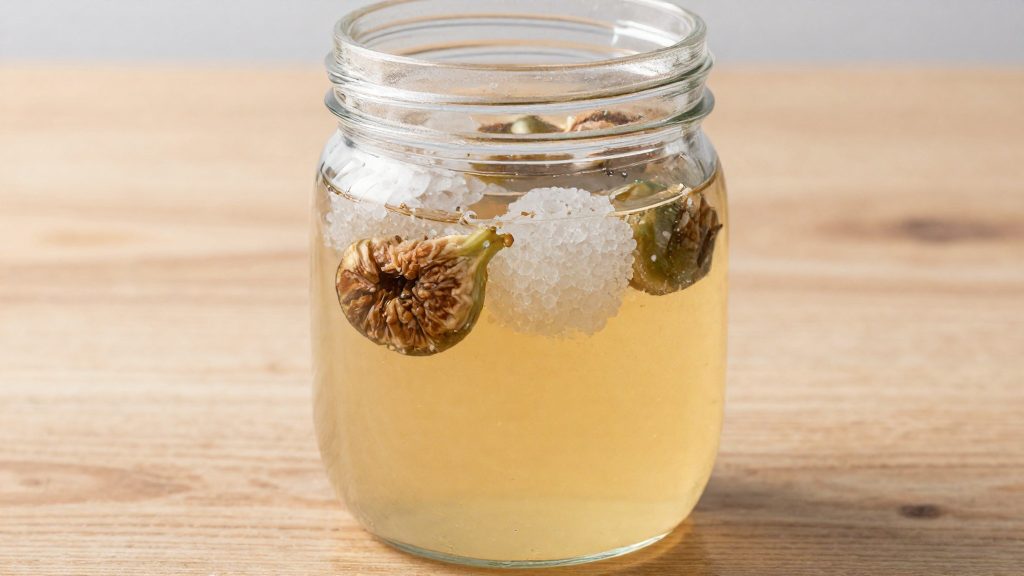
Water kefir tastes too sweet when the grains have not converted enough of the sugar added to the batch. Three factors drive this: fermentation stopped before the sugar was consumed, the starting sugar load was high, or the grain mass was small for the amount of sugar.
Why is my water kefir too sweet?
Sugar left unconverted when fermentation is cut short
The grains convert sugar over the course of the ferment, so a batch that is sampled too early still carries most of its original sweetness. A batch pulled from the jar or bottled before the sugar has been consumed will taste sweet regardless of how healthy the grains look.
Starting sugar load sets the baseline
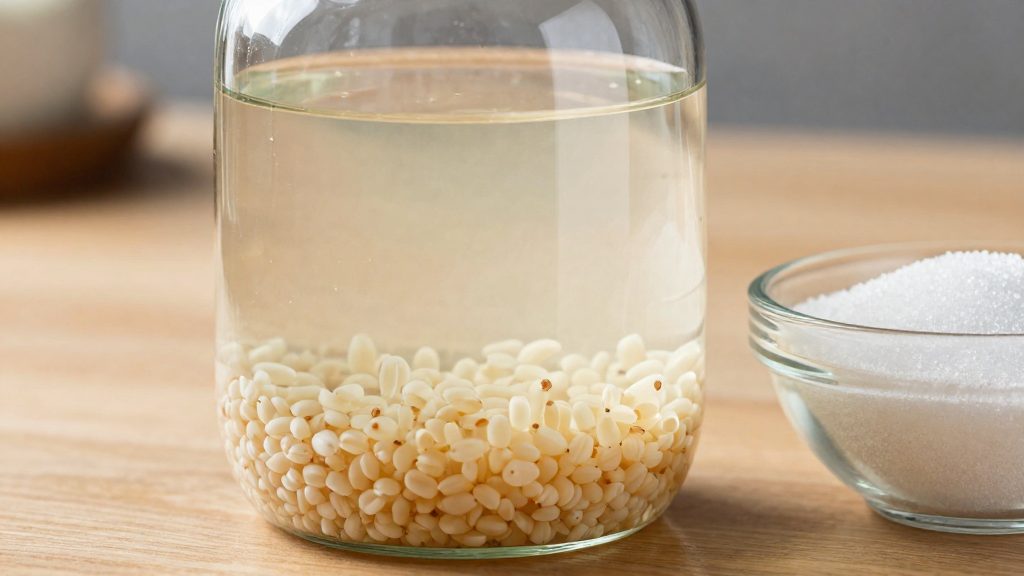
The sugar added at the start determines the sweetness ceiling. The reference recipe is 1/4 cup (about 60 mL) raw sugar per 3 1/2 cups (about 830 mL) of chlorine-free water. Adding more sugar than this raises the starting load and leaves more residual sugar at the end, even if the grains are active.
Molasses adds sugar and minerals. Cultures for Health (2026) recommends limiting molasses to about 1/2 tsp per batch, used only as needed for mineral supplementation.
Grain mass too small for the sugar added
Sugar conversion depends on how much grain is present relative to the sugar. When the grain mass is small compared with the sugar load, the grains need longer to consume it, and the batch finishes sweet. Judge this by observation: if a batch consistently tastes sweet at the recipe’s standard ferment time, the grain mass is likely insufficient for the sugar being added.
Consistent sweetness across several batches, despite correct timing and the reference sugar quantity, points to the grain mass rather than the process.
Ferment the first batch longer
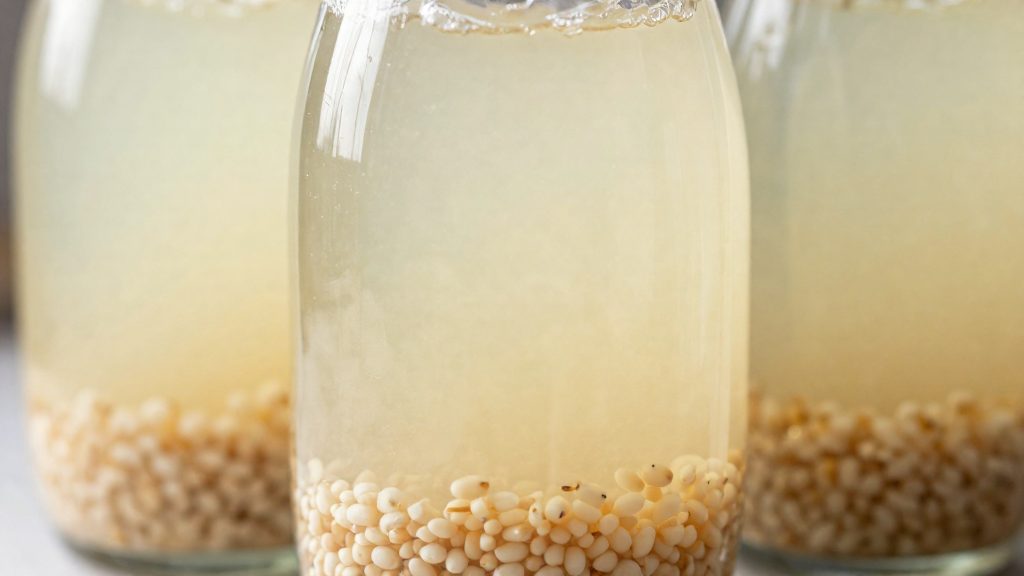
The first ferment window is the stage where the grains convert most of the sugar in the batch, so its length directly controls how sweet the finished water kefir tastes. According to Fermenting for Foodies (2026), a base-recipe first ferment needs 24 to 36 hours, depending on temperature. Staying within that range and giving the grains the full window before you move the liquid to bottles is the most direct way to lower the sugar that remains.
How room temperature sets the window
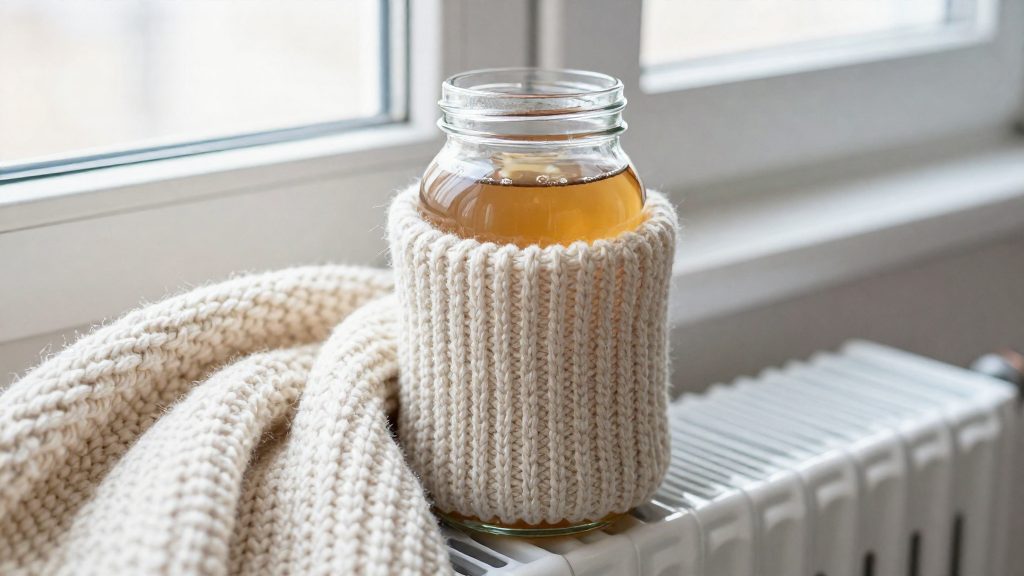
The 24 to 36 hour range is not a fixed schedule. Temperature determines where your batch falls within it:
| Room condition | Effect on the first ferment |
|---|---|
| Warmer room | Window shortens, so the batch reaches the end of fermentation sooner |
| Cooler room | Window lengthens, so the batch needs more time to reach the same sweetness |
In a warm kitchen the batch will tend toward the shorter end of the 24 to 36 hour range, so begin tasting at about 24 hours.
Steps for lowering residual sugar
- Note the start time when the sugar water and grains are combined in the jar.
- Begin tasting at about the 24-hour mark, the lower end of the range.
- Taste again at intervals until the batch reaches the 36-hour mark.
- Strain and bottle once the batch tastes less sweet, or at the 36-hour mark at the latest. If it still tastes sweet, the bottle stage can continue the work.
Taste test before bottling
The taste test is the only reliable signal that the batch has fermented enough. Use a clean spoon, take a small sample, and return the spoon to a clean surface rather than dipping it back into the jar. Compare the flavour to the sugar water at the start. If the batch still tastes sweet at 36 hours, move on to the bottle stage, which can run up to 7 days, and adjust the next batch.
Try a less refined sugar
Sugar type sets the baseline sweetness of water kefir before any other adjustment. According to Cultures for Health (2026), turbinado or raw sugar produces a less sweet water kefir than refined white sugar or organic cane juice crystals, which both give a noticeably sweet result. Changing the sugar you feed the grains is one option when the finished drink tastes too sugary, and it does not require changing the rest of your method.
Sugar choice also controls flavor intensity. Cultures for Health (2026) reports that Rapadura, Sucanat and brown sugar produce a stronger-flavored water kefir. These sugars carry more character than refined options, so they suit drinkers who want a bolder profile rather than a light, neutral one. Because the flavor carries through to the finished drink, test a small jar before committing a full batch.
Some sugars carry a risk to the grains. Cultures for Health (2026) states that coconut palm sugar and maple sugar are too rich and can damage the grains. If you want to use either, keep the amount small and combine it with cane sugar rather than using it as the only sugar source.
| Sugar type | Sweetness outcome | Flavor outcome | Usage note |
|---|---|---|---|
| Turbinado or raw sugar | Less sweet than refined white sugar | Not specified | Suitable as a base sugar |
| Refined white sugar or organic cane juice crystals | Sweet | Neutral | Produces a sweet kefir |
| Rapadura, Sucanat or brown sugar | Not specified | Stronger | Produces a stronger-flavored kefir |
| Coconut palm sugar or maple sugar | Not specified | Rich | Too rich; can damage grains; use in small amounts with cane sugar |
Judge the result by taste, and adjust the sugar type in small steps across batches.
How long can the second ferment run?
Bottled water kefir can run for up to 7 days, according to Fermenting for Foodies (2026). Fizz usually comes first: at room temperature, bottled water kefir turns fizzy within 24 to 48 hours.
Stage limits at room temperature
| Stage | Timing at room temperature | What to check |
|---|---|---|
| Bottling | Day 0 | Taste a small sample and note the sweetness level |
| Fizz onset | 24 to 48 hours | Carbonation begins; compare sweetness to the target |
| Extended bottling | Up to 7 days | Sweetness keeps falling the longer the kefir stays bottled |
Using sweetness as the stopping signal
The fizz onset marks the first point where the kefir can be tasted for final sweetness. Use the following process:
- Pour a small sample from one bottle at the fizz onset window and taste it against your target.
- If it already tastes balanced, stop bottling and move the batch to cold storage.
- If it still tastes too sweet, leave it bottled and recheck at intervals, keeping the total bottle time within the 7-day maximum.
- Once the 7-day ceiling is reached, stop regardless of taste and refrigerate, because the source sets 7 days as the upper limit for this stage.
Why the ceiling matters
The 7-day maximum is a hard boundary, not a target. A batch that is still sweet at day 7 needs a change in the next brew, not a longer bottle stage. Keep a short log of bottling date, taste result at each check, and final stop time so you can set the limit for the following batch from real results.
Does less sugar work?
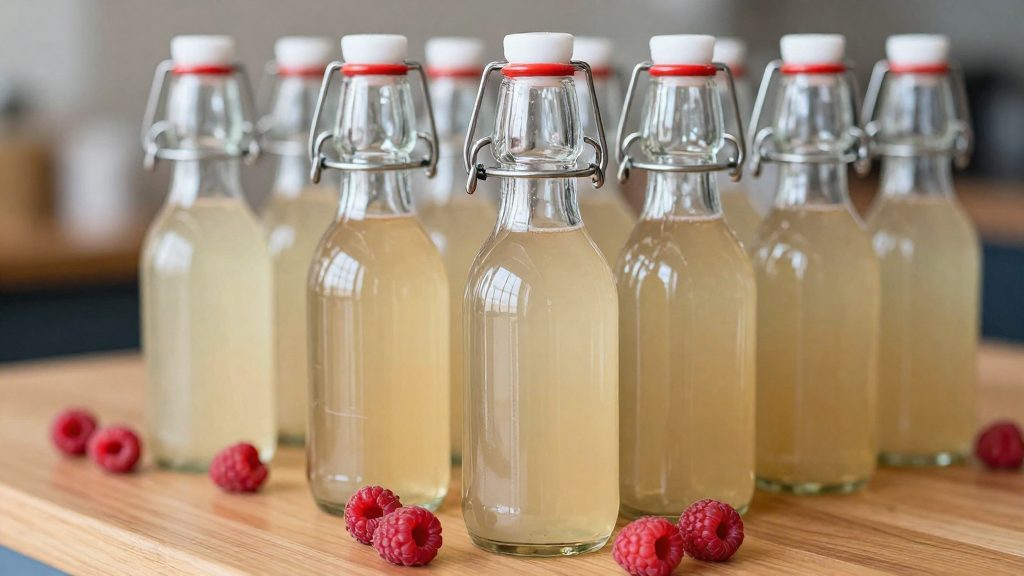
Cutting added sugar lowers sweetness, but it also reduces the food the culture uses to ferment. In water kefir, the grains and their microbes consume sugar during the first ferment and convert part of it into acids and carbon dioxide. Less sugar means less fuel for the ferment, so the trade-off is a milder drink against a weaker, less predictable batch.
Effect on fizz in bottles
Carbonation in sealed bottles depends on the residual sugar left after the first ferment. When a batch starts with less sugar, less remains for secondary fermentation, so the bottles may fizz more slowly or stay flatter.
Grains need enough sugar to stay active
Water kefir grains are a living culture that depends on regular sugar to stay active. Grains depend on regular feeding, and reduced-sugar batches may ferment more slowly. Observation is the practical test: a batch that ferments normally with a modest reduction is a better signal than a fixed quantity.
Closer grain health checks for reduced-sugar batches
Lower-sugar batches warrant more frequent inspection of the grain health than a standard batch does.
| Check | What to look for | When |
|---|---|---|
| Grain size | Grains that shrink or stop multiplying | At each harvest |
| Ferment activity | Slower souring or little visible bubbling | During the first ferment |
If any check shows decline, return to the previous sugar level before reducing again.
Flavor without extra sugar
Water kefir can taste bright and complex without added sweetener. The main levers are fresh fruit, ginger, and aromatic botanicals for flavor, and a small amount of molasses for minerals. Adding these after the sugar has been converted by the grains gives you aroma without pushing the sweetness higher. Because the sugar is what the grains consume, the flavor additions do not need to replace it. They change what the finished drink tastes like, not how much sugar the grains have to work with.
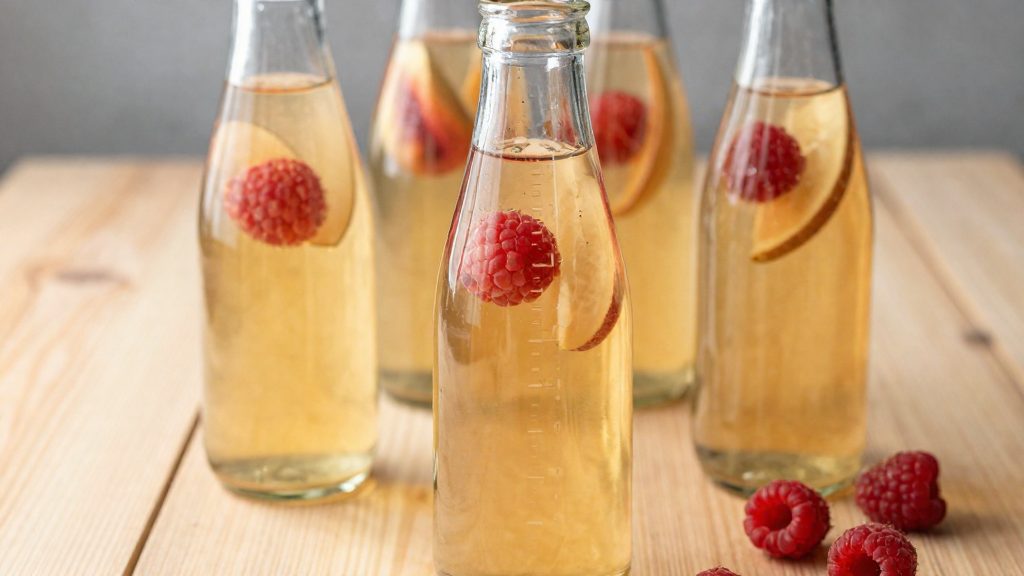
Fresh fruit and ginger are the most direct way to add aroma. Sliced fruit or a few pieces of fresh ginger can go into the bottle at the second ferment stage, where they release their volatile aromatics into the liquid. Fruit does carry sugar of its own, so it is not a zero-sugar option, and it can make the drink taste sweeter even when the grains have consumed most of the added sugar. Ginger adds a sharp, warming note without sweetness, which makes it useful when you want the drink to taste less sugary.
Herbs and botanicals add subtle aromatic depth rather than a strong flavor. Small amounts of dried or fresh herbs and other botanicals can layer in fragrance and background complexity. Start with a light hand and taste before you bottle, because aromatic herbs are easy to overpower a batch with. Keep the additions to one or two at a time so you can tell which note is coming through.
Molasses is the only additive in this group that serves a nutritional purpose. According to Cultures for Health (2026), molasses should be limited to about ½ tsp per batch as mineral supplementation, and only as needed. Use it as a mineral source, not as a flavoring, and do not add more because you want a richer taste.
| Addition | What it contributes | Practical note |
|---|---|---|
| Fresh fruit | Fruit aroma and flavor | Carries its own sugar, so it can raise perceived sweetness |
| Fresh ginger | Sharp, warming aroma | Adds flavor without sweetness |
| Herbs and botanicals | Subtle aromatic depth | Use a light hand and add one or two at a time |
| Molasses | Mineral supplementation | Capped at about ½ tsp per batch, only as needed |
Food safety and bottle pressure
Water kefir in sealed bottles keeps producing carbon dioxide, so pressure is the main physical risk at the bottling stage. According to Fermenting for Foodies (2026), the recommended control is to open the bottles every 2 days to release pressure and prevent over-carbonation.
Venting schedule
| Bottle day | Action | Purpose |
|---|---|---|
| Day 0 | Seal the bottles and leave them at room temperature | Start carbonation |
| Day 2 | Open each bottle briefly, then reseal | Release built-up CO2 |
| Day 4 | Open each bottle briefly, then reseal | Release built-up CO2 |
| Day 6 | Open each bottle briefly, then reseal | Release built-up CO2 |
| Day 7 | Final check at the end of the window | Stop the bottle stage |
Open the bottles over a sink or with a towel nearby, since the gas can release suddenly from a tightly closed bottle.
Why sealed bottles build pressure
A sealed bottle holds the carbon dioxide produced by the culture. Because the gas cannot escape, pressure rises with every day of fermentation. Venting is the only control step in this stage that the sources tie directly to pressure, so skipping it leaves the bottle without any release point.
Sourcing chlorine-free water
According to Fermenting for Foodies (2026), the water in every batch must be chlorine-free, including the water used to rinse or refresh the grains. The water must be chlorine-free. Check with your local water supplier how your tap water is treated, since methods vary across Canada.
Frequently asked questions
How long should I ferment before tasting for sweetness?
Fermenting for Foodies (2026) gives a first ferment of 24 to 36 hours, depending on temperature. A warm room shortens that window, so start tasting around 24 hours and let the taste guide you from there.
Does switching to a different sugar reduce sweetness?
Yes. Cultures for Health (2026) reports that turbinado and other raw sugars produce a less sweet kefir than refined white sugar or cane juice crystals. Coconut palm sugar and maple sugar are richer and can harm the grains, so use them only in small amounts alongside cane sugar.
What should I do if the batch is still sweet after 36 hours?
Bottle it and let it rest in the bottle stage for up to 7 days, opening the bottles every 2 days to release pressure (Fermenting for Foodies, 2026).