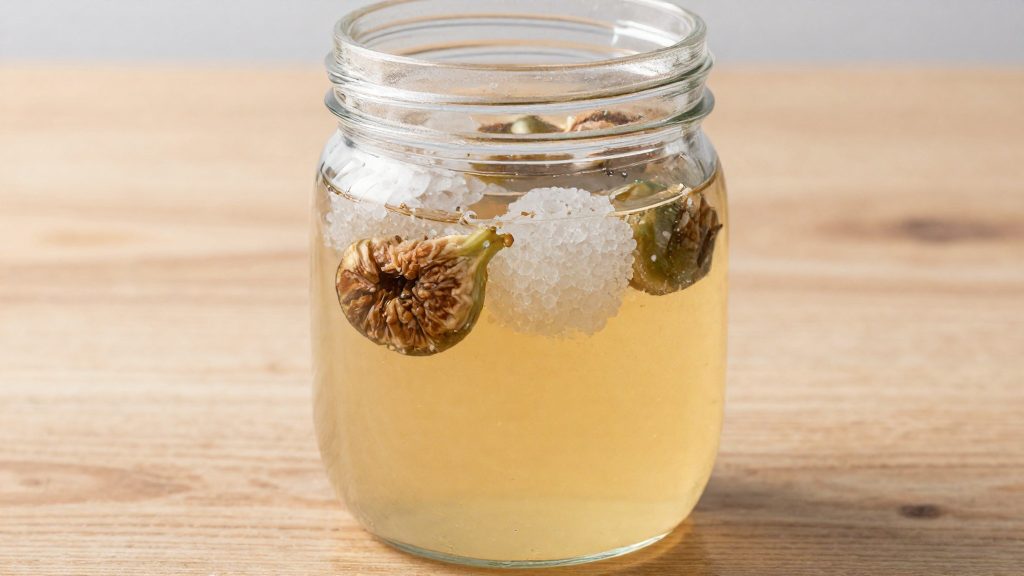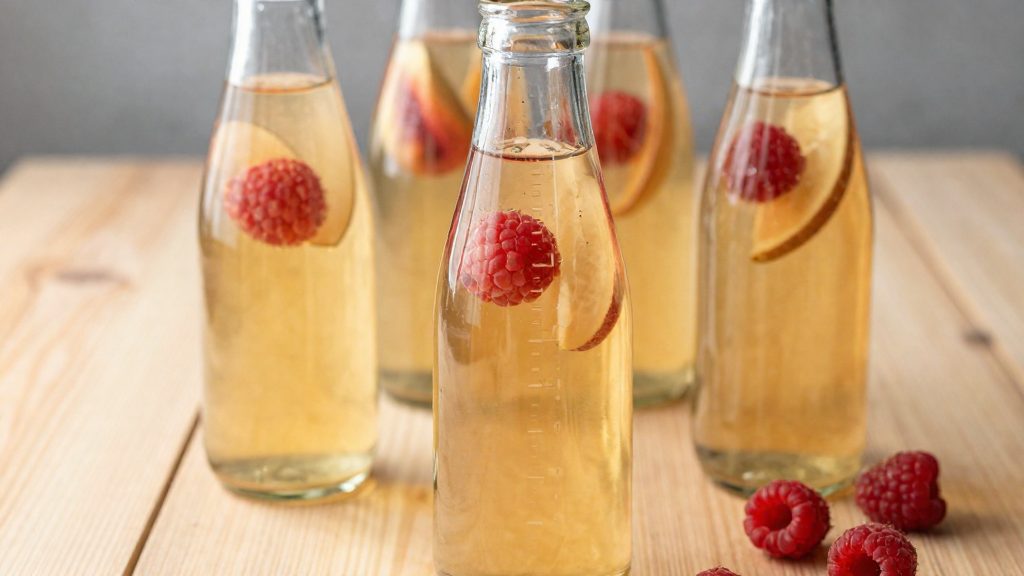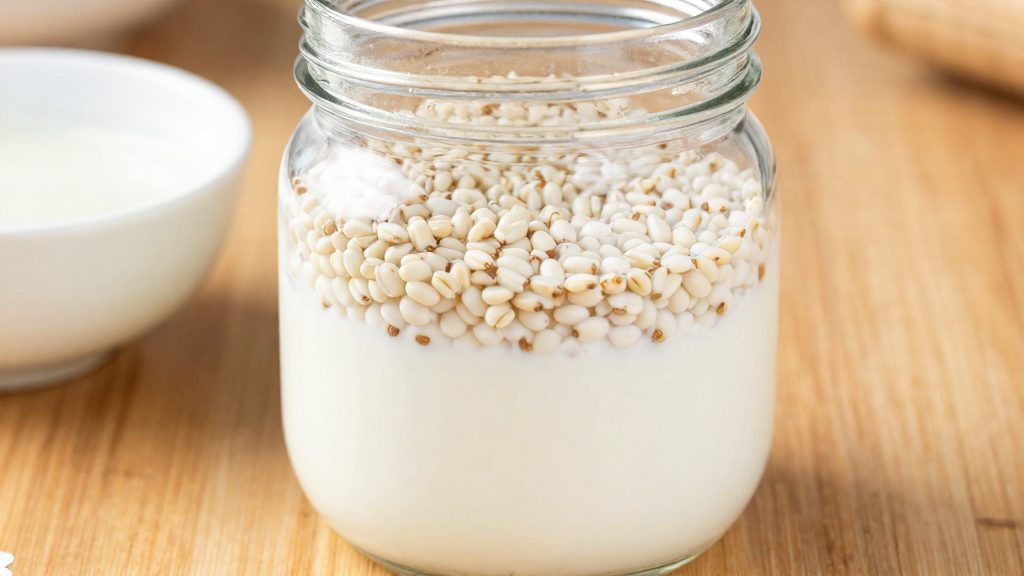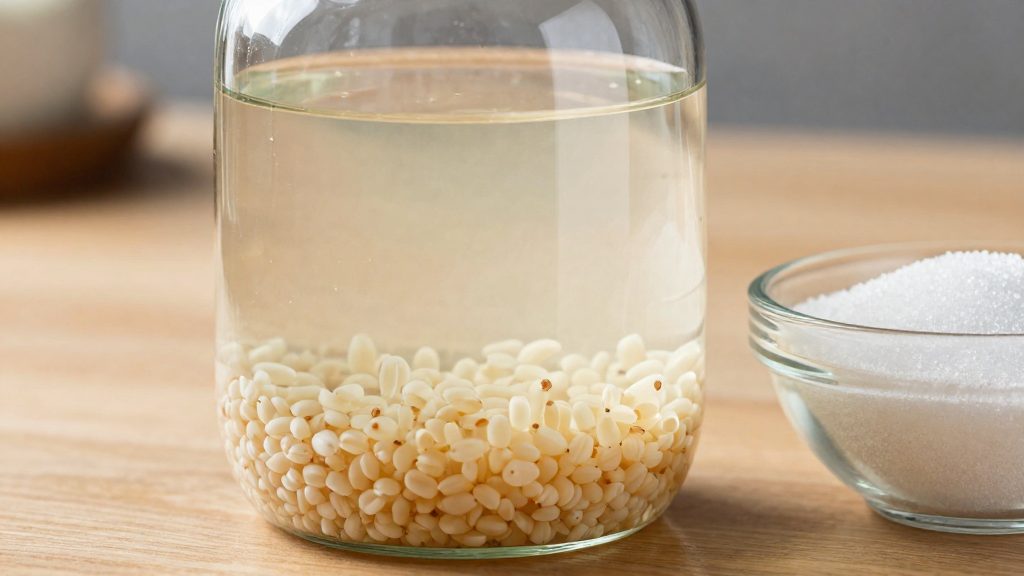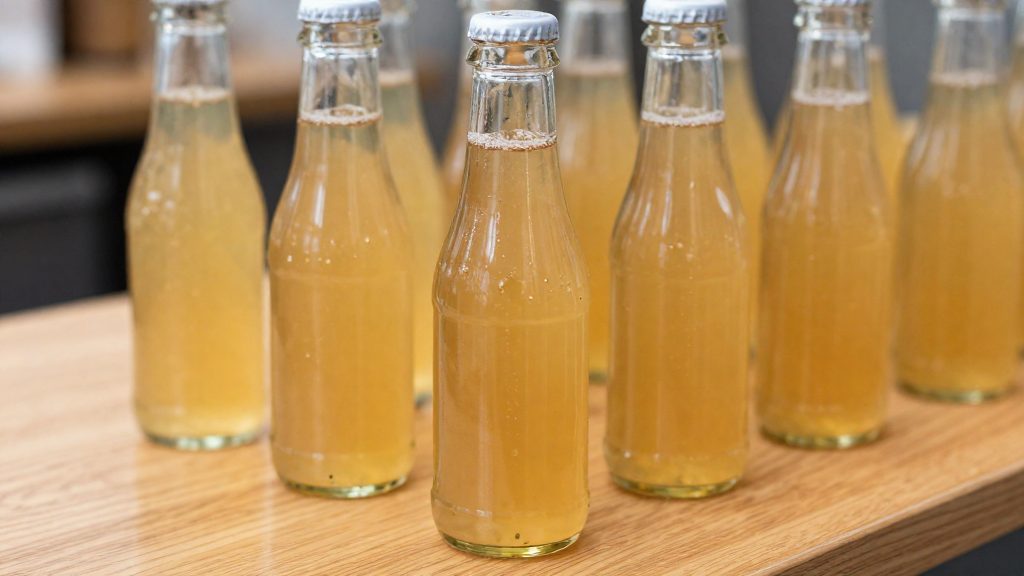
Water kefir soda is a lightly sparkling, mildly tangy drink made by fermenting sugar water with water kefir grains, a culture of bacteria and yeasts that contains no dairy. The microbes consume sugar and produce acids and carbon dioxide, which gives the finished drink its fizz. Home brewers often confuse it with kombucha and milk kefir because all three are live fermented drinks, but each uses a different culture, a different base and yields a different flavour.
What is water kefir soda?
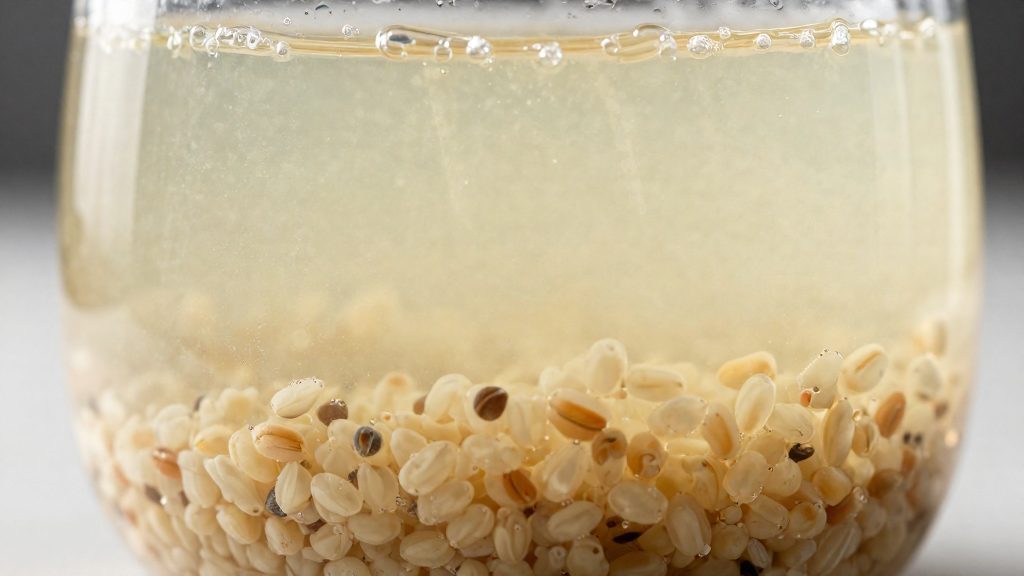
Water kefir grains are small, translucent, gelatinous granules that hold a community of lactic acid bacteria and yeasts. They ferment sugar dissolved in water rather than milk or tea, so the grains need a regular supply of sugar to stay active between batches. In a closed vessel, the yeasts generate carbon dioxide, and the bacteria produce lactic and other organic acids that give the drink its tartness.
The three cultured drinks differ in base, microbes and taste:
| Feature | Water kefir | Kombucha | Milk kefir |
|---|---|---|---|
| Base liquid | Sugar water | Sweetened tea | Milk |
| Culture | Water kefir grains | SCOBY (symbiotic culture of bacteria and yeast) | Milk kefir grains |
| Main microbes | Lactic acid bacteria and yeasts | Acetic acid bacteria and yeasts | Lactic acid bacteria and yeasts |
| Typical profile | Light, sweet-tart, fizzy | Tea-based, vinegary tang | Creamy, sour, thick |
Because the base is plain sugar water, the finished soda is clear and light-bodied, with little of the tea character found in kombucha and none of the richness of milk kefir. Its flavour comes mainly from the acids formed during fermentation, which reduce sweetness, and from any fruit or juice added later. Carbonation depends on the yeast activity inside a sealed bottle, so a fizzy result reflects gas retained in the container rather than a property of the grains alone.
What you need before you start
A water kefir soda needs only a few items, but the materials and ingredients affect the result. Set out your tools and check your water and sugar before combining the finished water kefir with juice.
Non-metal tools
Use a plastic strainer to separate the water kefir grains from the liquid. Mix and store the batch in a glass jar or another non-metal vessel. Avoid metal spoons, strainers and lids in contact with the brew.
Sugar and tap water
Sugar feeds the culture, but too much of it can kill the culture (MyFermentation (Cultures for Health, 2026)). Choose a sugar you can dissolve fully in the water before adding the grains. Stir the sugar until no crystals remain at the bottom.
As a precaution, use filtered or dechlorinated water if your supply is treated with chlorine.
Bottles for the second ferment
Choose bottles made for fermenting. Cultured Food Life (2026) recommends a 16-oz bottle (about 473 ml) for a batch of 14 oz (about 415 ml) of finished water kefir plus 2 to 4 oz (about 60 to 120 ml) of juice.
| Bottle feature | Guidance |
|---|---|
| Capacity | 16 oz (about 473 ml) |
| Headspace | About 1 inch (Cultured Food Life, 2026) |
| Closure type | Flip-cap bottles, the format named by MyFermentation (Cultures for Health, 2026) |
Leave about 1 inch of empty space at the top of each bottle. This gap gives the carbonation room to build without filling the neck.
How to make the first ferment
The first ferment is the stage where water kefir grains feed on sugar dissolved in water and produce the acids and carbon dioxide that give the drink its tang and light fizz. The method is simple: dissolve the sugar completely, add the grains, cover the container loosely, and leave it at room temperature until the liquid tastes mildly sour. Follow the sugar, water and grain quantities supplied with your grains. Measure the sugar rather than adding it by eye, because too much sugar can kill the culture.
| Stage | Action | What to check |
|---|---|---|
| Dissolve | Stir sugar into the water until no granules remain | Clear liquid with no crystals on the bottom |
| Add grains | Place the grains in the sugar water in a non-metal container | Grains are fully submerged |
| Rest | Cover loosely and keep at room temperature | Small bubbles forming; liquid becoming mildly sour |
| Strain | Pour the liquid through a plastic strainer | Grains stay in the strainer, liquid runs clear |
Dissolving the sugar
Dissolve the sugar fully before the grains go in. Undissolved crystals settle on the grains and can cause uneven feeding. Once the liquid is clear, let it reach room temperature so the grains are not shocked by heat.
Resting at room temperature
Cover the container with a cloth or a loose lid. This lets gas escape while keeping dust and insects out. The ferment is ready when the liquid tastes sour and shows bubbles. If a batch has failed (rancid or rotten-milk smell), discard it.
Straining and rinsing the grains
Pour the liquid through a plastic strainer into a clean jar. The grains stay behind and the strained liquid becomes the base for the next step. Rinse the grains briefly in clean water to remove residue, then return them to fresh sugar water to begin the next batch.
How to flavour water kefir with fruit juice
Fruit juice is the usual way to add flavour and fizz to water kefir during a second ferment. The culture converts the juice’s sugars into carbonation and acids, and the fruit flavour remains in the finished drink. Cultured Food Life (2026), MyFermentation (Cultures for Health, 2026) and Kefirko (2026) all add a small volume of juice to finished water kefir, but they differ in juice type, purity and proportion.
Choosing the juice
Use pure juice with no added sugar. MyFermentation (Cultures for Health, 2026) is the only consulted source that specifies 100% pure juice. Juice should flavour the batch, not serve as its main sugar source.
Juice-to-kefir ratios by volume
| Source (year) | Juice | Water kefir | Juice share of total mix |
|---|---|---|---|
| Cultured Food Life (2026) | 2 oz | 14 oz | 12.5% |
| Cultured Food Life (2026) | 4 oz | 14 oz | about 22% |
| Kefirko (2026) | 100 ml | 900 ml | 10% |
| MyFermentation (Cultures for Health, 2026) | 1 cup | 4 cups | 20% |
The juice share is the juice volume divided by the total volume. The published mixes range from 10% to about 22%. The consulted sources do not quantify how each step changes carbonation or flavour. A higher juice share puts more fruit flavour into the drink, and a lower share keeps the water kefir taste more prominent.
Mango, kiwi and other juice variants
Kefirko (2026) names mango or kiwi, using 100 ml of either per 900 ml of kefir. To compare juices, run small batches at the same ratio, using 100% pure juice each time, and record the carbonation and taste of each.
How long should the second ferment take?
The second ferment for water kefir soda with fruit juice generally runs from about 24 hours to 3 days at room temperature. The sources differ on the exact window because they target different fizz levels and bottle types, so the right stopping point depends on how carbonated you want the drink. Cultured Food Life (2026), MyFermentation (Cultures for Health, 2026) and Kefirko (2026) give the following timings:
| Source (year) | Stated duration | Conditions given |
|---|---|---|
| Kefirko (2026) | About 24 hours | Room temperature; mango or kiwi juice variant |
| Cultured Food Life (2026) | 1 to 3 days | Left on the counter; bottle opened periodically to check bubbles |
| MyFermentation, Cultures for Health (2026) | 2 to 3 days | Flip-cap bottles; temperature not specified |
The sources do not compare gas production rates between these timings.
How room temperature affects carbonation speed
Every timing in the table assumes ambient room temperature. Treat the ranges as starting points if your kitchen runs warmer or cooler than room temperature. A practical approach is to begin checking at the 24-hour mark, then reassess each day, keeping a note of the conditions for your next batch.
Checking carbonation by squeezing the bottle
Cultured Food Life (2026) recommends opening the bottle periodically to confirm it is bubbly. Follow the sourced check: open the bottle periodically, pointing it away from people, to confirm it is bubbly. Use this feel alongside the bubble check rather than relying on it alone, because the squeeze test only indicates pressure and says nothing about flavour.
How do you avoid exploding bottles?
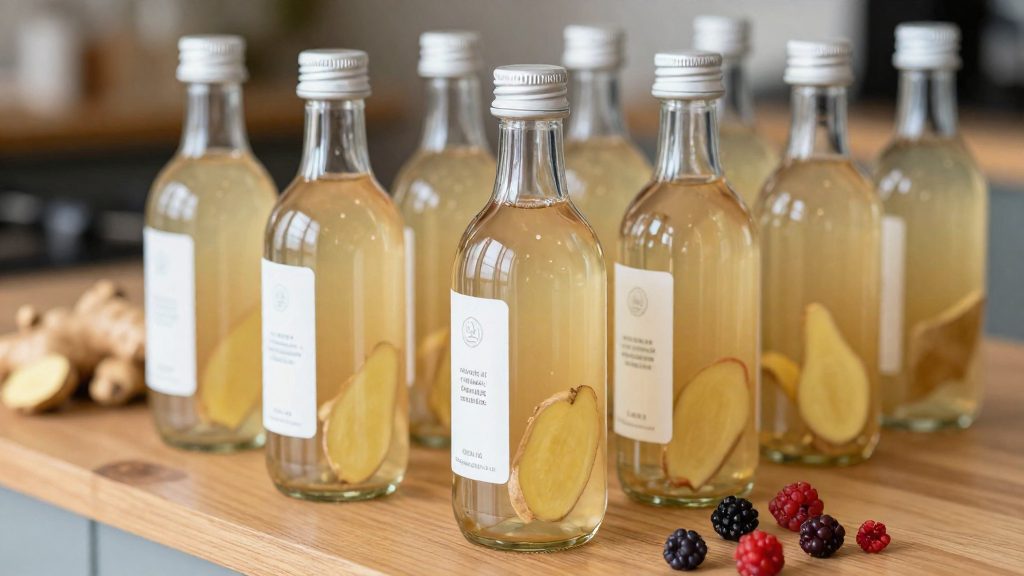
Bottle breakage in a water kefir second ferment comes from pressure that builds in a sealed bottle with too little free space. Control it with three measures: leave room for gas, release pressure on a schedule, and use a bottle built for fermenting. The figures below come from Cultured Food Life (2026), which gives the sizing for a juice second ferment.
| Parameter | Guidance | Source |
|---|---|---|
| Bottle size | 16 oz bottle made for fermenting | Cultured Food Life (2026) |
| Water kefir | 14 oz | Cultured Food Life (2026) |
| Fruit juice | 2 to 4 oz | Cultured Food Life (2026) |
| Headspace | About 1 inch | Cultured Food Life (2026) |
Cultured Food Life’s volumes add up to 16 to 18 oz, which is at or above the nominal 16 oz bottle volume, so 1 inch of headspace may not be achievable at these volumes. Check the headspace before capping. If the liquid reaches the neck, reduce the fill while keeping the same juice share, rather than leaving less than 1 inch of headspace.
Burping is the main release routine. Kefirko (2026) warns that a juice variant can become very fizzy and overflow, so release pressure periodically during the second ferment. Do this at room temperature before the bottle goes into the fridge, since a sealed bottle left unchecked keeps building gas.
Release direction matters as much as timing. When opening, point the bottle away from people and loosen the cap slowly. MyFermentation (Cultures for Health, 2026) notes that flip-cap bottles can build pressure, so treat them with the same caution.
Bottle wall strength and pressure ratings: Choose a bottle sold for fermenting, inspect it for cracks before each use, and replace any damaged bottle rather than relying on it to hold pressure.
Troubleshooting flat, sour or off-smelling soda
Most problems with water kefir soda fall into three groups: a flat result, a sour or sharp taste, and an off smell. The smell is the clearest sign of failure given by the sources, but if a batch looks or smells unusual in any other way, discard it. Flatness and sourness usually trace back to adjustable factors, so the fix is usually a change to the next batch.
Flat soda: causes and corrective steps
Juice share and sugar supply are variables you can adjust one at a time. Adding extra sweetener is not a safe way to boost fizz. The juice shares are:
| Source | Juice | Water kefir | Juice share of total mix |
|---|---|---|---|
| Cultured Food Life (2026) | 2 oz | 14 oz | 12.5% |
| Cultured Food Life (2026) | 4 oz | 14 oz | about 22% |
| Kefirko (2026) | 100 ml | 900 ml | 10% |
| MyFermentation (Cultures for Health) (2026) | 1 cup | 4 cups | 20% |
The shares are calculated from the volumes each source gives. The 1 cup to 4 cups ratio is the one MyFermentation (2026) states gives good flavour and fizz, so it is a useful reference when a batch comes out flat.
Flat soda is the opposite fault to overcarbonation.
Sour taste: diagnosing excess acidity
The British Columbia Institute of Technology (2026) measured pH in kombucha, where it fell below 4.6 within 12 hours at room temperature. That result applies to kombucha and cannot be transferred to water kefir. The study’s authors did recommend measuring pH and working in a sanitary manner, which is a sound habit for any home brew.
For a practical check, compare the juice share of a sharp batch with the table above. A batch that is much sharper than the others made with the same ratio points to a difference in the process rather than the recipe, so record your ratios batch by batch.
Rancid or rotten-milk smell: batch failure
A lemony, yeasty smell is part of a normal water kefir second ferment. A rancid or rotten-milk smell is different and signals batch failure, according to MyFermentation (Cultures for Health) (2026). Only that source specifies 100% pure juice, so it is the reference for juice quality if you are troubleshooting repeated failures.
Storing and serving
Once the second ferment reaches the carbonation you want, move the bottles to the refrigerator. Cultured Food Life (2026) lets the bottle sit on the counter for 1 to 3 days, and advises drinking or refrigerating it within about one week. Kefirko (2026) gives a shorter window for its mango or kiwi variant, advising refrigeration and use within a few days. The two windows differ, so when in doubt, use the shorter one.
| Source | Storage after second ferment | Use window |
|---|---|---|
| Cultured Food Life (2026) | Refrigerate | Within about one week |
| Kefirko (2026) | Refrigerate | Within a few days |
Chilling bottles before opening
Cold liquid holds dissolved carbon dioxide more readily than warm liquid, so a thoroughly chilled bottle releases less gas when it is opened. A cold bottle is a practical way to limit foam loss at the moment of serving.
Serving temperature and glass selection
In general practice, a cold drink stays more carbonated in the glass than a warm one. Pour gently down the side of the glass to limit foaming. Pour gently down the side of the glass to limit foaming.
Frequently asked questions
Which juice should I use, and how much goes into the second ferment?
Use 100% pure fruit juice, which MyFermentation (Cultures for Health, 2026) specifies and other sources do not. Cultured Food Life (2026) adds 2 to 4 oz of juice to 14 oz of finished water kefir, while MyFermentation (Cultures for Health, 2026) uses 1 cup of juice per 4 cups of kefir.
How do I know when the second ferment is ready and safe to drink?
Let the sealed bottle sit on the counter for 1 to 3 days, opening it periodically to check fizz, then drink it or refrigerate it within about one week (Cultured Food Life, 2026). A lemony, yeasty smell is normal, but a rancid or rotten-milk smell means the batch has failed. Kefirko (2026) reports a shorter cycle of about 24 hours for a 100 ml mango or kiwi juice variant, and warns that the brew can overflow, so release pressure during that window.
What can damage the grains during a flavoured batch?
Too much sugar can kill the water kefir culture, so keep added sweetness moderate, especially when fruit juice already contributes sugar (MyFermentation, Cultures for Health, 2026). Avoid contact with metal and use a plastic strainer to separate the grains from the liquid (MyFermentation, Cultures for Health, 2026).