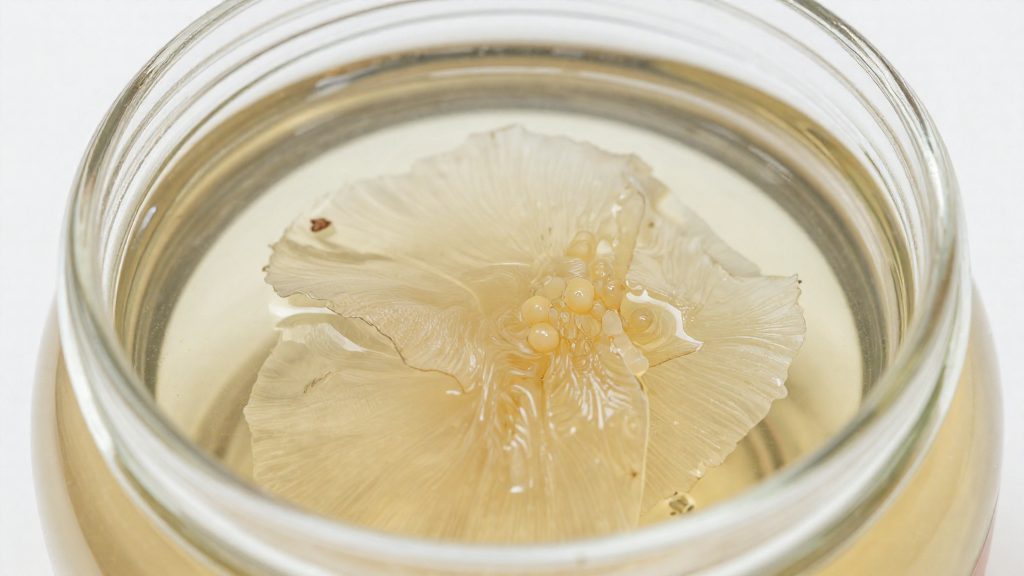
Is a dried SCOBY dead or dormant?
A dehydrated SCOBY is usually dormant, not dead. Drying halts the metabolism of the yeast and acetic acid bacteria in the mat, so they stop producing acid and carbon dioxide but remain viable. The culture can resume fermenting once it is rehydrated in sweet tea.
Why drying pauses the culture rather than killing it
Dehydration removes the water that microbes need for active metabolism. The yeast and bacteria enter a low-activity state, similar to a seed waiting for moisture. Nothing in the dried mat is actively fermenting, which is why it shows no bubbles, no sour smell, and no growth while stored dry.
Dried mat versus living SCOBY
| Feature | Dried SCOBY | Living SCOBY |
|---|---|---|
| Moisture | Little or none, the mat is stiff | Moist and pliable, kept in liquid |
| Metabolic activity | Paused, no acid or gas produced | Active, producing acetic acid and CO₂ |
| Response to sweet tea | Needs an extended reactivation period | Continues fermenting in regular batches |
| Visible change during reactivation | Often none for days | Gradual thickening and new layer formation |
The physical state is the clearest difference. A dried mat looks and feels like a brittle sheet, while a living one is soft, slippery, and gelatinous.
Why a dormant culture cannot ferment until rehydrated
Fermentation needs water, sugar, and an active microbial population. A dried SCOBY supplies the microbes but not the conditions they need to work. Only after it sits in the cooled sweet tea with vinegar does the culture begin to metabolize again. The guidance calls for leaving the jar undisturbed for the full 30 days, then smelling and tasting the liquid.
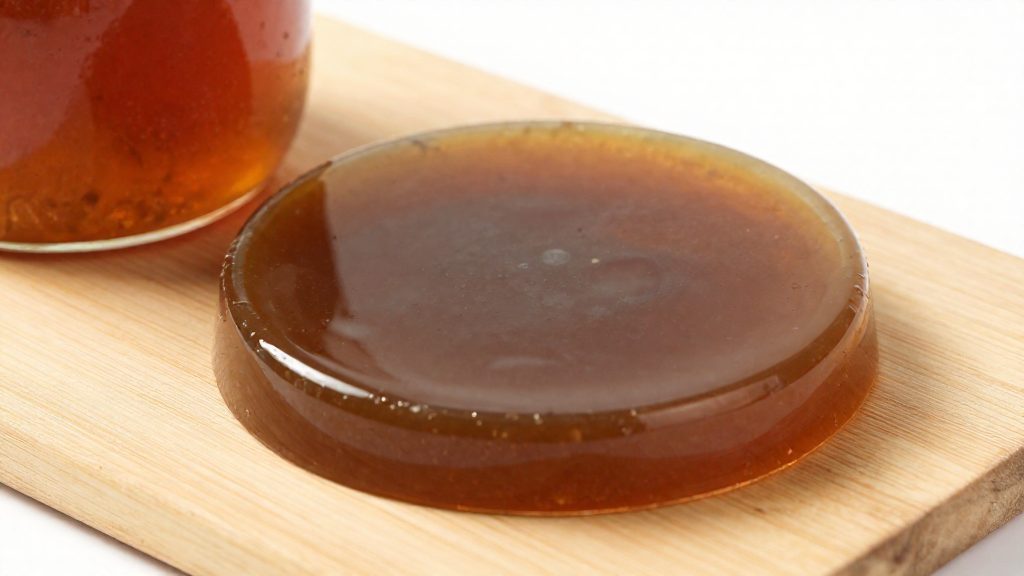
What you need to rehydrate a SCOBY
Rehydrating a dried kombucha SCOBY takes four ingredients and one container: tea, white sugar, distilled white vinegar, water, and a quart glass jar. According to Cultures for Health (2022-06-23), the standard batch uses the quantities below. Each ingredient has a specific form or quality, so substitutions change the starting conditions for the culture.
| Ingredient or item | Amount | Specification |
|---|---|---|
| Tea | 2 tea bags, or 1½ tsp loose tea | Either format gives the same batch size |
| White sugar | ¼ cup | White sugar, as specified |
| Distilled white vinegar | ½ cup | Distilled white only |
| Water | 2–3 cups | Unfluoridated, unchlorinated water |
| Vessel | 1 quart (about 1 L) glass jar | Glass |
Choosing the water
Water quality matters more than most people expect. The source specifies unfluoridated, unchlorinated water, so tap water that has been treated with chlorine or fluoride does not meet the requirement. Municipal tap water in Canada is commonly treated with chlorine, and in some communities with fluoride, so check your municipality’s water information. If your supply is treated, use an alternative source that meets the specification.
Choosing the vessel
The batch is made in a single quart glass jar. The jar holds the full volume of 2–3 cups of liquid, the tea, the sugar, the vinegar and the dried SCOBY together. The source specifies glass, so use a glass jar for this batch.
Measuring the ingredients
Measure the tea, sugar and vinegar before combining them with water. Use the ratios in the table exactly as written. The vinegar is measured by volume, so measure it in a measuring cup rather than estimating it.
How to revive a dried kombucha SCOBY step by step
Reviving a dried kombucha SCOBY follows a fixed order. The sweet tea must be cooled before any vinegar or culture goes in, and the vinegar and dried SCOBY are added to that cooled liquid together. Cultures for Health (2022-06-23) gives this sequence, and skipping or reversing a step changes the conditions the culture starts in.
| Step | Action | Condition from the guidance |
|---|---|---|
| 1 | Brew the sweetened tea | Sugar dissolved before cooling |
| 2 | Cool the tea | 68–85°F (20–29°C) |
| 3 | Add the vinegar | Added to the cooled liquid |
| 4 | Add the dried SCOBY | Added after the vinegar, in the same liquid |
| 5 | Cover the jar | Tight-weave cloth or vinegar-dampened coffee filter |
Preparing and cooling the liquid
Brew the tea and dissolve the sugar fully. Then let the liquid cool before adding anything else. Cultures for Health (2022-06-23) specifies a range of 68–85°F (20–29°C) for this step. Check the temperature with a thermometer rather than by touch, so the liquid is confirmed to sit inside the range before the next step.
Adding the vinegar and the dried SCOBY
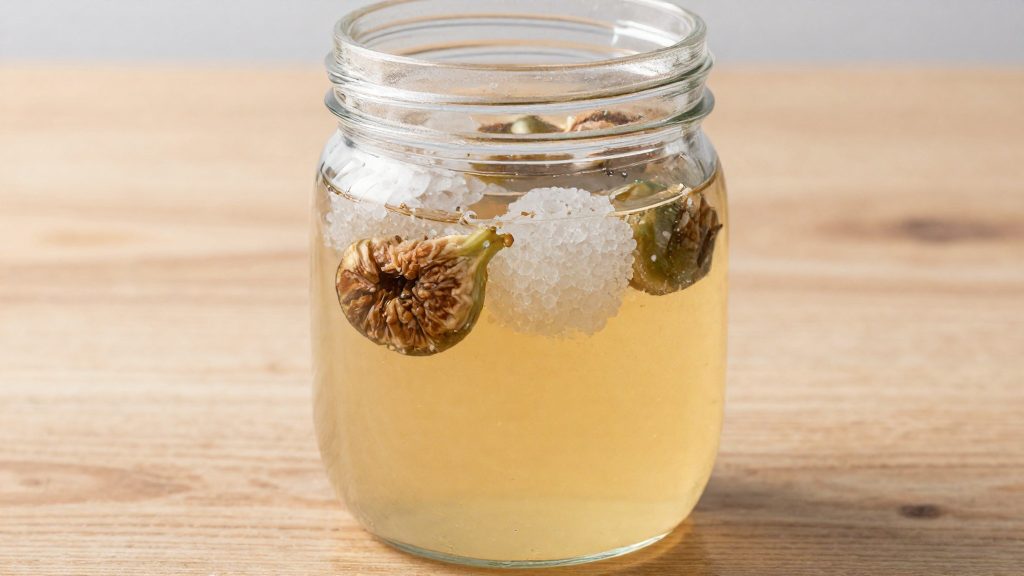
Once the tea is in range, add the distilled white vinegar, then place the dried SCOBY into the liquid. Both go into the same quart glass jar. Add the vinegar first, then the dried SCOBY, both into the cooled tea in the same jar.
Covering the jar
Cover the opening with a tight-weave cloth or a coffee filter dampened with vinegar, and secure it so insects and dust stay out. The jar must not be closed with an airtight lid. The cover should let air pass through while blocking debris, which is the only purpose of this step.
How long does reactivation take?
Reactivating a dehydrated kombucha SCOBY takes a full 30-day incubation. According to Cultures for Health (2022), the jar must be left undisturbed for the entire 30 days, even when nothing visible seems to change. The timeline depends on the culture’s own activity, not on how the jar looks, so the wait is the same whether the surface stays still or not.
Most of that period can look uneventful. A dried SCOBY has to rehydrate and build up its microbial activity before the liquid shows a clear result, and that process happens largely out of sight. Checking the jar often does not speed it up.
Reading the first weeks correctly
Visible inactivity does not mean the reactivation has failed. Cultures for Health (2022) lists several changes that can look alarming but are not signs of a bad culture:
| Observation | Position of Cultures for Health (2022) |
|---|---|
| Holes or tears in the SCOBY | Not a sign of a bad culture |
| SCOBY sinks, floats, or sits sideways | Not a sign of a bad culture |
What to expect from the first batches
A reactivated culture is judged by how it ferments, not by new growth. Cultures for Health (2022) states that no baby SCOBY may form during the first few batches after reactivation, and that this is normal. Do not treat a missing new layer as evidence that the culture is weak.
The early liquid can also be harsher than the finished kombucha you are used to. Cultures for Health (2022) notes that it may be too sour to drink, but it still works in recipes. Using it in recipes is a practical way to make use of the first output while the culture settles.
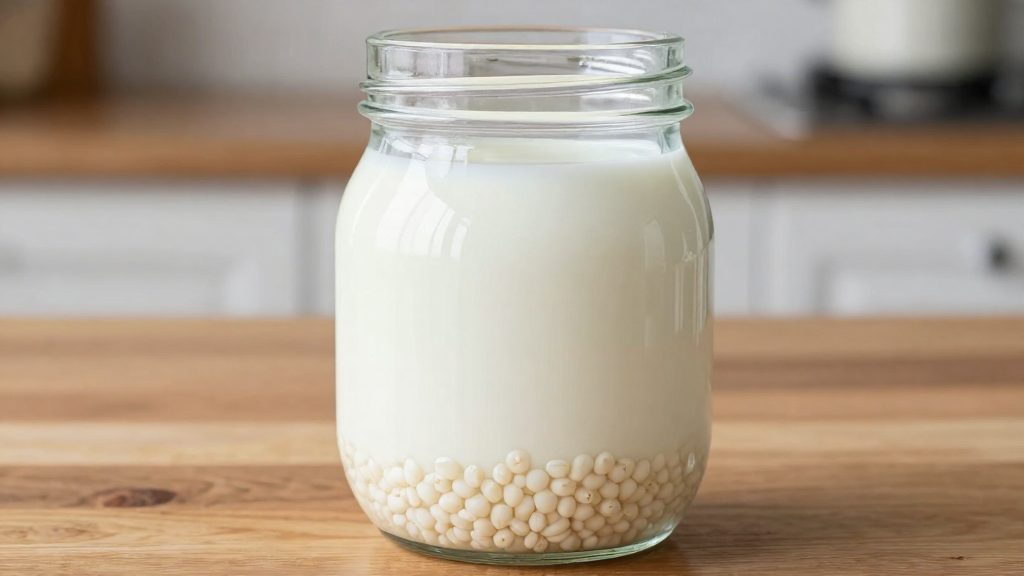
Signs the revival is working
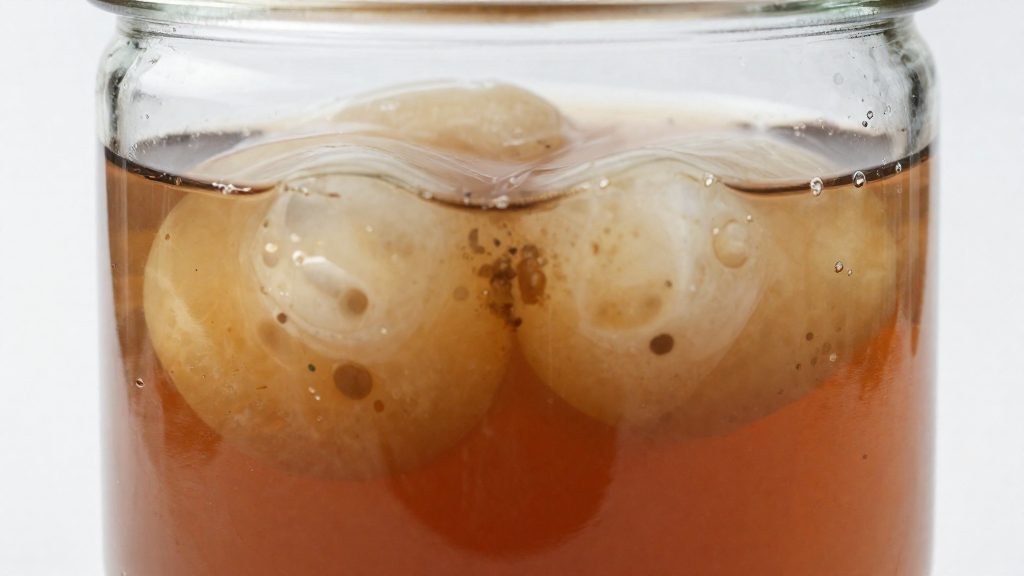
Judge activation by smell and taste, not by holes, tears or position, but still check for mold or a black SCOBY, which mean discarding it. According to Cultures for Health (2022), after the full 30 days, a rich, vinegary smell and taste confirms that the dried SCOBY has activated. Sample the liquid with a clean spoon at that point.
Smell is the first check. An activated brew smells distinctly of vinegar. If the liquid smells mainly sweet or faintly of tea, the culture has not yet shown the result the test looks for.
Taste is the second check, and it can be surprising. The liquid may be too sour to drink, yet it is still usable. Cultures for Health (2022) states that it works in recipes, so a sharp, strongly acidic taste is a sign of activity, not a fault. Use the liquid in recipes rather than drinking it straight.
Appearance should not decide the question. Holes, tears, or a SCOBY that sinks, floats, or sits sideways do not mean the culture is bad, according to Cultures for Health (2022). A culture can look irregular and still be active, so do not discard it based on shape or position alone. Smell and taste confirm activation, but mold or a black SCOBY still mean the batch or SCOBY must be discarded.
Mold or yeast? When to throw it out
Separating harmless yeast from contamination decides whether a revived culture can continue. According to Cultures for Health (2022-06-23), a reactivated batch can show growth that is a normal part of fermentation or a sign that the batch must be discarded. Inspect the surface and the liquid first, then apply the rule that matches what you see.
Mold is the one finding that ends the batch. If mold develops at any point, discard the whole batch, SCOBY included. The guidance does not allow saving the culture by removing the affected area.
Brown stringy bits are a different case. They are harmless yeast and can be strained out of the liquid with a fine strainer. Pour the batch through the strainer into a clean container, and discard the captured strands. The strands are not a reason to throw the batch away.
A black SCOBY indicates either contamination or an exhausted culture. In both cases the guidance is to discard it. Color is the deciding factor here, so a SCOBY that has turned black should not be kept on the basis of how it smells or tastes.
Use this sequence when you inspect a batch:
| Observation | Meaning | Action |
|---|---|---|
| Any mold growth | Contamination | Discard the whole batch, SCOBY included |
| Brown stringy bits | Harmless yeast | Strain them out of the liquid |
| Black SCOBY | Contamination or exhausted culture | Discard the SCOBY |
How should you store a SCOBY so it doesn’t dry out?
A kombucha SCOBY stays hydrated when it remains in liquid, so storage comes down to two choices: keep it wet in starter liquid between batches, or dry it and keep it sealed.
Keep the SCOBY submerged in its starter liquid, the fermented tea from the previous batch. The liquid covers the culture and keeps its surface moist. When moving a SCOBY to a new container, pour the starter liquid over it so no part is left exposed above the surface, and use a clean, non-metallic vessel.
For pauses between batches, keep the covered jar with the SCOBY submerged in starter liquid. Check the jar at each stage, since storage does not replace regular attention to the culture.
A dried SCOBY needs a different approach. Keep it in a sealed bag or container in a dry, cool place that is away from humidity, so that moisture does not reach the culture.
Frequently asked questions
How long should I wait before judging a revived SCOBY?
Leave the jar undisturbed for the full 30 days, even if nothing visible changes, then smell and taste the liquid. A rich, vinegary result means the culture is activated, though the liquid may be too sour to drink and can still be used in recipes. Don’t expect a baby SCOBY in the first few batches after reactivation, since its absence is normal.
What should I do if mold or a black layer appears?
Mold means you should discard the entire batch, including the SCOBY. A black SCOBY points to contamination or an exhausted culture, so it also goes. Brown stringy bits are harmless yeast and can simply be strained out.
Does a SCOBY with holes or an odd position mean it has failed?
No. Holes, tears, and a mat that sinks, floats, or sits sideways do not indicate a bad culture. Judge it by the mold and color signs above, along with the smell and taste after the full waiting period.